Island County urges residents to stock two weeks of disaster supplies
Island County says a two-week supply is the right baseline when ferries stall, roads close or a Cascadia quake cuts off help.
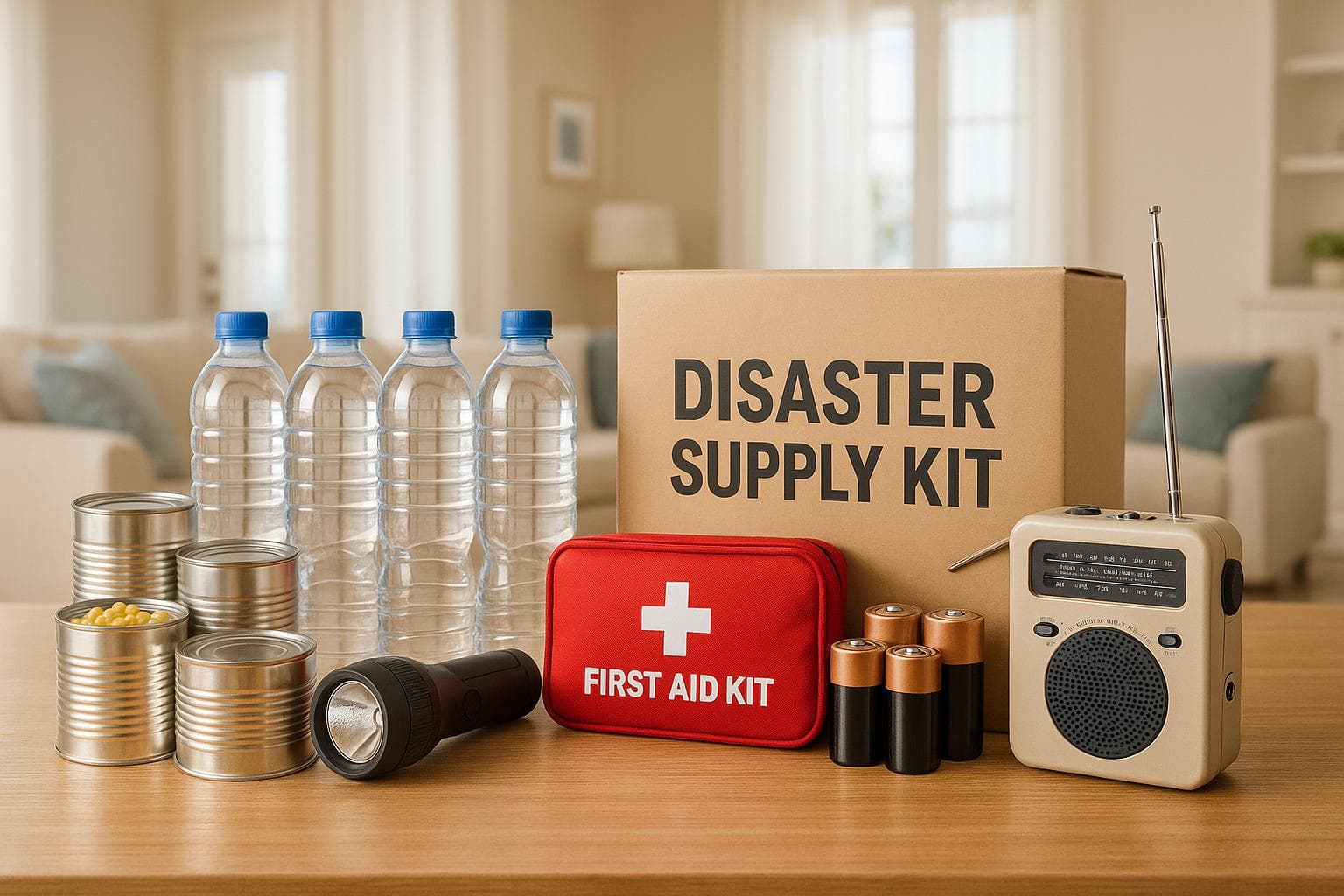
Two weeks is the local baseline
In Island County, a disaster kit is less about convenience than getting through the gap before help arrives. The county says local responders may not be able to reach everyone immediately after a disaster, and that residents should be ready to be self-sufficient for at least two weeks, with more supplies if possible.
That advice is shaped by geography. When transportation is strained, getting food, water, medicine and fuel onto Whidbey Island or Camano Island can take time, and the county says it may take days or even weeks before outside help is available. For a county with a 2025 Census estimate of 85,657 people spread across island communities and shoreline neighborhoods, the difference between a three-day kit and a 14-day supply is not theoretical.
The county’s message is blunt: if something happens fast, you need to move fast too. That is why the go-bag guidance is built around evacuation, temporary shelter and self-reliance, not around waiting for a perfect response window.
What belongs in a go bag
Island County’s go-bag guidance is aimed at keeping a household functional if evacuation becomes necessary. The county suggests thinking in layers: a home kit, a work kit and, where relevant, supplies for pets. The goal is to make sure essentials are close at hand whether the disruption starts at home, at work or during a commute between Coupeville, Oak Harbor, Langley and Freeland.
A strong island kit should cover the basics first:
- Water and a way to carry or store more
- Food that does not require cooking
- Medications and copies of prescriptions
- First-aid supplies
- Flashlights and backup batteries
- A phone charger or power bank
- Cash, since cards and digital payments may not work
- Copies of important documents
- Clothing and sturdy shoes
- Items for children, including comfort items and age-specific necessities
- Pet food, leashes, carriers and vaccination records
The county’s preparedness pages also urge residents to think ahead about shelter, food, sanitation and first aid. That matters because an island outage can turn simple errands into long waits, especially when roads are blocked or ferry service is disrupted.
Water is the first supply to size correctly
Island County’s water guidance gives households a clear benchmark: store one gallon per day for each family member for at least two weeks. The county adds that children, nursing mothers and people who are ill may need more, which makes water planning a household-by-household calculation rather than a one-size-fits-all rule.
To make that easier, the county launched a 2026 Water Storage Calculator that helps households figure out minimum storage needs, including for pets. That is a useful tool for families who want a concrete target instead of guessing how much water a freezer, closet or garage can hold.
The county’s longer two-week recommendation reflects the high earthquake risk in Island County and Washington as a whole. In a region where a major quake could disrupt roads, utilities and deliveries at once, water is not a backup item. It is the foundation of the whole plan.
Plan for power loss, documents and the people in your household
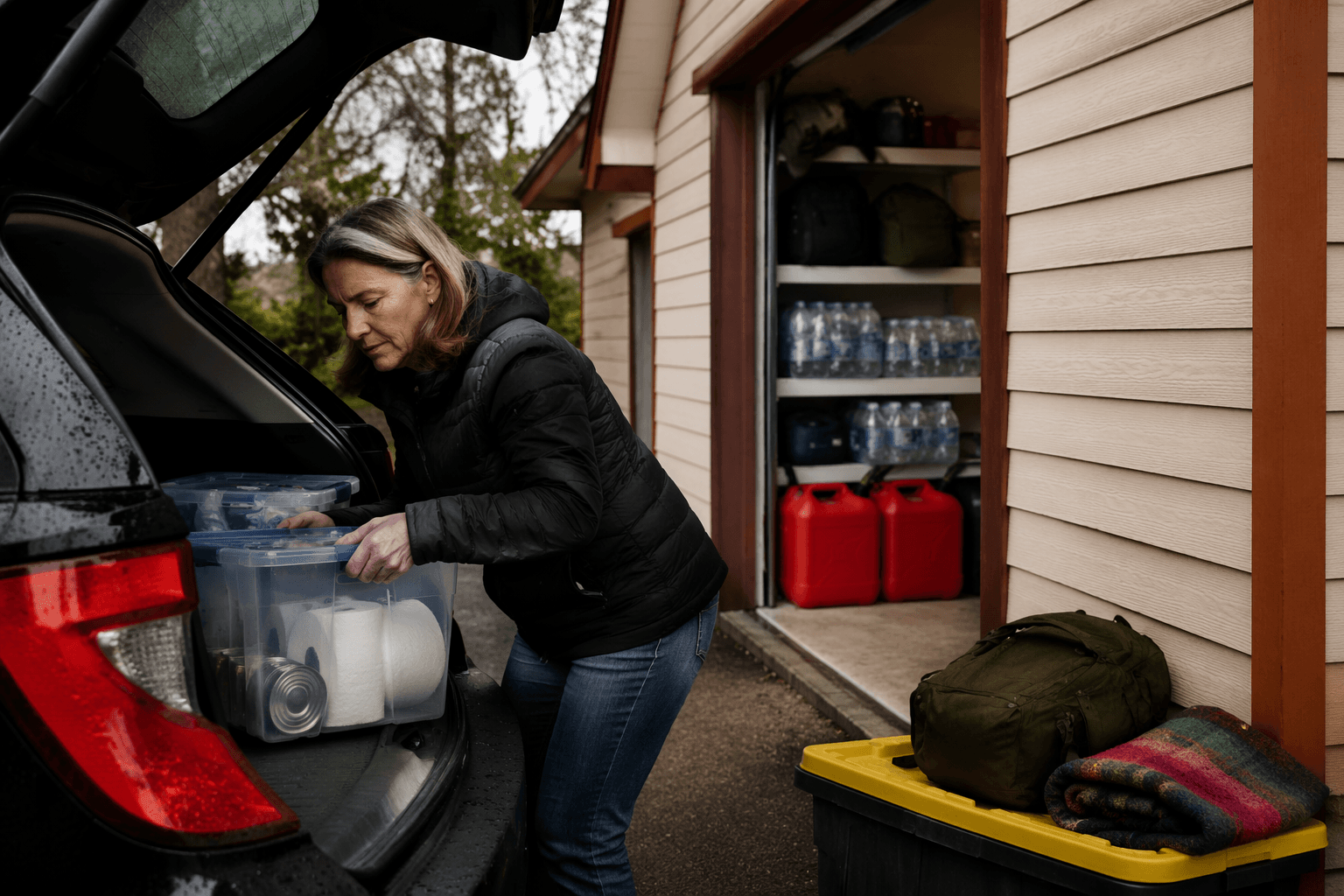
A useful go bag is more than a bag of supplies. Island County also tells residents to make a family communication plan, identify out-of-area contacts, protect important documents, prepare for power loss, secure water heaters and get vehicles ready. Those steps matter because a disaster is rarely isolated to one system. A storm or earthquake can affect power, fuel, phones and the ability to move around the county all at once.
The county also asks households to think about people with disabilities, access and functional needs, mental and behavioral health needs, children and pets. That is a practical instruction, not a slogan. A kit for a senior in Oak Harbor, a family with young children in Coupeville or a household in Freeland with two dogs will not look the same, and Island County’s guidance recognizes that.
The same logic applies to papers and records. If a household needs to evacuate quickly, having identification, insurance information, medication lists and other essential documents already protected can save time and stress when services are strained.
Use the county tools now, not after the warning
Island County has built a broader preparedness system around these household steps. Its Ready Neighbors program was discontinued on January 6, 2026, but the materials remain available for download, and the county says the program was designed to be free, flexible and adaptable to apartments, townhomes, single-family homes and other housing types.
Residents can also use the county’s hazard maps, which identify tsunami inundation zones, flood zones, landslide hazard areas and other risks. The tsunami guidance is especially important for coastal and Puget Sound communities, because the county says a Cascadia Subduction Zone earthquake could generate a local tsunami for shoreline areas and parts of Puget Sound. The county also says tsunami warning messages may come through the Emergency Alert System and mobile devices.
This is where the local picture becomes clear. Island County operates an Emergency Operations Center when activated and coordinates preparedness, mitigation, response and recovery with Oak Harbor city government and the Washington State Department of Emergency Management. County planners are also updating the Multi-Jurisdictional Hazard Mitigation Plan in 2026, a process that matters because the Disaster Mitigation Act of 2000 requires state and local governments to develop hazard mitigation plans as a condition for certain federal grant assistance.
Why this matters on the islands
Transportation is part of the emergency story here. Washington State Ferries says it is the largest ferry system in the United States and operates 21 vessels connecting communities from Tacoma to the San Juan Islands. Island Transit adds another layer, providing transportation services in Island County and more than 491,832 trips annually, but even a strong local system can be strained during a major disruption.
That is why the county’s preparedness advice keeps coming back to the same idea: island households should be ready to bridge the gap themselves. Whether the disruption comes from an earthquake, tsunami, storm surge, flooding, wildfire smoke, power outage or transportation interruption, the first two weeks are likely to belong to the people already here.
For residents in Coupeville, Oak Harbor, Langley and Freeland, the practical step is straightforward. Build the kit now, size the water correctly, include the medications and pet supplies that would be hardest to replace, and use the county’s preparedness tools before the next ferry delay, storm or outage turns advice into necessity.
This article was produced by Prism’s automated news system from verified source data, official records, and press releases, then run through automated quality and moderation checks before publishing. The system is built and supervised by the people who set the standards it runs under. Read our full AI policy.
Know something we missed? Have a correction or additional information?
Submit a Tip