Meet the people who keep Whidbey safe
Whidbey’s safety net depends on dispatch, fire districts, ferry-timed logistics and residents who know where to turn when calls stack up.

On Whidbey Island, safety starts before the sirens. A call can move from a Coupeville dispatcher to a fire crew in Oak Harbor, a sheriff’s deputy on the road, or a WhidbeyHealth ambulance headed toward WhidbeyHealth Medical Center, all while ferry traffic and island distance shape the clock. That is the network behind the work of keeping Whidbey safe.
Who answers the call
At the county level, the Island County Department of Emergency Management runs the alerts and preparedness side of the system from 1 NE 7th Street in Coupeville, WA 98239. Its staff directory lists Justin E. Ross as director and John Becker as deputy director, the people residents are most likely to hear from when warning systems or community notifications go out. The department’s phone number is 360-679-7370, a practical detail that matters when storms, fire risk or other disruptions make quick contact part of the response.
That county office does not work alone. The Island County Sheriff’s Office handles law enforcement, Island County Public Health handles health-related guidance, and local fire districts handle fire suppression, rescue and many medical calls. On an island where many residents see the same crews at school events, grocery stores and ballfields, the system works best when those agencies are linked before the emergency starts.
The crews on the front line
Fire and rescue is one of the clearest examples of how local the island’s safety net really is. Central Whidbey Island Fire & Rescue says call volume has increased 50 percent since 2012, and overlapping calls are pushing response times longer. That kind of growth turns a routine dispatch into a logistics problem, because one crew can be tied up on a medical call while another emergency comes in elsewhere on the island.
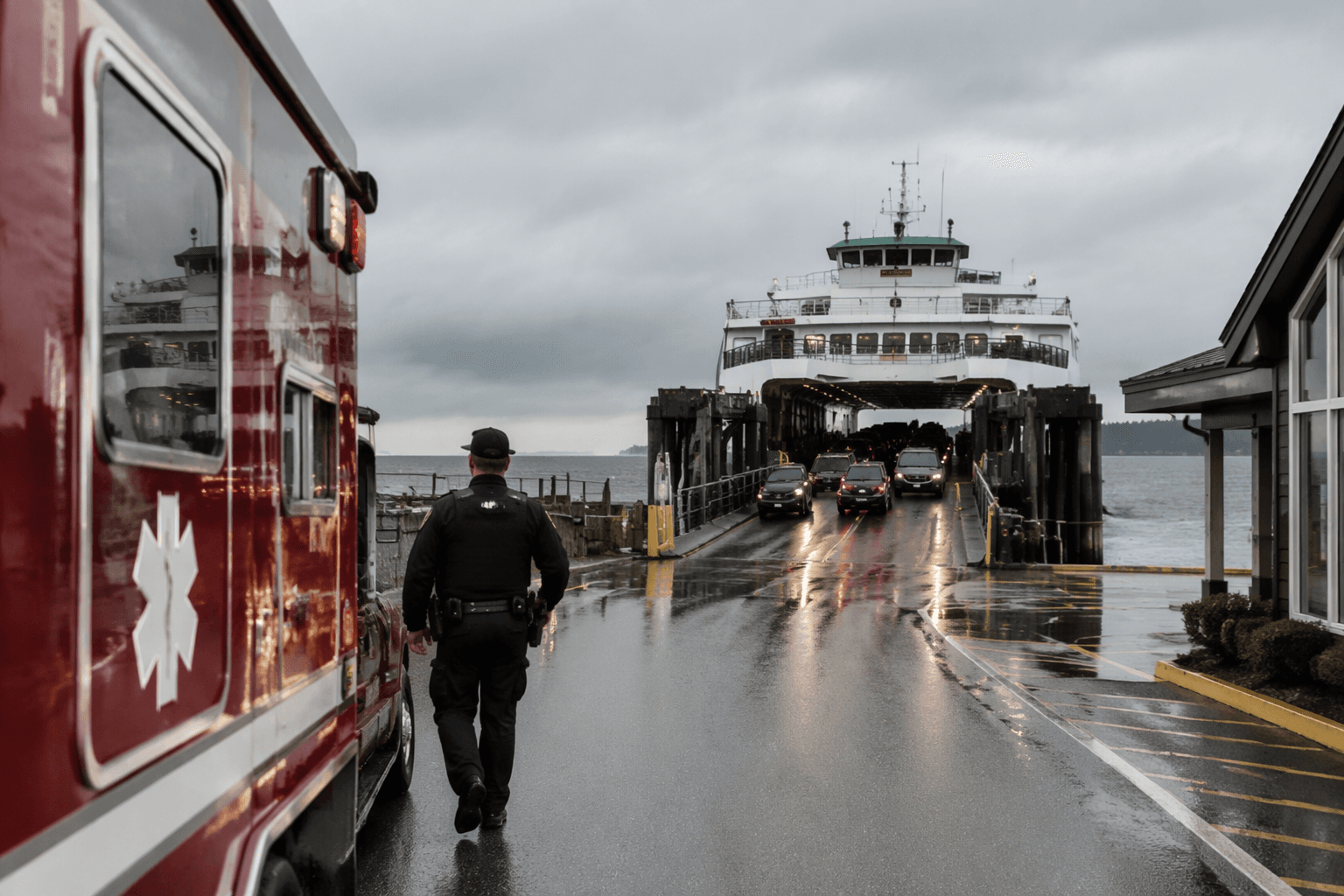
North Whidbey Fire and Rescue adds another piece of the picture. The district says it was established in 1950, a reminder that some of the island’s public-safety structure has been built over generations, not months. Together with Central Whidbey Island Fire & Rescue, it covers the kind of incidents island residents know well: traffic accidents, medical calls and weather-related problems that can spill across rural roads and shoreline neighborhoods.
WhidbeyHealth is part of that response chain too. Its emergency care department is open 24 hours at WhidbeyHealth Medical Center, which gives island crews a destination that does not close when the pace of the day changes. For patients, that matters when transport times are longer than in a mainland city and every handoff has to be efficient.
Why Whidbey is harder to cover
The island’s geography changes everything about response. Coupeville, Oak Harbor, Langley and Freeland are close enough to share a county, but spread out enough that distance can add minutes before a crew even reaches the scene. Add ferries, visitor traffic and summer congestion, and a call that looks simple on paper can become a timing problem in the real world.
That strain is most visible in the summer. Washington State Ferries expected about 400,000 riders over the Fourth of July holiday weekend in 2026, a level of traffic that affects roads, parking, staging and the first few minutes of a response. On top of that, beaches, waterfront access and recreational activity bring more people into the same corridors that first responders use, which means more chances for traffic accidents, medical calls and weather-related incidents.

The county also has to think about fire risk as part of daily preparedness. Island County posted an Outdoor Burning Ban in effect as of 7:00 a.m. on Friday, June 20, 2025, and later listed a Type I burn ban in effect as of 7:00 a.m. on Wednesday, July 1, 2026. Those dates are more than calendar markers. They show how quickly island conditions can tighten the rules around what residents can do outside, especially when dry weather and wildfire concern rise together.
How residents plug into the system
Island County’s emergency-alert page gives residents several ways to stay connected: text message, email, pager or voicemail through myAlerts by AlertSense. That flexibility matters on Whidbey, where not everyone relies on the same device or checks the same channel. When weather, smoke, road closures or other hazards hit different parts of the island at different times, the warning has to reach people where they already are.
Preparedness also shows up in training. Island County’s calendar lists a Community Emergency Response Team Basic Course in Oak Harbor for Aug. 21-23, 2026. CERT training is one of the few ways residents can learn the same basic disaster skills that help during outages, road blockages or delayed outside assistance, especially when island-specific conditions make self-sufficiency part of the first hour.
The county’s safety network is not just a roster of agencies, then. It is a set of connected pieces: emergency management in Coupeville, law enforcement through the sheriff’s office, public health, fire districts with rising call volume, a 24-hour hospital emergency department, and residents who sign up for alerts and learn how to help. On Whidbey, that coordination is what keeps a call from becoming a crisis.
This article was produced by Prism’s automated news system from verified source data, official records, and press releases, then run through automated quality and moderation checks before publishing. The system is built and supervised by the people who set the standards it runs under. Read our full AI policy.
Did this article answer your question?