Navy Official Cites Housing, Medical Care Gaps for Whidbey Sailors
An $88 million barracks upgrade can't fix the core problem: 65% of Whidbey sailors must find housing in one of Washington's least affordable rural markets.

Finding a doctor and an affordable place to live are proving harder than expected for sailors stationed at Naval Air Station Whidbey Island, the base's executive officer told an Oak Harbor audience at the annual State of the Station address Thursday at the Elks Lodge.
Cmdr. Joshua Overn framed both challenges as persistent concerns even as he delivered relatively stable news on the base's growth outlook: no new commands, squadrons, or platforms are expected at NAS Whidbey Island in the near term, and the base population is anticipated to level off over the next five years.
The housing problem is in part structural. Base housing accommodates only 35% of the station's population, Overn explained, while the remaining 65% must live off-base, a requirement the base describes as intentional in order to stimulate economic growth in surrounding communities, including Oak Harbor. That 35% cap is inflexible: the base can improve or replace existing housing, as it did with a recent $88 million barracks refurbishment, but it cannot build beyond the threshold.
That investment, substantial as it is, does nothing to ease competition for off-base housing in a rural market already stretched thin. Sailors on Whidbey are facing challenges typical of rural living, Overn said, and the statewide picture underscores why. Washington's Department of Commerce reported in 2023 that 1.1 million new homes would need to be added over the next two decades, with the majority needing to be affordable for "residents at the lowest income levels."
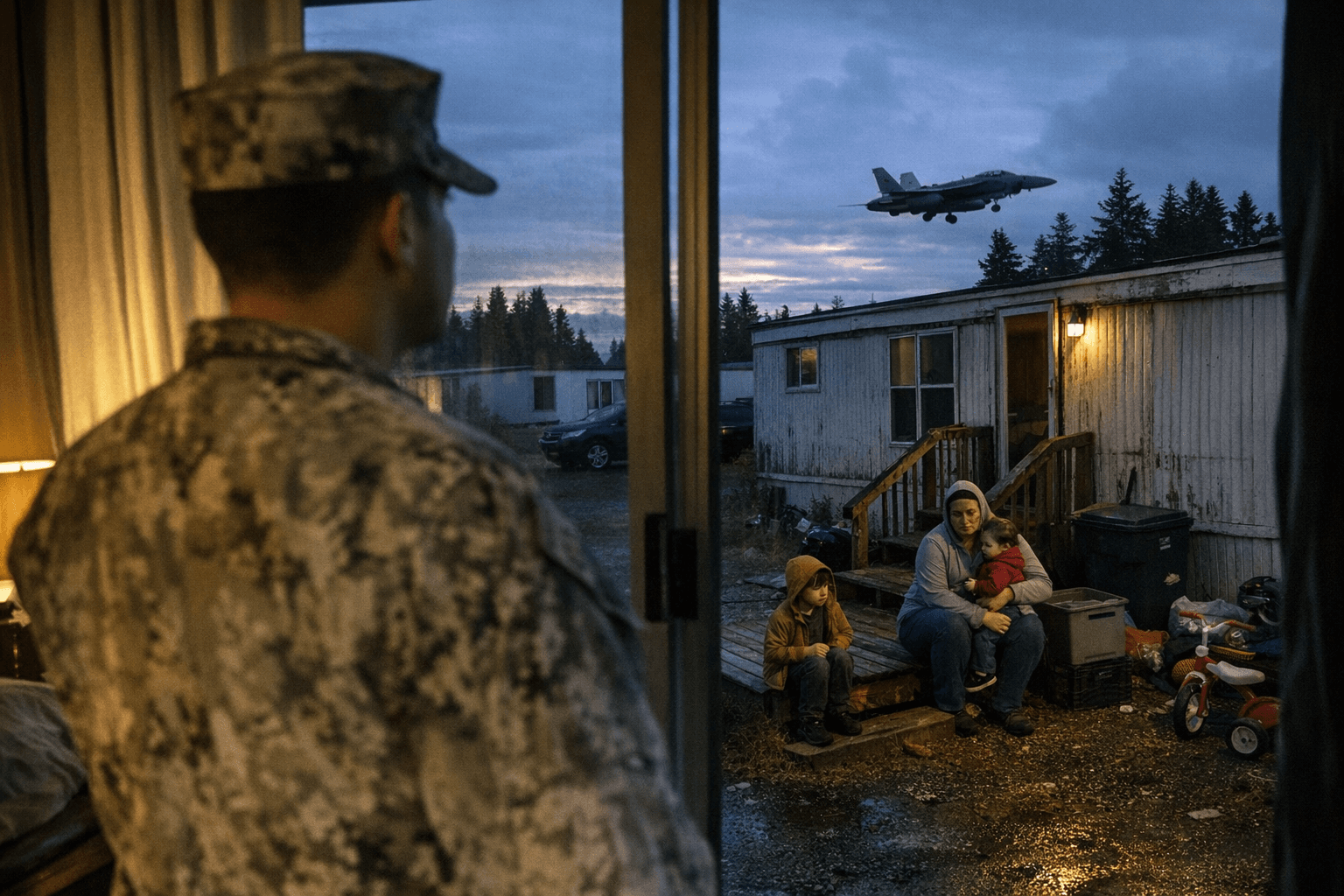
Overn connected the housing and medical-access pressures to a deeper shift in how sailors are arriving at Whidbey. The Navy historically expects to enlist young service members who then grow their families as they advance through the ranks. "That has not been the case as of late," Overn said, a trend that complicates planning for both housing demand and access to family medical care in an area without the provider density of a major metro.
The base has not offered specific metrics on medical wait times, clinic capacity, or the number of families directly affected by either gap, leaving the full scope of both problems unquantified for now.
This article was produced by Prism’s automated news system from verified source data, official records, and press releases, then run through automated quality and moderation checks before publishing. The system is built and supervised by the people who set the standards it runs under. Read our full AI policy.
Did this article answer your question?