New book spotlights Whidbey’s beloved pigeon guillemot and its advocates
Whidbey’s red-footed seabird is more than a beach sighting. A new book traces how pigeon guillemots, and the volunteers who watch them, reveal the health of the Salish Sea.

On Whidbey Island, a stout black-and-white seabird with bright red feet has become both a familiar shoreline presence and a measure of marine health. The pigeon guillemot, the only seabird that regularly nests on Whidbey, now has a new book devoted to its habits, habitat and the people who have tracked it for more than two decades.
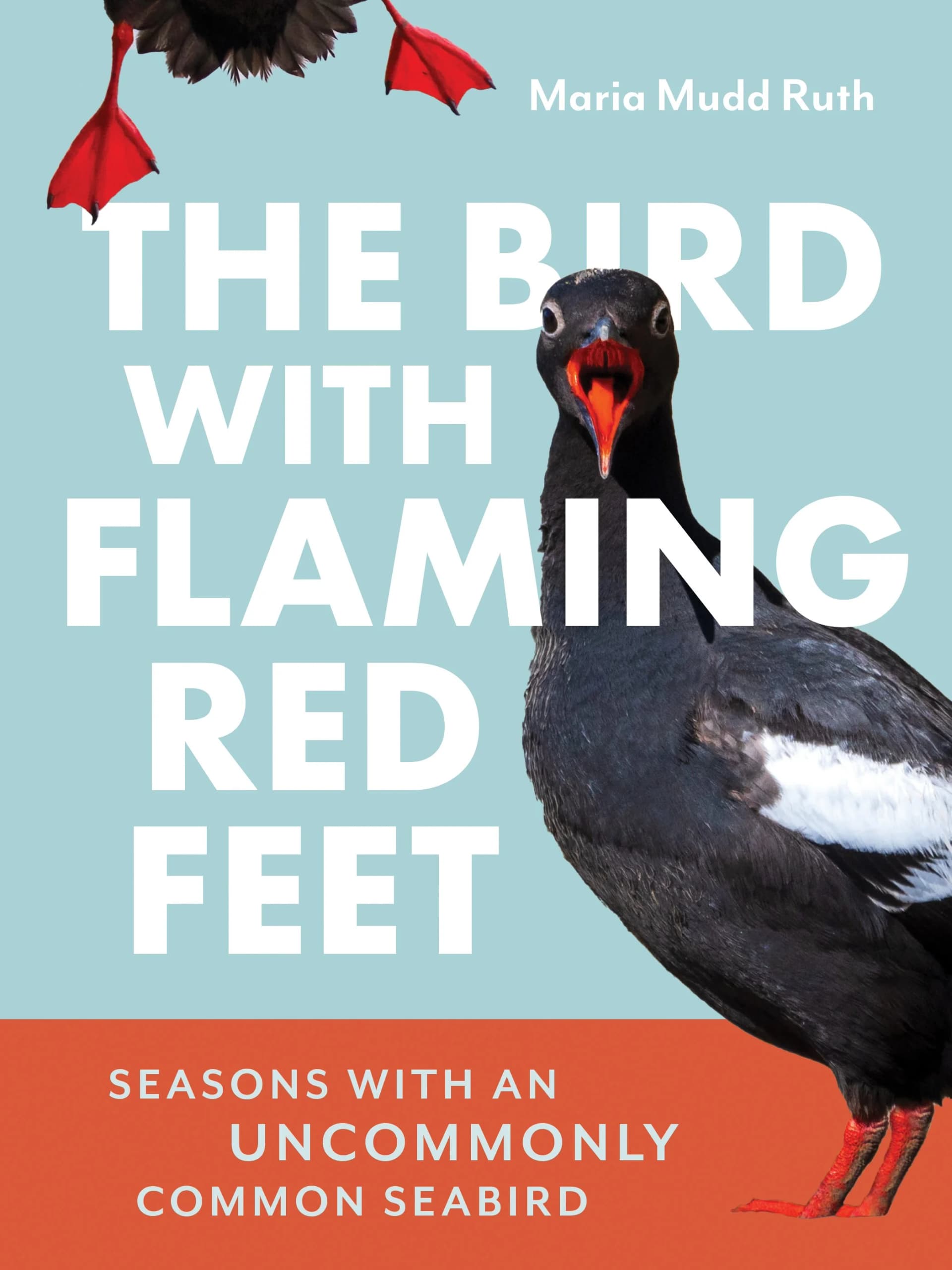
Maria Mudd Ruth’s The Bird with Flaming Red Feet: Seasons with an Uncommonly Common Seabird has been drawing attention across the Pacific Northwest, and the Salish Sea Guillemot Network has called it a “glorious tribute” to the bird and the community scientists who study it. Ruth is set to speak Thursday evening at Coupeville Recreation Hall in a free event sponsored by the Whidbey Audubon Society, with a talk titled The Joys of One-Bird Birding.
The guillemot’s appeal is partly visual. Birders see it on Whidbey beaches, bluffs and ferries, where its red mouth and feet stand out against the gray water and rock. But its significance goes well beyond charm. The Washington Department of Fish and Wildlife says pigeon guillemots depend on Washington’s marine environment for food and nest in the region, making the species a useful signal of conditions in the Salish Sea and Puget Sound.
That is why the bird has drawn a durable corps of volunteers. Whidbey Audubon says the Salish Sea Guillemot Network began as a community science project on Whidbey in 2004. Island County Marine Resource Committee says the effort started that same year in partnership with Whidbey Audubon Society, Washington Audubon and the Guillemot Research Group, after Frances Wood and Dr. Phyllis Kind established the original survey goals and protocols. Since then, about 30 volunteers have visited 23 active colonies each summer, while Whidbey Audubon says the project trains 30 to 70 volunteers.
The numbers have helped fill in a long gap in knowledge about a bird that is neither pigeon nor French. Island County Marine Resource Committee says the colonies range from 15 to 134 birds, and crews recorded more than 800 birds and about 150 active burrows in 2006. They also observed 35 juveniles during August and September boat surveys that year. Sound Water Stewards says the highest count in a single hour of surveying in 2021 was 96 birds.
The bird’s role as an indicator species is now built into regional monitoring. Puget Sound Vital Signs includes pigeon guillemot in its marine bird abundance indicator alongside marbled murrelet, rhinoceros auklet and scoters, and its 2024 bird report says pigeon guillemot densities were relatively stable from 2000 to 2024. On Whidbey, the bird even nested on the ramp counterbalance at the Coupeville Ferry Dock in the summer of 2021, a reminder that island ecology is often visible in ordinary places, if people know where to look.
This article was produced by Prism’s automated news system from verified source data, official records, and press releases, then run through automated quality and moderation checks before publishing. The system is built and supervised by the people who set the standards it runs under. Read our full AI policy.
Did this article answer your question?