New orca calf K-32 sighted off Whidbey Island's west side
A new orca calf, designated K-32, was sighted off Whidbey Island on Jan. 13, confirming recent movements of Southern Resident pods and aiding local monitoring efforts.

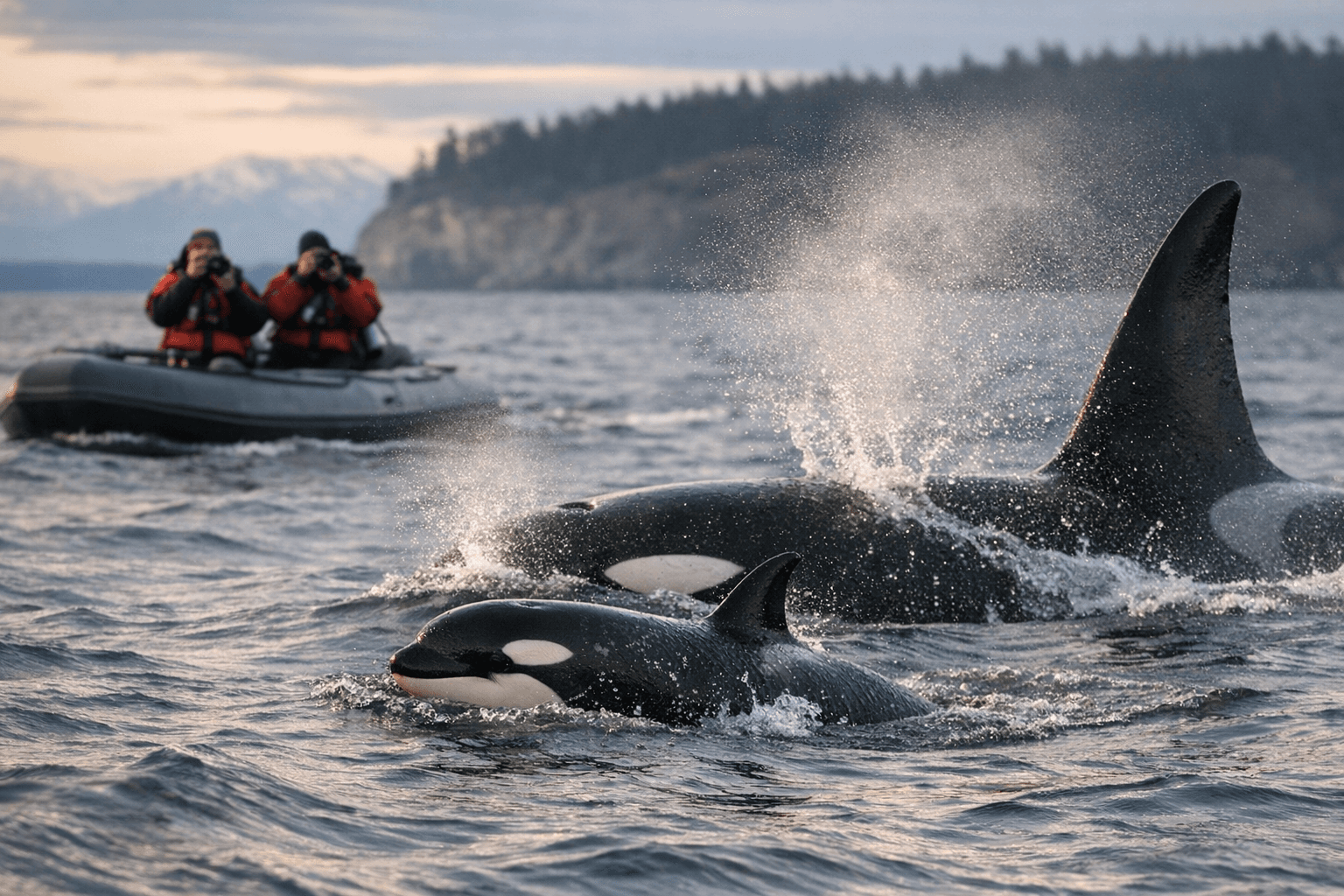
Residents and researchers photographed a new Southern Resident killer whale calf, designated K-32, traveling with K-pod off the west side of Whidbey Island on Jan. 13. The calf was observed alongside its mother, K-16 (Opus), and other family members, providing fresh documentation of pod composition in Island County waters.
Images from local observers and the Center for Whale Research confirmed the sighting and offered detail that helped narrow the calf’s likely birth window. Scientists had first documented the animal with J-pod in Puget Sound, and the Jan. 13 sighting marks additional movement between family groups and local waterways. The photographs serve as a key record for researchers tracking births, maternal associations, and pod movements among the Southern Residents.
The sighting matters to Island County because Southern Resident whales' presence affects local wildlife monitoring, recreational boating, and whale watching activity. Photographic confirmation by local residents underscores the role that community observers play in supplementing scientific surveys. For researchers, the new calf adds to a dataset used to chart family ties and seasonal presence in Puget Sound and the Salish Sea, informing conservation priorities and monitoring efforts.
K-16 Opus’s association with K-32 also helps clarify maternal lines within K-pod. Continued photographic and visual records are central to identifying individuals, estimating ages, and tracking survival over time. Center for Whale Research documentation combined with community images accelerates researchers’ ability to place new animals into historical catalogues and to estimate when calves were likely born.
Local agencies and researchers say monitoring will continue as the Southern Residents move through Island County waters. Observations like the Jan. 13 sighting feed into ongoing efforts to document pod distribution during winter months and to maintain an up-to-date picture of population structure.
For Islanders, the sighting is a reminder that local waterways remain critical habitat and observation areas for Southern Resident killer whales. Expect researchers to publish follow-up updates as photos are analyzed and as K-pod and related groups continue to be monitored in and around Whidbey Island.
This article was produced by Prism’s automated news system from verified source data, official records, and press releases, then run through automated quality and moderation checks before publishing. The system is built and supervised by the people who set the standards it runs under. Read our full AI policy.
Did this article answer your question?