Oak Harbor Sculptor Transforms Scrap Metal Into Art for All to See
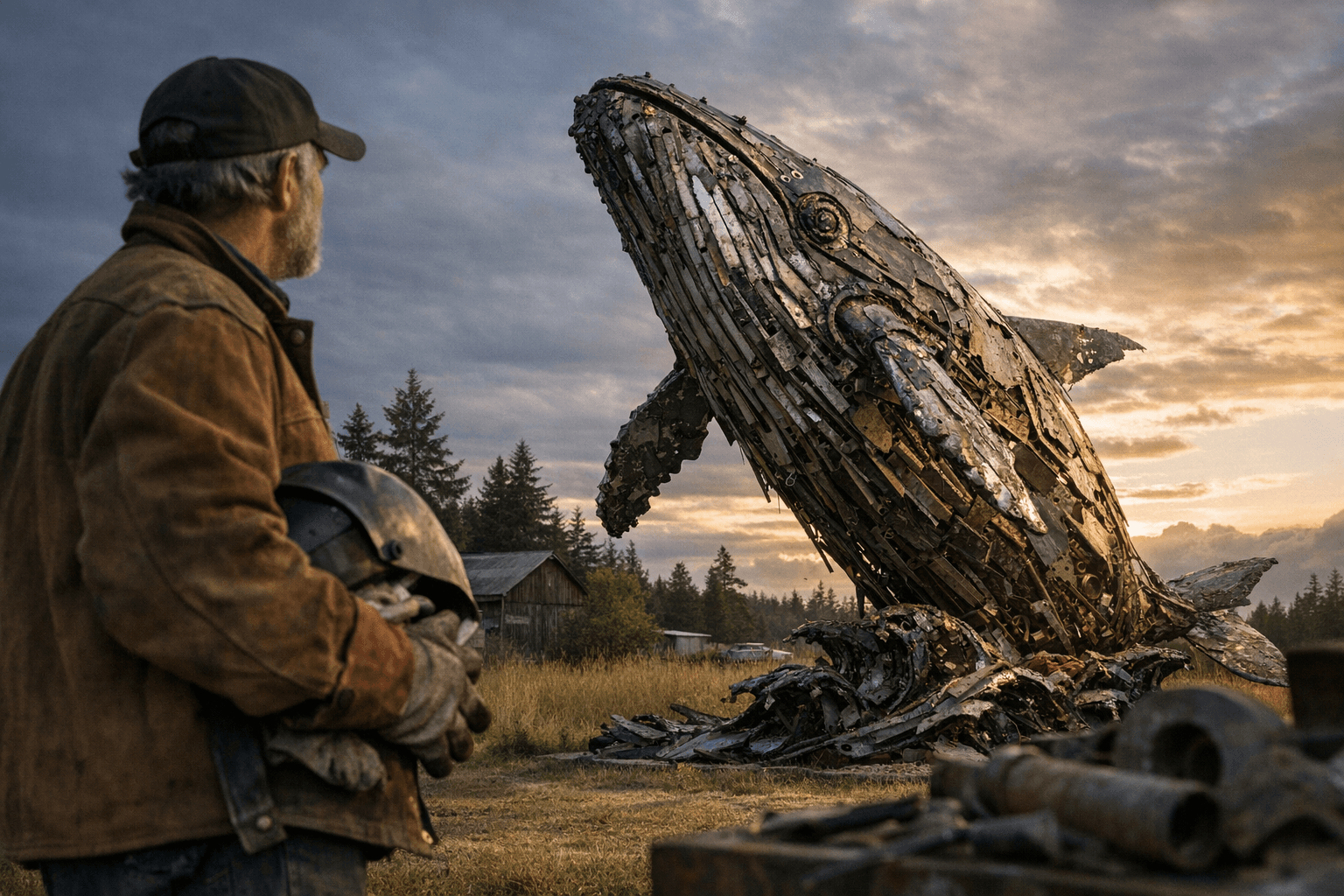
A whale sculpted from scrap metal took six months to build. Now it sits in a front yard on West Frostad Road, Oak Harbor, waiting for the right buyer.

Five sculptures made from rusted metal, driftwood, and salvaged plastic line the front yard at 185 West Frostad Road in Oak Harbor. They are not the output of a gallery-backed studio program or an arts commission. They are the work of Jammie Hulse, owner of Broken Rusty Halos LLC, who has spent 24 years turning things other people discard into art worth stopping for.
From Trash to Form
Hulse works with whatever she can find and repurpose: rusted scrap metal is the primary medium, but driftwood, plastic, and other cast-off materials all enter the mix depending on what a piece calls for. The results range from intricate face masks to a whale that took roughly six months to complete, a scale that speaks to both the ambition of the work and the patience required to build large sculpture around a full-time job. Smaller pieces come together during weekends or shorter creative bursts, a rhythm that reflects the practical reality of sustaining an arts practice without gallery stipends or institutional backing.
The business name, Broken Rusty Halos LLC, signals something about Hulse's aesthetic: there is beauty in imperfection, value in what has been worn down, and a kind of redemption in material most people would not touch. What looks like corrosion becomes contour. What reads as wreckage becomes a whale.
The Instinct Behind the Work
Hulse describes her inspiration as instinctual. She starts with a feeling and builds a piece organically from there, rather than arriving at the studio with a finished concept mapped out. That approach has sharpened over 24 years of making art, with the most recent years focused primarily on metalwork. The practice has evolved from general assemblage into something more technically demanding, with metal now at the center of nearly everything she makes.
That long experience shows in the range of what she produces. A face mask requires a different kind of precision than a large-scale whale, yet both emerge from the same process: source the material, feel what it wants to become, and build toward that. Hulse channels both accumulated skill and practical resourcefulness into pieces that blend utility and whimsy in equal measure.
The Yard as Gallery
The front yard at 185 West Frostad Road is not a formal exhibition space, and that is exactly the point. Hulse has placed five sculptures in an outdoor showcase where anyone driving or walking past can stop, look, and buy. There are no gallery hours, no admission fee, no gatekeeping. The display is intended to remain up until the pieces are sold or relocated, and Hulse plans to add larger works to the yard as her practice grows.
This model sidesteps the traditional gallery circuit entirely and creates a direct line between maker and audience. Neighbors encounter the work without seeking it out. Tourists and collectors traveling Whidbey Island stumble across it. The spontaneous encounter is the point: art that lives in a neighborhood rather than behind a white wall reaches a different and often wider audience than formal exhibition spaces allow.
Balancing the Day Job and the Studio
Hulse holds a full-time job alongside her weekend studio practice, a pattern common among small-scale makers who are building an arts practice over time without the cushion of grants or institutional income. Sourcing materials that are free or inexpensive, including scrap metal, driftwood, and salvaged plastic, keeps production costs low and makes the work financially viable even when individual pieces take months to complete.
That resourcefulness is not incidental to the work; it is built into the aesthetic. The sculptures are made from materials that were already discarded, which means every finished piece represents an act of reclamation. The rust is not sanded away. The wear is not hidden. The history of the material becomes part of what the sculpture is.
What It Means for Oak Harbor
A sculptor who displays her work in a front yard on West Frostad Road is doing something quietly significant for Oak Harbor's cultural identity. Visual markers like Hulse's yard showcase make a neighborhood feel distinct and invite the kind of slow, attentive looking that a strip mall or a parking lot never will. Small, sustained practices like hers accumulate into something larger over time: a town where art appears unexpectedly, where makers are visible in the landscape, and where the boundary between public space and creative space is productively blurred.
The reclamation logic at the heart of Hulse's work also asks a quiet question about value: what gets saved, what gets thrown away, and who decides. Posed from a residential front yard in Oak Harbor rather than a museum wall, that question feels immediate and, for this island community, entirely local.
This article was produced by Prism’s automated news system from verified source data, official records, and press releases, then run through automated quality and moderation checks before publishing. The system is built and supervised by the people who set the standards it runs under. Read our full AI policy.
Did this article answer your question?