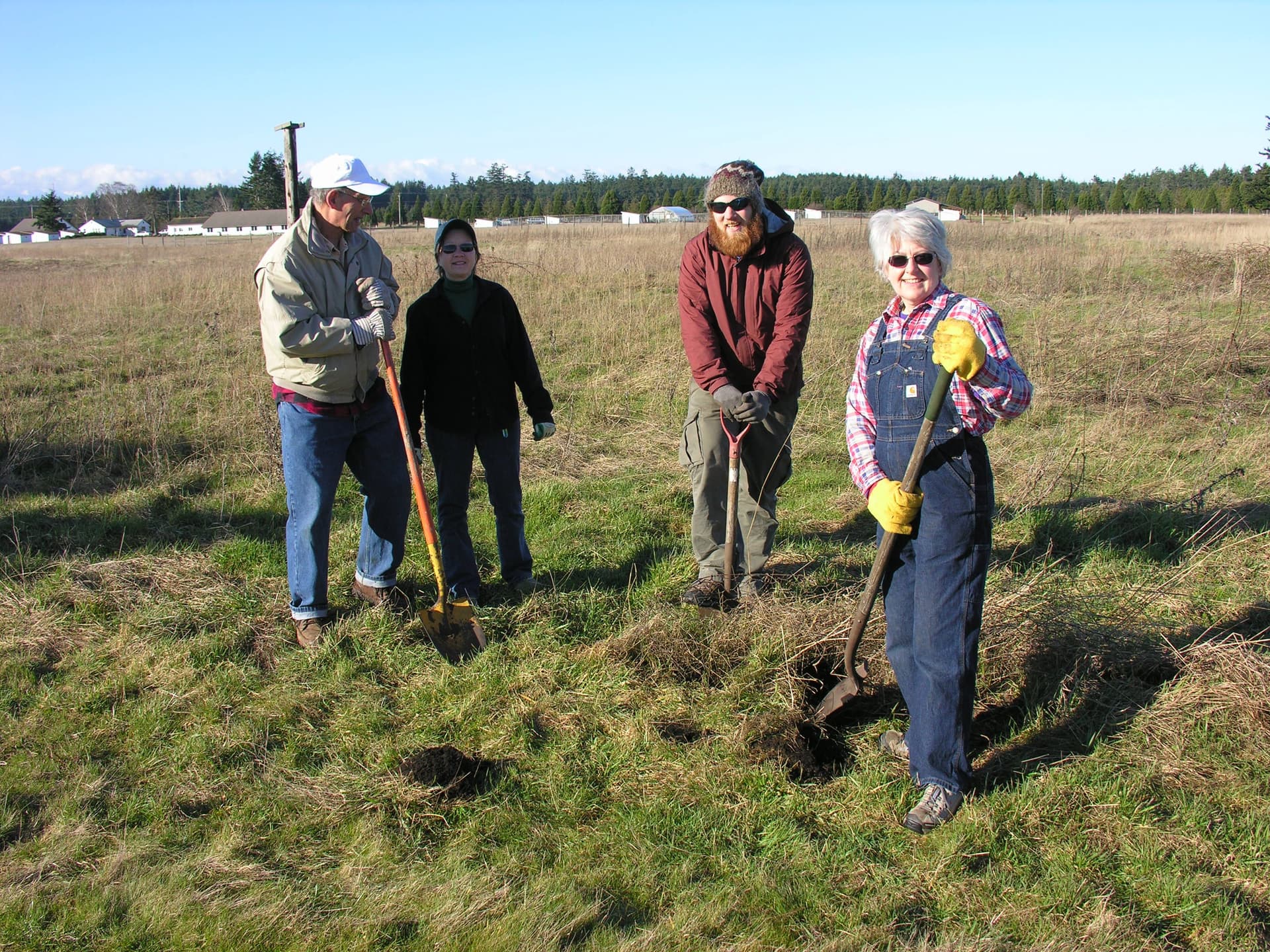
Pacific Rim Institute prairie blooms as grant cuts threaten restoration
Golden paintbrush is blooming east of Coupeville, but Pacific Rim Institute says grant cuts could stall a prairie restoration now spanning nearly 40 acres.

Golden paintbrush is spreading its bright yellow across the Pacific Rim Institute prairie on Central Whidbey, but the bloom also marks a deadline. The nonprofit says the grants that helped restore the site are being eliminated or reduced, putting one of the Pacific Northwest’s rarest prairie ecosystems on uncertain footing even as the work has turned a 4-acre remnant into nearly 40 acres under active restoration.
The stakes go beyond one preserved field near Coupeville. Pacific Rim Institute says prairie and oak systems in good ecological condition make up less than 3% of their original area, and the institute is now on track to protect 146 acres through a conservation agreement with the Whidbey Camano Land Trust. That protection would help keep the land from development and give the prairie a better chance to hold together as a living habitat instead of a patchwork of fragments.

Much of the restoration has centered on golden paintbrush, a native plant that blooms in late spring and once teetered on the edge of disappearance. The U.S. Fish and Wildlife Service says the species was listed as threatened in 1997 with fewer than 20,000 plants at 10 sites. By 2023, after years of work by conservation partners, it had rebounded to more than 325,000 plants at 48 locations across Washington, Oregon and southern British Columbia. Pacific Rim Institute says it now grows more than 90,000 golden paintbrush plants on-site and has used the species in ongoing restoration.
That plant work is also tied to a more ambitious goal: bringing back Taylor’s checkerspot butterfly to Whidbey Island. Federal wildlife officials say the butterfly is endemic to the Pacific Northwest and now survives only at a small handful of sites, while the Washington Department of Fish and Wildlife says it is limited to eight populations in Washington, one in British Columbia and two in Oregon. Board chairman Jim Peskuric said the butterfly could thrive at the institute because it depends on golden paintbrush and also needs native plantains, which the institute is cultivating.
The recovery effort has relied on invasive-species control, native plant restoration and prescribed fire, the same tools that have kept prairie and oak habitat viable for centuries. Pacific Rim Institute says its campus now holds more than 80 species of rare native plants, and its public Prairie Days events in May 2025 and spring 2026 offered island residents a rare look at the habitat before permanent protection is finalized. The immediate question is whether outside funding keeps pace with the biology: without it, the bright bloom could outlast the restoration that made it possible.
This article was produced by Prism’s automated news system from verified source data, official records, and press releases, then run through automated quality and moderation checks before publishing. The system is built and supervised by the people who set the standards it runs under. Read our full AI policy.
Did this article answer your question?