Rear-end crash on Highway 525 injures passenger, disrupts traffic
A two-vehicle collision on Highway 525 north of Maxwelton Road on Jan. 6 injured one person and briefly shut down the northbound lane, highlighting vulnerabilities in rural traffic safety and emergency response. The incident illustrates how even short closures can affect Island County residents who rely on limited roadways and local medical services.

A two-vehicle collision on Highway 525 north of Maxwelton Road on Jan. 6 left one passenger injured and forced first responders to divert traffic for about 45 minutes. Fire District 3 reported that a small pickup struck a station wagon from behind in the northbound lane. The station wagon’s passenger, a woman, was transported by ambulance to Whidbey General Hospital; other occupants were not reported to be injured.
Emergency crews arrived on scene to assist the injured party and clear debris, temporarily diverting northbound traffic while the roadway was made safe. The brief disruption underscores how a single incident can ripple through Island County’s transportation network, where alternate routes are limited and ferry connections and narrow mainland links concentrate traffic along key corridors.
Beyond immediate disruption, rear-end collisions raise public health concerns. Injuries that appear minor at the scene can worsen if diagnostic imaging and follow-up care are delayed. For residents of Whidbey and Camano islands, access to emergency medical services and hospital care depends on dependable ambulance transport and the capacity of local facilities such as Whidbey General Hospital. In rural communities, a small surge in demand or a simultaneous emergency can place strain on limited resources.
The crash also brings attention to systemic factors that affect road safety and equity. Island County’s geography concentrates commuting, commercial traffic, school transportation, and emergency response on a small number of state routes. Closures or delays can disproportionately impact people who lack flexible work arrangements, caregivers transporting children or elders, and residents without alternative transportation. These realities highlight the importance of preventive measures such as targeted traffic-safety education, roadway design improvements, and continued investment in local emergency medical services.
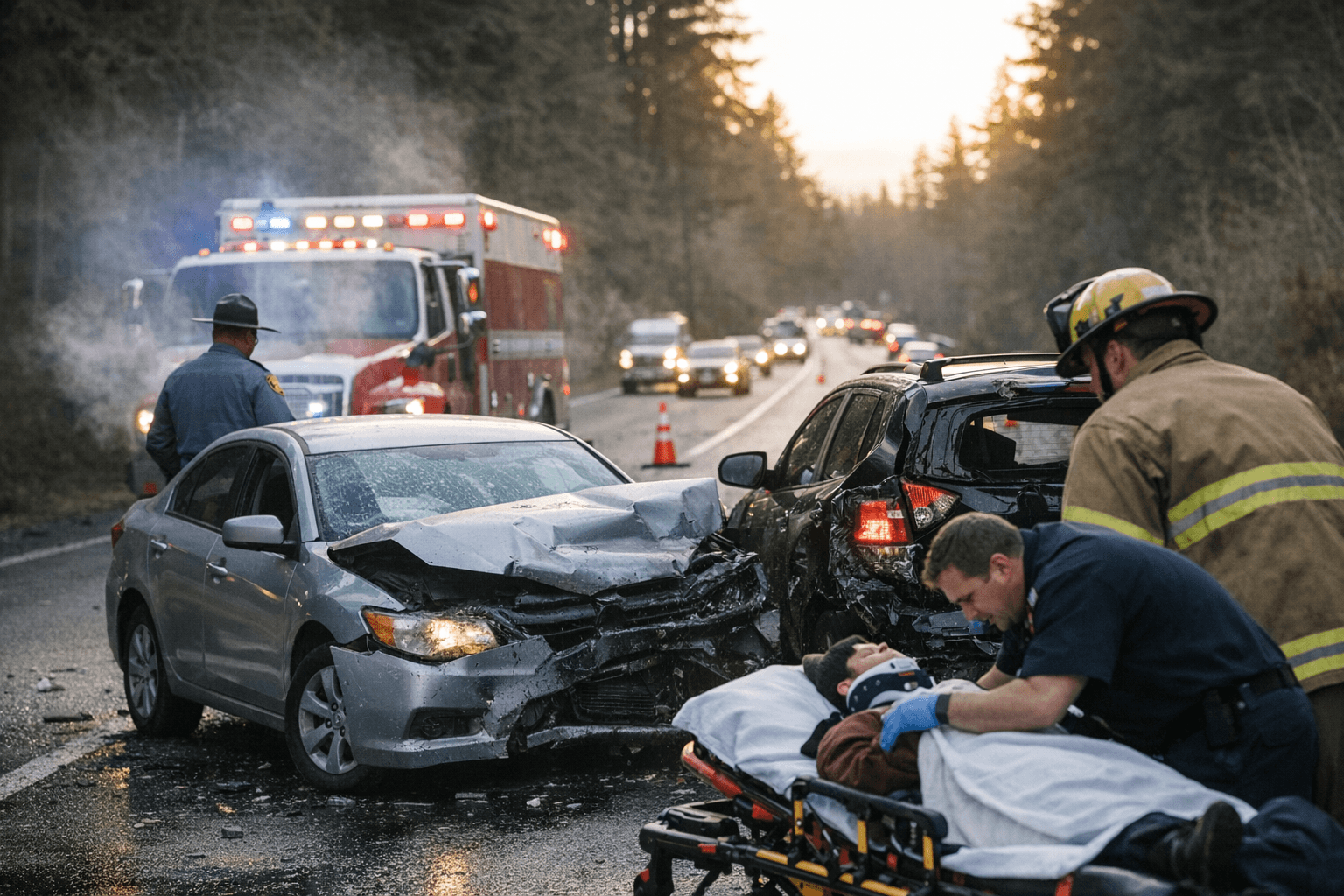
Officials did not report contributing causes beyond the pickup striking the station wagon from behind. Local traffic-safety programs and public-health planners often emphasize that rear-end collisions can be reduced through measures including maintaining safe following distances, managing speeds for conditions, and improving visibility at problem locations. Infrastructure changes such as wider shoulders, clearer signage, and turn lanes can also reduce conflict points on busy stretches.
While the injured woman received prompt care, the Jan. 6 crash serves as a reminder that road incidents on Island County’s main arteries affect community health, equity, and daily life. Residents and policymakers face ongoing choices about how to strengthen prevention, ensure rapid emergency response, and protect access to care for all islanders.
This article was produced by Prism’s automated news system from verified source data, official records, and press releases, then run through automated quality and moderation checks before publishing. The system is built and supervised by the people who set the standards it runs under. Read our full AI policy.
Did this article answer your question?