Seattle Firm Designs Multi-Generational Retreat on Whidbey Island Farm
A Whidbey Island family farm gained a huckleberry basalt and cedar retreat designed to sleep 20 across three pavilions built around a native-planted courtyard.
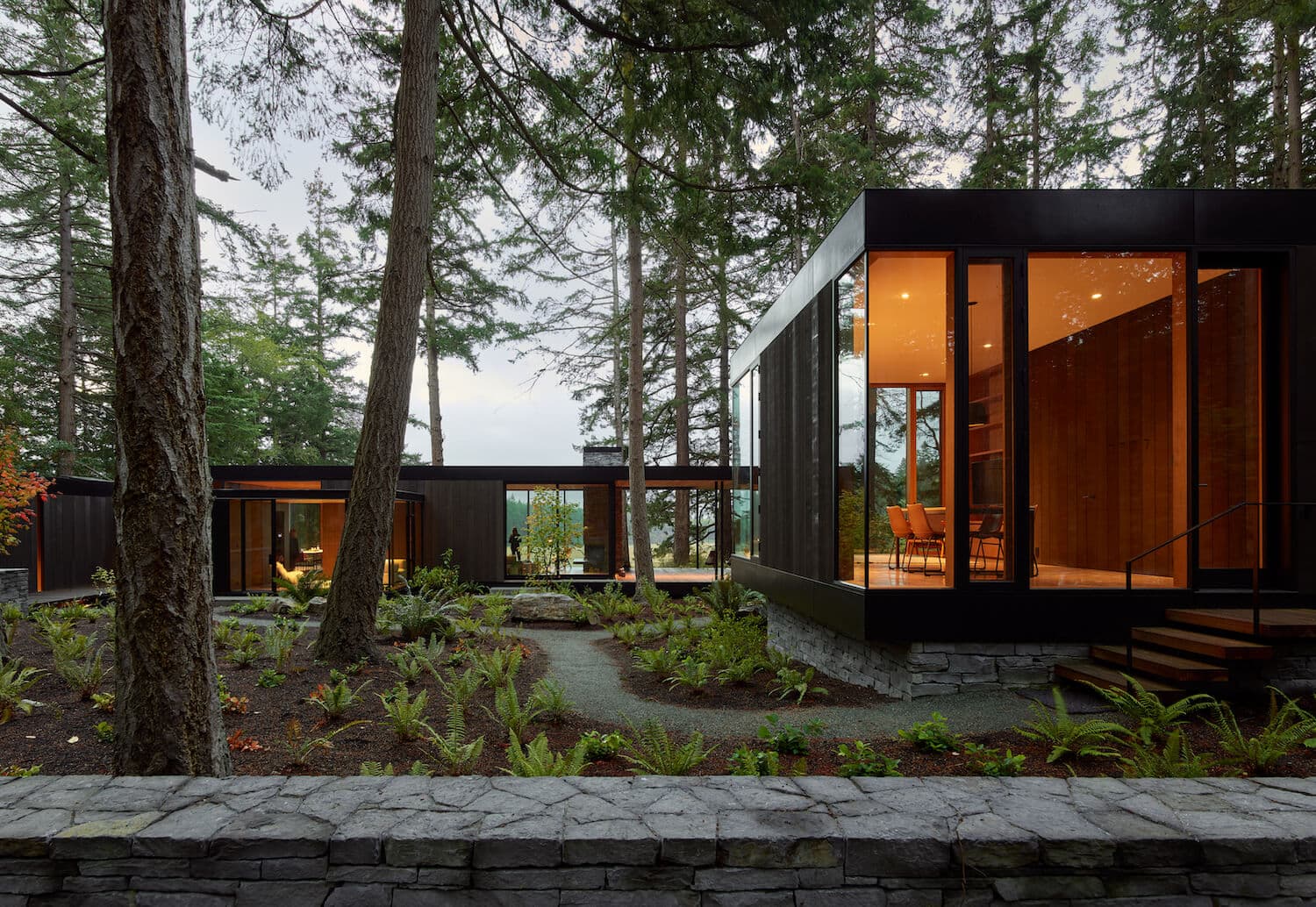
A multi-generational family with deep roots on Whidbey Island turned to Seattle-based architects mwworks to build a retreat on their working farm, producing a compound of three rectilinear volumes clad in locally sourced huckleberry basalt stone and western red cedar, designed to accommodate up to 20 people at once.
The farm, which has been in the family for several generations, sits on a sloping site overlooking chicken sheds, a weathered red barn, cattle fields, and a fishing pond. Rather than imposing on that pastoral landscape, the architects tucked the new structure against the edge of a densely forested hillside. From the valley below, the house appears intentionally modest and humble, deferential to the farmlands it overlooks.
The project grew out of a direct conversation between the architects and the entire family. The owners, their three adult children, and their teenagers sat down with mwworks to talk through summer barbecues, fishing retreats, and family gatherings. Those conversations shaped a clear brief: the retreat needed to be flexible, durable, and hard-working to meet the demands of a growing, active family.
The resulting design organizes three rectilinear volumes around a central courtyard crossed by pathways, filled with native greenery, and bordered by a low wall of local basalt. Wallpaper described the volumes as "floating pavilions" in its coverage of the project.
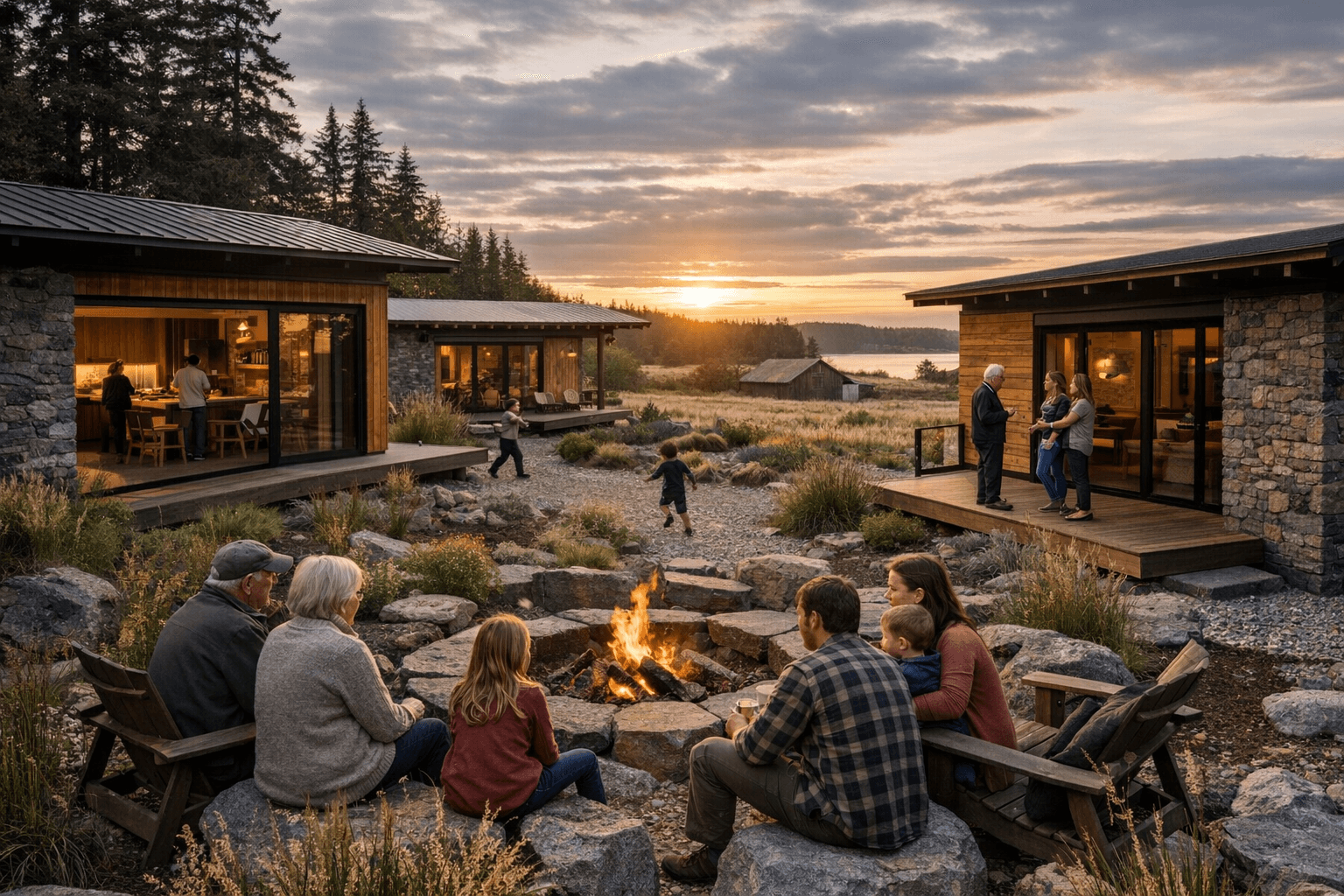
Materials were drawn from the land itself wherever possible. Both the huckleberry basalt and the western red cedar were sourced locally, and any trees felled during construction were returned to the farm as lumber, cattle fencing, or firewood. Renewable natural materials were used throughout, with finishes chosen to softly age alongside the land over time rather than require constant upkeep.
The intention behind the project extended beyond architecture. As Dezeen reported, "the senior owners set the project up so that regardless of what happens to them, the kids and their kids would always have the house to bring them together and continue building memories." The design was also meant to reflect what Dezeen described as "the layered history both of the site and of the family itself."
mwworks, which operates out of Seattle and has also been published under the name MW Works, was founded in 2007 by Steve Mongillo and Eric Walter. Photography of the completed project is credited to Kevin Scott.
This article was produced by Prism’s automated news system from verified source data, official records, and press releases, then run through automated quality and moderation checks before publishing. The system is built and supervised by the people who set the standards it runs under. Read our full AI policy.
Did this article answer your question?