Shotgun Wads Top the List of Debris Found on Whidbey Beaches
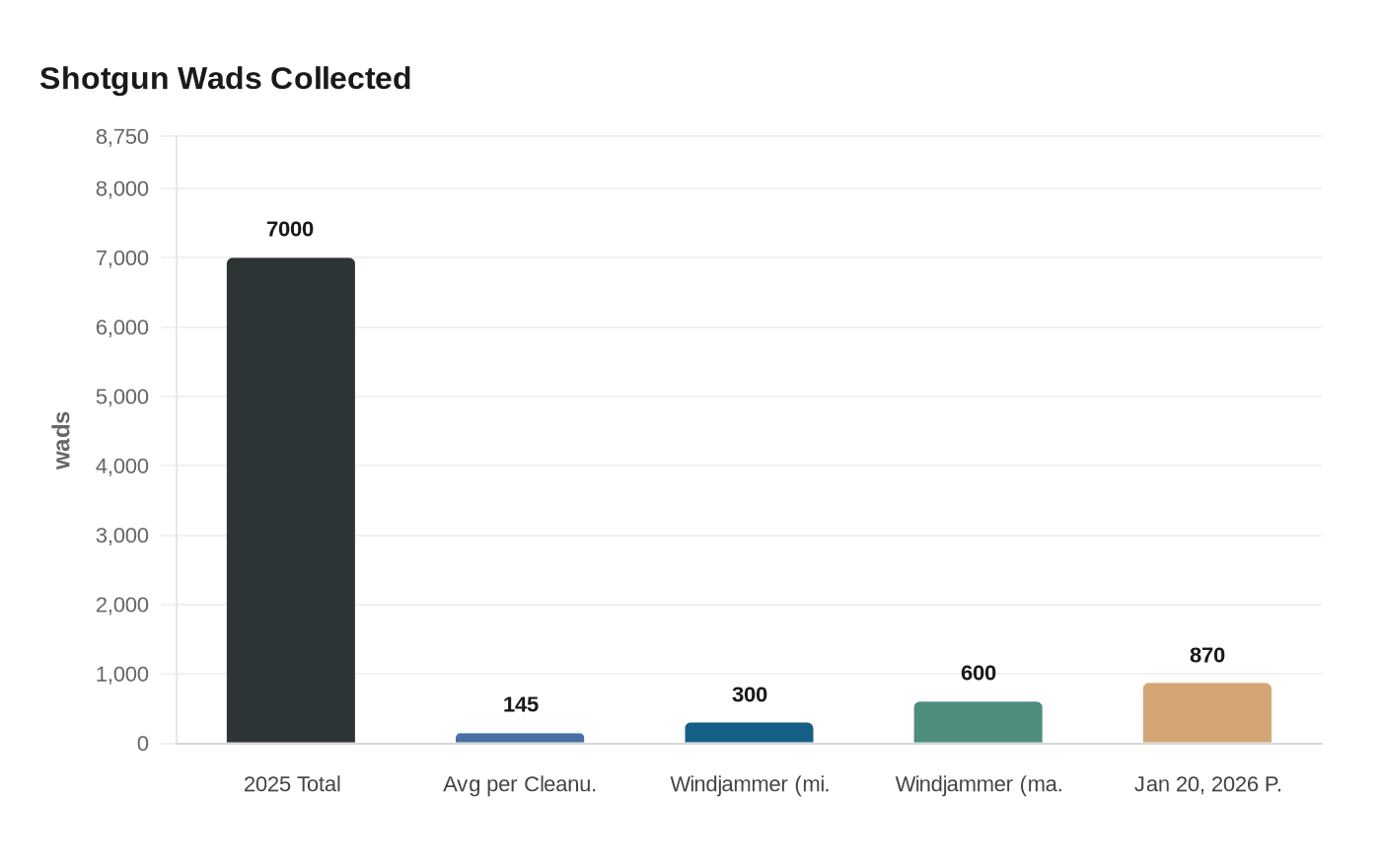
Beach cleanup volunteers picked up more than 7,000 shotgun wads on Whidbey Island's public beaches in 2025, one for every 3.77 feet of shoreline they patrol.

Volunteers patrolling Whidbey Island's shorelines began noticing "flower-like" blooms of plastic on every beach. The culprit turned out to be the shotgun wad, a component that accompanies the shot out of the barrel every time a hunter pulls the trigger over water. When shooting, the wads are fired out of the barrel, often into the water where they cannot be retrieved. Now the numbers tell a stark story: the Community Litter Cleanup Program picked up more than 7,000 wads in 2025, averaging one for every 3.77 feet of shoreline, or 145 wads per two-hour cleanup event. Each wad carries roughly the same amount of plastic as a shopping bag.
In 2025, the CLCP cleaned the half-mile-long Windjammer Park beach in Oak Harbor five times, collecting between 300 and 600 wads each visit. On Jan. 20, 2026, 15 volunteers returned to that same beach and picked up 870 wads in just two hours.
Plastic wads are now the number one piece of identifiable trash the program collects. Oak Harbor shores bear a disproportionate share of the accumulation. Volunteer Darwin Christopherson has attributed this to Oak Harbor's position in the Salish Sea and the currents that carry debris from major river systems, including the Skagit, Stillaguamish, and Snohomish deltas. Even though waterfowl hunting season runs between fall and winter, these objects keep washing up on North Whidbey shores on a daily basis.
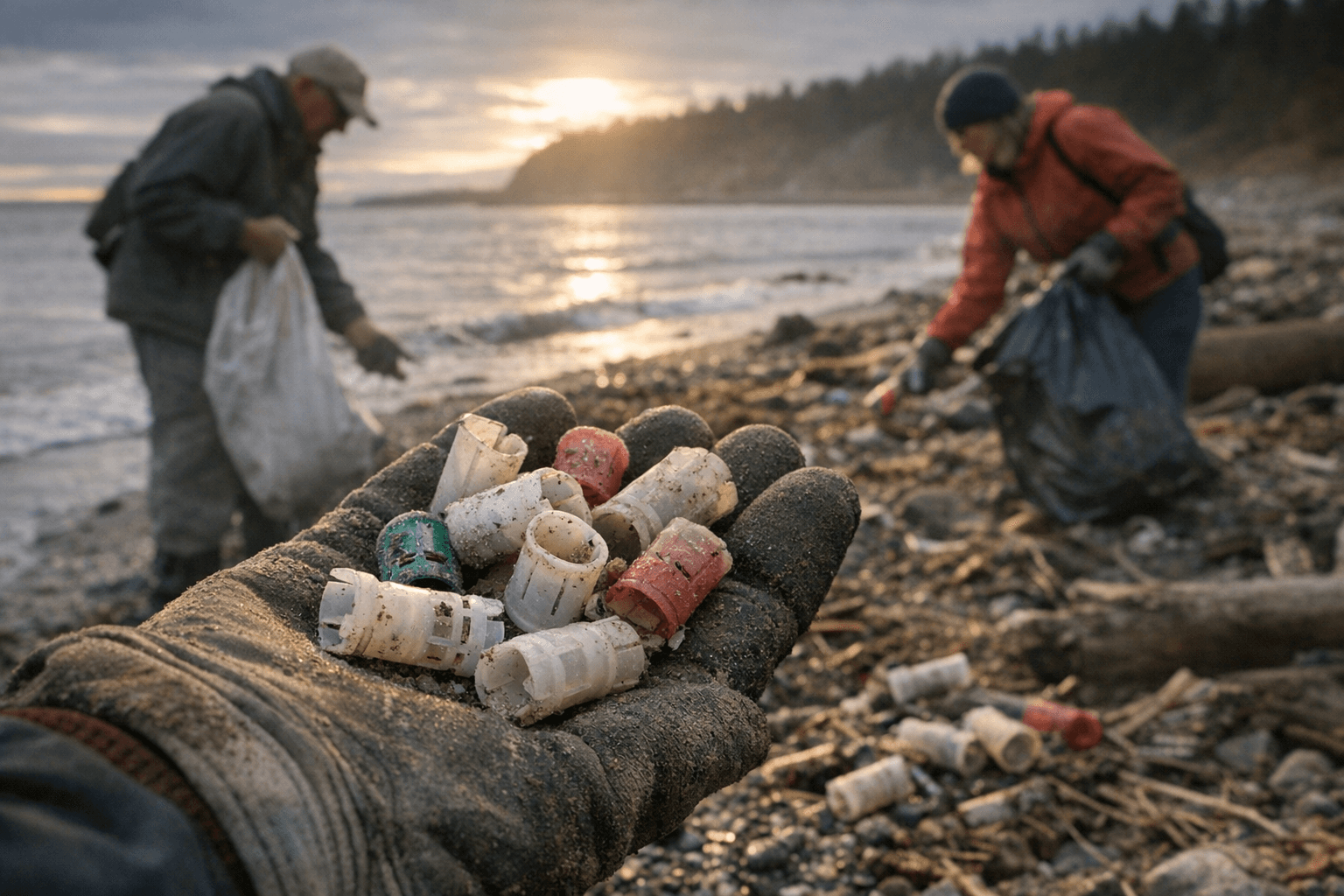
Volunteers gather weekly for two hours at Whidbey Island's public beaches, collecting what Christopherson calls "the dandruff of our society," including hygiene products, toxic chemical bottles, hypodermic needles, tires, food containers, cigar tips, clothing, and rope. The program is sponsored by the Department of Ecology and Island County, and managed by the Washington State University Extension office in Coupeville. About 150 volunteers are on the weekly email list. The cleanup fleet even has a mascot of sorts: events center around an old blue WSU truck driven by volunteers, with peeling paint and 115,000 miles on the odometer.
The volunteers' push for a remedy has drawn political support. Island County Commissioners Melanie Bacon and Janet St. Clair, along with Rep. Clyde Shavers, met with the group to offer perspective and support, as did State Wildlife Biologist Kurt Licence and State Flyway Manager Kyle Spragens. Wildlife biologists from around the state visited Oak Harbor to witness the wad accumulations firsthand. From those collaborations, a rebate plan was formalized to encourage local hunters to try biodegradable ammunition, with retailers Ace Hardware and Skagit Arms stepping forward to stock bio ammo in anticipation of rebates.
WSU Extension organized the grant application and committed to managing funds from the state Aquatic Lands Enhancement Account to support the effort. The volunteers' position, shaped through conversations with hunters, is pointed: every hunter they spoke with wanted a solution, and none wanted to keep blasting plastic onto beaches. The conclusion the group reached is that it is the ammunition industry and its sponsored representatives that remain captive to the profit of the status quo.
In much of Europe, biodegradable ammunition is required by law, and most biodegradable hunting ammo is manufactured there as a result. In the United States, no such requirement exists, so manufacturers have little incentive to supply the domestic market with a bio product. Commissioner Bacon has noted that unlike many environmental problems, this one has a clear path forward: "This is one that has a pretty basic solution.
This article was produced by Prism’s automated news system from verified source data, official records, and press releases, then run through automated quality and moderation checks before publishing. The system is built and supervised by the people who set the standards it runs under. Read our full AI policy.
Did this article answer your question?