South Whidbey Island Still Has 35 Working Pay Phones Offering Free Local Calls
Whidbey Telecom maintains 35 working pay phones across South Whidbey, all offering free local calls with no coins required.
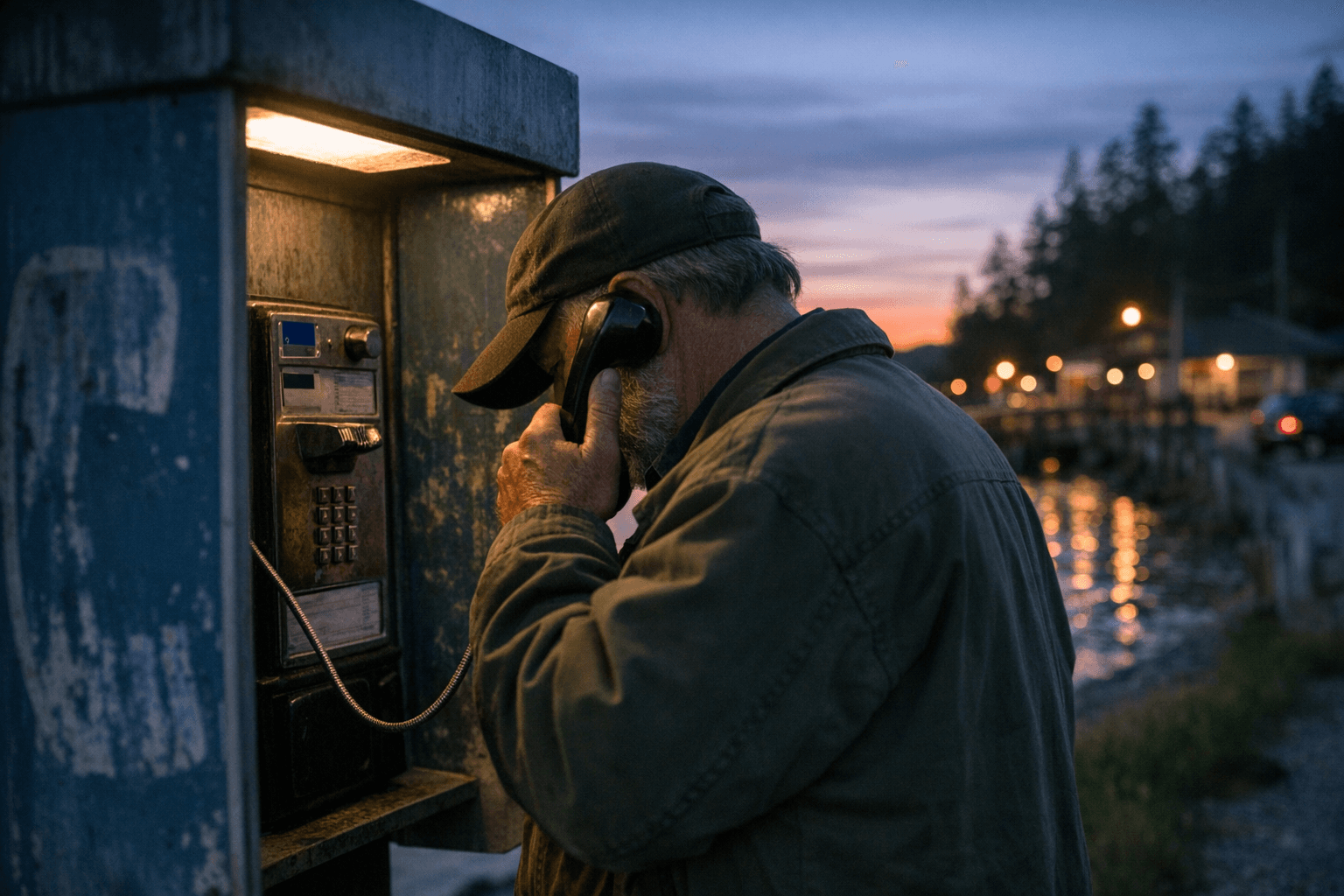
While pay phones have vanished from nearly every corner of the country, South Whidbey Island still has 35 of them, all maintained by Whidbey Telecom, all working, and all free for local calls.
The phones are scattered across the southern half of the island, from the Clinton ferry dock to the Whidbey Island fairgrounds, Langley Marina, grocery stores, parks, convenience stores, and restaurants. The 35th booth sits on Hat Island at the boat dock. Whidbey Telecom made a deliberate choice to keep the network intact even as the industry abandoned pay phones elsewhere. "While phone booths are disappearing elsewhere, Whidbey Telecom has decided to keep this part of island history alive and useful, as a courtesy to its customers," the company said.
The switch to free local service came with a trade-off. Chris Michalopolous, Whidbey Telecom's director of customer experience, said the company installed new phones that won't accept coins, absorbing the cost of that upgrade itself. The service covers a broad range of calls: any destination on South Whidbey is free, 911 calls are free, and 1-800 calls are free. For traditional long-distance calls, callers can use a calling card.
A handful of full enclosure booths, the kind that once gave Superman his changing room, also survive on the island. The one near the Dog House Tavern in Langley was customized by metal artist Tim Leonard. The booth at Classic Road has accumulated a different kind of status over the decades: it has been the subject of what the South Whidbey Record describes as "innumerable photographs and paintings through the years," and for generations of South Enders it served as the unofficial boundary marker between the southern and northern halves of the island, because that's where Whidbey Telecom's service area historically ended. The boundary is no longer accurate, but the booth's symbolic weight persists.
"Classic Road is the dividing line between North and South Whidbey," one observer explained to the Seattle Times. "That phone booth kind of typifies the end of the frontier. It actually marks the end of Whidbey Telecom's service area, but it also reminds me of the kinds of telephone booths that you see in rural Britain. You might be traveling on a one-lane road out in the middle of nowhere with nobody around, and all of a sudden, here's a red phone booth."
The analogy to Britain is apt. British Telecom attempted to remove its iconic red booths, but public resistance forced a preservation process to determine which ones could stay. South Whidbey skipped that fight entirely because Whidbey Telecom never walked away.
For some, the appeal of a working booth goes beyond convenience. "That gives me a sense of connection, community and security to know that here I am, cut off from everywhere else in the world, and here's a working telephone," said a woman identified as Felice. "A mobile phone doesn't really give you that same kind of tactile, secure sensation. It's kind of like people now going back to playing records instead of streaming [music]. People have a sense of desiring something that they can touch, see and feel, and that's what you get from a phone booth."
Whidbey Telecom's history on the island stretches back to 1913, when the original telephone building was constructed. The company, led now by Marion Henny as chairwoman of the board following her husband David Henny's death in 2001, has plans to move that 1913 structure to downtown Langley and convert it into a museum of telecommunications history. George Henny, a family member connected to the company's leadership lineage, has been photographed at the booths as part of the company's public documentation of the network.
South Whidbey residents who've run their phones dead know the 35 booths as a practical fallback, not a novelty. That familiarity is itself a measure of how thoroughly Whidbey Telecom has woven the network into daily island life.
This article was produced by Prism’s automated news system from verified source data, official records, and press releases, then run through automated quality and moderation checks before publishing. The system is built and supervised by the people who set the standards it runs under. Read our full AI policy.
Did this article answer your question?