Volunteers mobilize to pull scotch broom, teach island-wide eradication
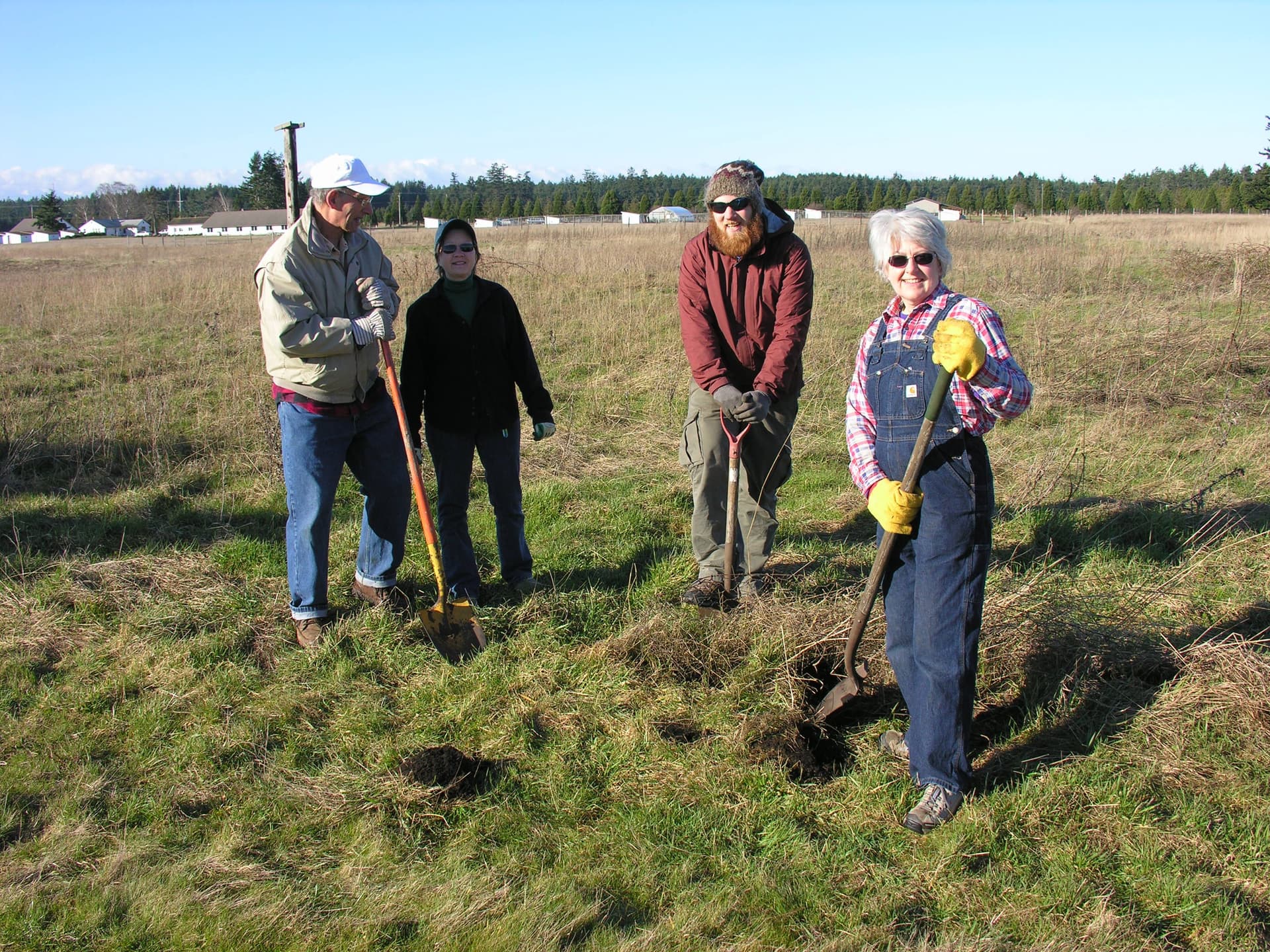
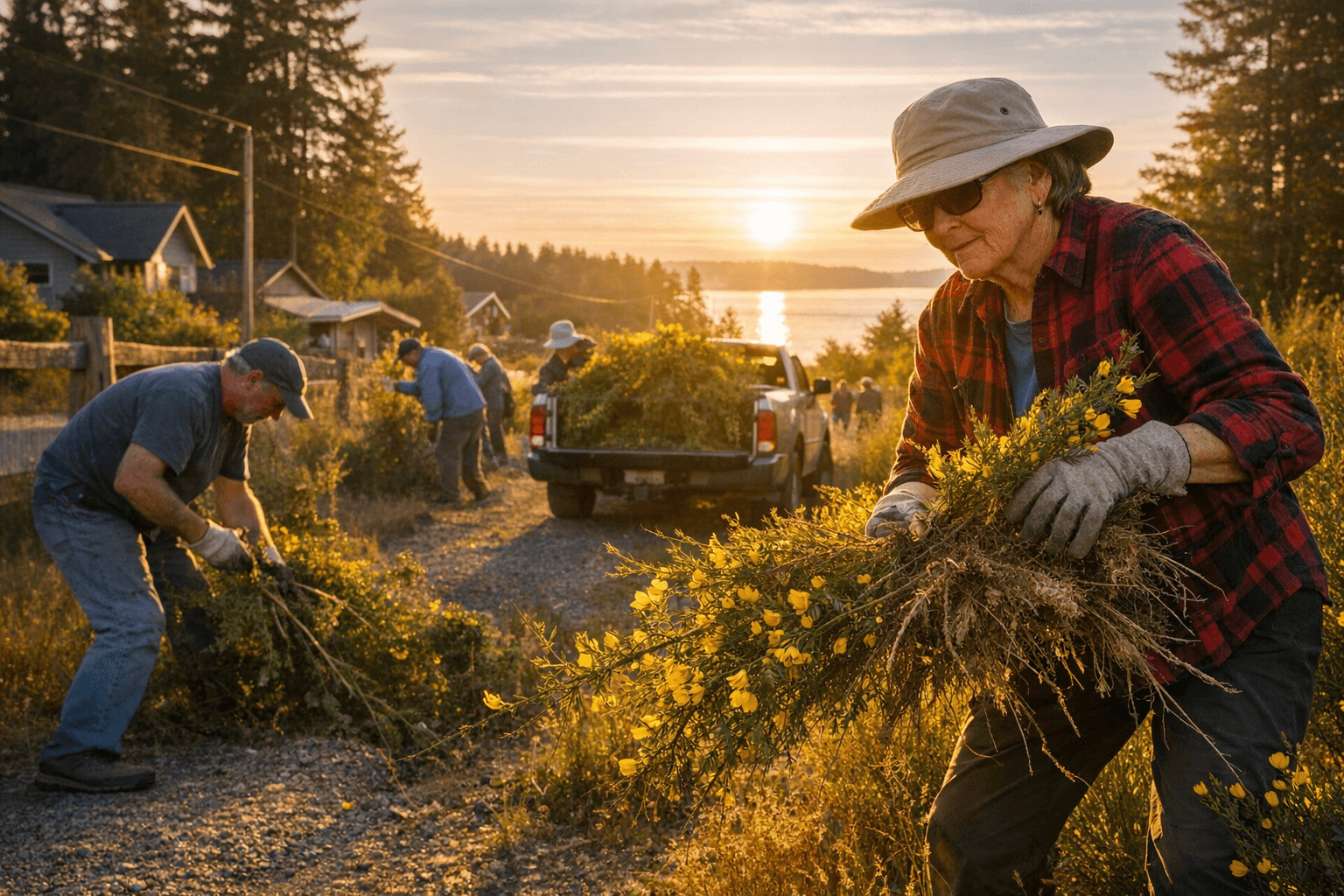
About 100 volunteers pulled scotch broom from South Whidbey public land, then learned how to keep the invasive plant from spreading onto their own property.

About 100 volunteers spent part of the week pulling scotch broom from infested public sites across South Whidbey, turning a familiar spring nuisance into a coordinated defense of roadsides, native habitat and open ground the plant can quickly take over.
The three work parties, organized by the St. Hubert Catholic Church Green Team and Goosefoot Community Fund, were timed to peak flowering season and centered in the Bayview vicinity. The goal went beyond making a few patches look cleaner. Organizers wanted residents to leave knowing how to identify scotch broom, remove it correctly and carry that work back to their own land.
Marian Myszkowski of Goosefoot said the hope is for the project to grow every year and draw even more participation. Local support also came from Seth Luginbill, Island County’s noxious weeds coordinator, and former South Whidbey fire chief Rusty Palmer, whose involvement gave the effort added credibility with both land managers and longtime island residents.
That practical focus matters because scotch broom does more than create a bright yellow roadside display. Island County’s noxious weed program says it helps consult with landowners, provides education and technical resources, and carries out physical control work on county rights-of-way and county-owned properties. For residents who pull broom on their own land, the county also accepts noxious weeds at the Coupeville Transfer Station and the Camano Transfer Station at no charge.
State guidance underscores why the plant is treated as a serious threat. Washington lists scotch broom as a Class B noxious weed and includes it on the Terrestrial Noxious Weed Seed and Plant Quarantine list. The state weed board says it shows up in roadsides, pastures, grasslands, open areas and recently disturbed soil, the same kind of ground where volunteer crews were working this week. A biological control agent, the Scotch broom bruchid, is also part of the state’s management strategy.
The plant has been on Whidbey long enough to become a problem of its own making. A Whidbey Earth & Ocean Month brochure says broom was first brought to the area in the 19th century as an ornamental plant and later used for erosion control. Whidbey Earth & Ocean Month itself dates to 2006, when community members began organizing Earth Day-related events on South Whidbey, and this year’s broom pulls on April 19, April 22 and April 25 fit that longer pattern of volunteer stewardship.
The campaign also followed a similar effort last April, suggesting the broom pull is becoming a recurring island ritual rather than a one-time cleanup. Island County’s Adopt a Road program, created to work with volunteer organizations to reduce roadside litter and noxious weeds, offers the same message in a countywide form: keep the roads clear, keep the weeds down, and keep the work local.
This article was produced by Prism’s automated news system from verified source data, official records, and press releases, then run through automated quality and moderation checks before publishing. The system is built and supervised by the people who set the standards it runs under. Read our full AI policy.
Did this article answer your question?