Whidbey Island man blends web development and massage therapy
Marc Juneau built a Whidbey career out of two very different skills, and the island’s small but growing economy made room for both. His path shows how local reinvention can work when wellness demand and digital business needs overlap.
A Whidbey career built from two worlds
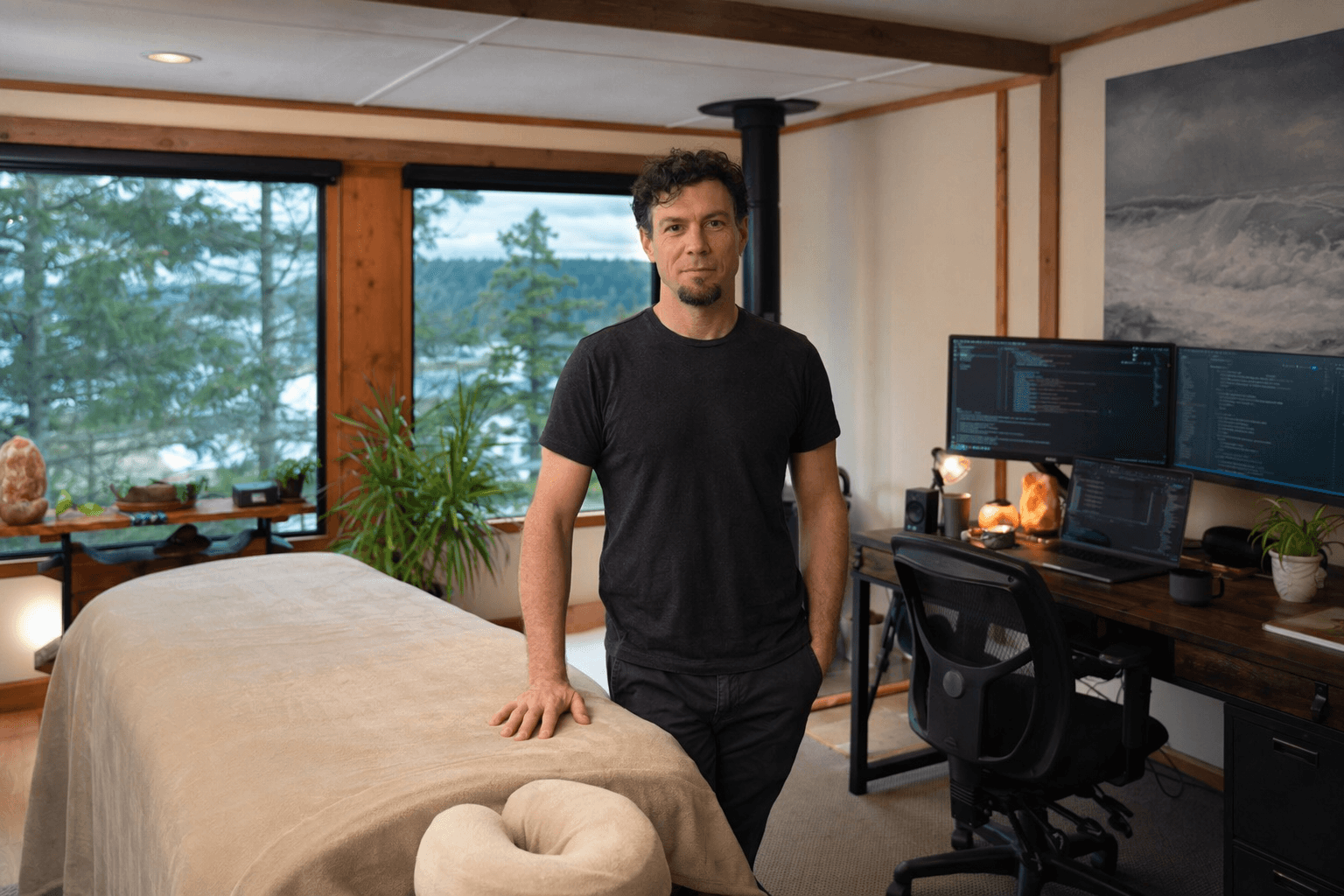
Marc Juneau’s work on Whidbey Island is a study in hybrid livelihoods. He now splits his professional life between WordPress web development and massage therapy, a combination that would look unusual anywhere else but fits a place like Whidbey, where small-business needs, wellness demand, and a close-knit customer base often overlap.
His path did not begin on the island. Juneau first enrolled in massage school in 1997, then left after eight months to chase software engineering and internet development as the early web economy took off. That pivot led to a 12-year stretch as the owner of a web development company, and his later career still reflects that foundation. His professional site says he ran NOLAGraphics in New Orleans and later served as a board member and vice president with the American Massage Therapy Association chapters in Florida and Colorado.
How he came back to bodywork
Juneau returned to massage school in 2016 with a deeper commitment to healing work, graduating from Blue Cliff School of Therapeutic Massage in New Orleans before moving to Florida and becoming deeply involved in the massage profession. From 2016 to 2019, he served as vice president of the Florida chapter of the American Massage Therapy Association, where he helped organize continuing education and conferences for thousands of therapists.
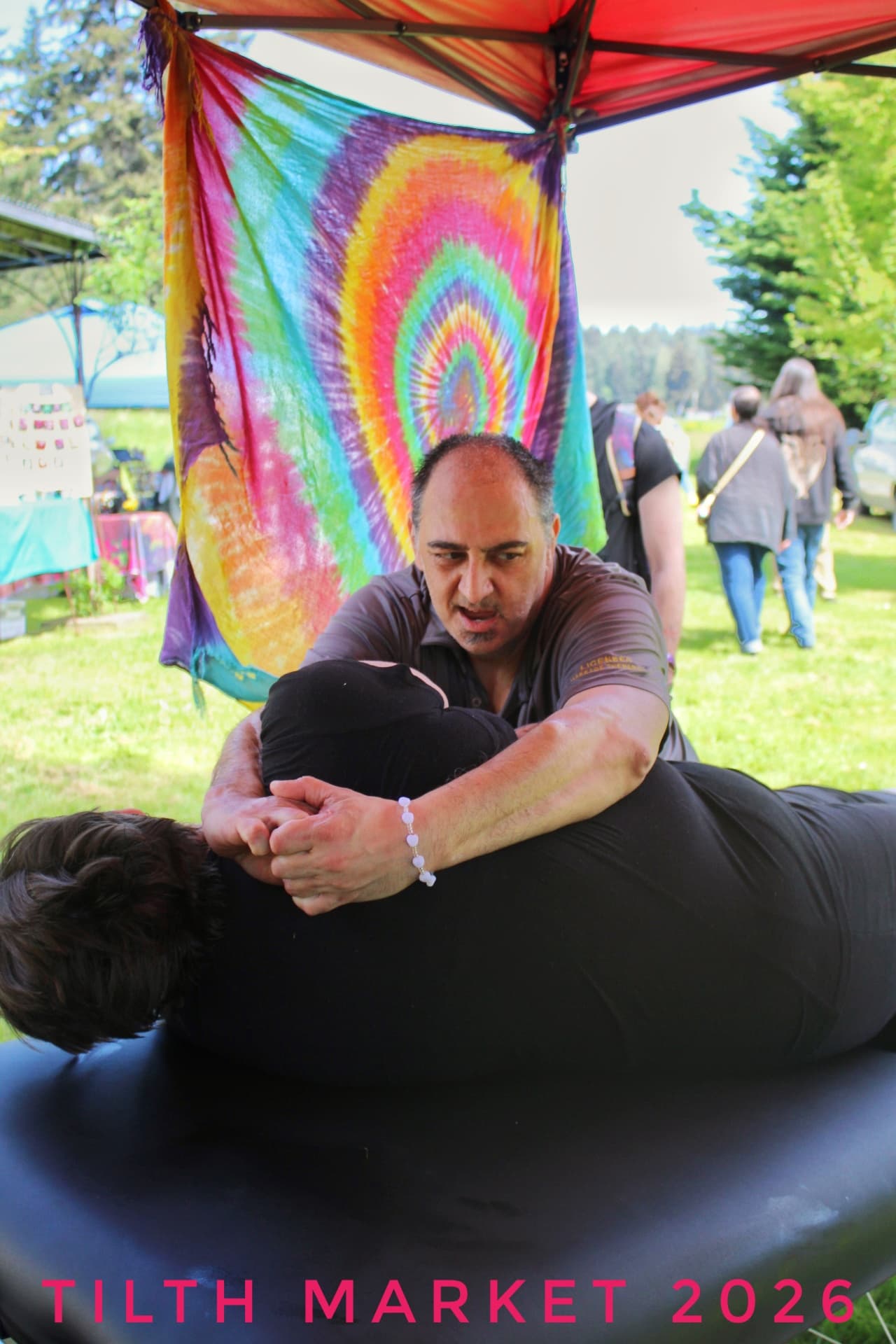
That background matters because it explains why his massage practice is more than a side pursuit. His AMTA profile lists neuromuscular therapy, active isolated stretching, acupressure, myofascial work, medical massage, injury rehab therapy, sports massage, Reiki, sound healing, and aromatherapy. In other words, this is a practitioner who brings a wide therapeutic toolkit to a market where people often want both relaxation and treatment for pain, mobility, or recovery.
Why Whidbey made the mix possible
The Whidbey chapter began in late 2022, when Juneau visited his sister in Langley and decided to stay. The island’s pace and community spirit drew him in, and by 2023 he had taken on a role with the Langley Chamber of Commerce to help redesign and launch VisitLangley.com in May 2024. That move linked his digital background to a local institution with a very practical job: supporting south Whidbey commerce and the visitor economy.
The chamber says it serves south Whidbey Island, has about 200 active members, and manages the Langley Visitor Center. On a small island where the 2020 census put Langley’s population at 1,147 and Island County’s at 86,857, that kind of business support carries outsized weight. A website redesign is not just a branding exercise in that setting. It can shape how visitors find shops, restaurants, lodging, and events, and it can help local businesses compete for attention in a tourism-driven market.
The wellness side of Whidbey’s economy
Juneau’s return to massage also fits the island’s broader wellness market. Later in 2024, he opened his own practice inside Eli Bentabou’s Chiropractic & Wellness Center in Freeland, while also seeing clients in a private home studio. His Whidbey Island Holistic Health Association listing says he offers personalized treatments from Bentabou Clinic & Wellness Center and a home studio in Freeland, giving him both an institutional base and a more intimate client setting.
That flexibility is part of the appeal of a small-island practice. Clients can come to him for a wide range of services, from injury rehabilitation and medical massage to sound healing and Reiki, while Juneau can anchor his schedule in the same community that also needs website help and visitor-facing business support. His AMTA profile says that by Dec. 12, 2024 he had moved to Whidbey Island and was bookable there, marking the point where his relocation became fully visible to clients.
Why licensing and training matter
Washington state requires massage therapists to be licensed before practicing, and the state’s licensing rules include continuing-education requirements that resumed after the COVID-era waiver expired on Dec. 31, 2022. That regulatory framework matters in a story like Juneau’s because it separates a casual wellness label from a licensed profession with formal standards.
Juneau’s credentials line up with that environment. His AMTA profile identifies him as a Washington and Colorado licensed massage therapist, and his background includes the kind of organized professional work, board service, and continuing-education leadership that tends to matter in regulated fields. For a local reader, that means the Whidbey version of reinvention is not simply about changing jobs. It is about carrying formal expertise into a smaller market that can support multiple lines of work when the person behind them has enough range.
What his story says about Whidbey right now
Juneau’s career makes sense in a place where visitor traffic and local services both matter. Whidbey tourism reporting for 2024 estimated 376,000 new visitors, and tourism revenue has grown by nearly 53% since 2004. That kind of demand helps explain why a local business chamber would need digital help and why a massage therapist with a broad service menu can find clients in the same community.
It also helps explain why Whidbey can attract people who want a second act. Juneau brought experience from New Orleans, Florida, and Colorado, then found that Whidbey could absorb both sides of his career. The island did not force him to choose between code and care. It gave him a place where both could become part of the same working life, and that may be the clearest sign of how the local economy has changed.
Know something we missed? Have a correction or additional information?
Submit a Tip