Whidbey mushroom tours teach safe foraging this spring in Langley
Spring tours in Langley teach locals what to pick, what to skip, and why Island County’s mushroom rules matter before anyone starts foraging alone.
What you can learn before you ever pick
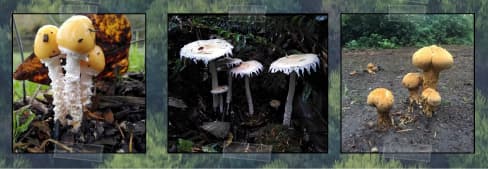
A safe foraging outing can teach you to leave a mushroom in the moss before it ever reaches your basket. That is the practical promise behind Whidbey Wild Mushroom Tours, where the first lesson is not how to harvest, but how to tell edible, medicinal and poisonous fungi apart with enough confidence to keep your next step off the wrong trail.
The tours are built for beginners who want more than a casual walk in the woods. Guests start with mushroom identification, then head to a pre-scouted forest location, which turns the experience into a guided field class instead of a guess-your-luck outing. Participants also receive informational booklets to keep, a small but useful detail that makes the tour feel like a reference tool as much as a weekend activity.
Travis Furlanic, who leads the operation, says he has studied mycology for more than 15 years and has helped teach and identify mushrooms on citizen-science platforms since 2016. A local profile noted that he also gives presentations on cultivation, foraging and identification to organizations and libraries, which helps explain why the tours lean so heavily into education. On the trail, that translates into a slower, more careful way of looking at the forest floor, where the goal is to recognize the difference between a meal, a medicine and a mistake.
Where the spring tours meet
The spring public tours run on Saturdays from April 18 through June 20, 2026, with two time slots each day: 9 a.m. to noon and 1 p.m. to 4 p.m. They meet at the South Whidbey Tilth Farmers’ Market in Langley, at 2812 Thompson Rd, Langley, WA 98260. Private tours are available year-round, which makes the operation more than a seasonal novelty and more like a standing outdoor classroom for people who want a customized introduction.
That Langley meeting point matters. South Whidbey Tilth describes its campus as an 11-acre community space with a farmers market, educational workshops, gardens, a commercial kitchen, a picnic and play area, an orchard and trails. It is the kind of place that fits a mushroom tour naturally, because the setting already blends food, land use and learning before anyone steps into the woods.
The structure is simple enough for a first-timer: show up, learn the basics, then follow a guide into a forest location chosen ahead of time. For readers who want a low-commitment way to learn something useful about the island, that format removes a lot of the uncertainty that usually keeps people from trying foraging at all.
Why spring keeps drawing people back
Mushroom hunting has staying power on Whidbey because it is both seasonal and local. Seattle Refined noted that foraging field trips with Whidbey Wild Mushroom Tours happen all year, while also emphasizing that spring and fall are the key seasons in the Pacific Northwest. That matches the rhythm of the island itself: the woods are never empty, but the best learning windows tend to come when the season changes and the forest floor is most active.
The tours have also built enough of a following to show up in recurring event listings for Whidbey and Camano Islands, and they have drawn coverage from HeraldNet and KING 5. That kind of repeat attention usually signals more than a one-off curiosity. It suggests a local appetite for an outdoor experience that feels specific to South Whidbey rather than interchangeable with any nature walk.
One reason the story sticks is that it offers something concrete. Past coverage described Furlanic showing the fluorescent properties of sulfur tuft mushrooms during a tour, a detail that turns fungi from abstract field guide material into something memorable and visually surprising. For many people, that is the moment the woods stop being a green blur and start becoming a place with patterns, warnings and usable knowledge.
The rules that matter before you pick
Foraging in Island County is not just about finding mushrooms. It is also about knowing where harvesting is allowed and where it is not, which makes guided instruction especially valuable for anyone new to the practice.
Before picking anywhere in Washington, keep these rules in mind:
- Washington State Parks allow recreational harvest of edible plants and edible fruiting bodies, including mushrooms, up to two gallons per person per day unless otherwise posted.
- Commercial harvest is not allowed on Washington State park lands.
- Island County Parks prohibit plant harvest unless specifically authorized in writing.
- The Washington Poison Center says poisonous mushrooms grow statewide and that it is consulted every year for mushroom-poisoning cases tied to misidentification.
That mix of permission and restriction is exactly why beginner education matters. A mushroom that looks harmless in one patch of woods may be off limits in another, and a legal harvest in one place can become a violation in a different park system. The safest habit is to know the local land rule first, then treat identification as a separate question rather than assuming one answers the other.
The Poison Center warning adds another layer. Mushroom-poisoning calls remain common enough that the agency sees misidentification cases annually, which is a reminder that wild fungi are not a category for improvisation. A guided class cannot eliminate every risk, but it can reduce the chance that a curious beginner mistakes confidence for knowledge.
Why the tours fit Whidbey so well
Whidbey Wild Mushroom Tours works because it is rooted in place. The forest ecology of South Whidbey, the campus at South Whidbey Tilth, the recurring spring and fall timing, and the emphasis on Pacific Northwest fungi all reinforce that this is an island-specific outdoor lesson, not a generic recreation stop. It is tied to the landscape people here already use, cross, walk and care for.
That local grounding is also why the tours carry value beyond a single afternoon. Someone may come looking for an edible species and leave instead with a better eye for lookalikes, a clearer sense of park rules and a booklet that turns one outing into a future reference. That is the kind of practical payoff that travels well, whether the goal is safer foraging, a deeper connection to South Whidbey or simply a better understanding of what is growing under the trees.
This article was produced by Prism’s automated news system from verified source data, official records, and press releases, then run through automated quality and moderation checks before publishing. The system is built and supervised by the people who set the standards it runs under. Read our full AI policy.
Did this article answer your question?