Whidbey sisters bring bone-casting and spiritual readings to islanders
Bone-casting has found a steady audience on Whidbey, where the Wyrd Systers have turned spiritual readings into part of the island’s arts-and-mysticism scene.

Adrienne MacIain and Rebecca MacIain have made bone-casting visible on Whidbey Island, turning a practice many people would never expect to see in public into a familiar part of the island’s cultural mix. Working as the Wyrd Systers, Dr. Odd and Sister Spike offer readings and classes that they frame as more than performance, describing bone-casting as a way to look at spiritual life, almost like an X-ray for the soul. On an island where arts markets, small gathering spaces and metaphysical businesses already move by word of mouth, their work lands less as a novelty than as another expression of Whidbey’s taste for ritual, craft and curiosity.
A practice they want to share
The sisters present bone-casting as an accessible tradition, not a closed system reserved for initiates. Their approach is built around the idea that people can learn the practice, ask questions and use it as a tool for reflection rather than treat it as entertainment alone. That framing matters because it places the emphasis on instruction and participation, not only on the mystique of the reading itself.
MacIain and MacIain have built a local following by leaning into that openness. They have become a familiar presence in Whidbey Island’s magical community, and that familiarity is part of the appeal. Residents encounter them as part of a broader island culture that already makes room for spiritual experimentation, artisan work and small-scale personal exchange.
Why Whidbey is receptive
Whidbey has a long record of giving alternative and holistic practices room to breathe. A Whidbey News-Times article from 2000 described alternative and holistic healing on the island as “large, diverse and growing,” and a practitioner quoted in that piece said Whidbey could become “the hub for alternative medicine in western states.” That older framing still helps explain why a practice like bone-casting finds a local audience instead of being dismissed as a passing curiosity.
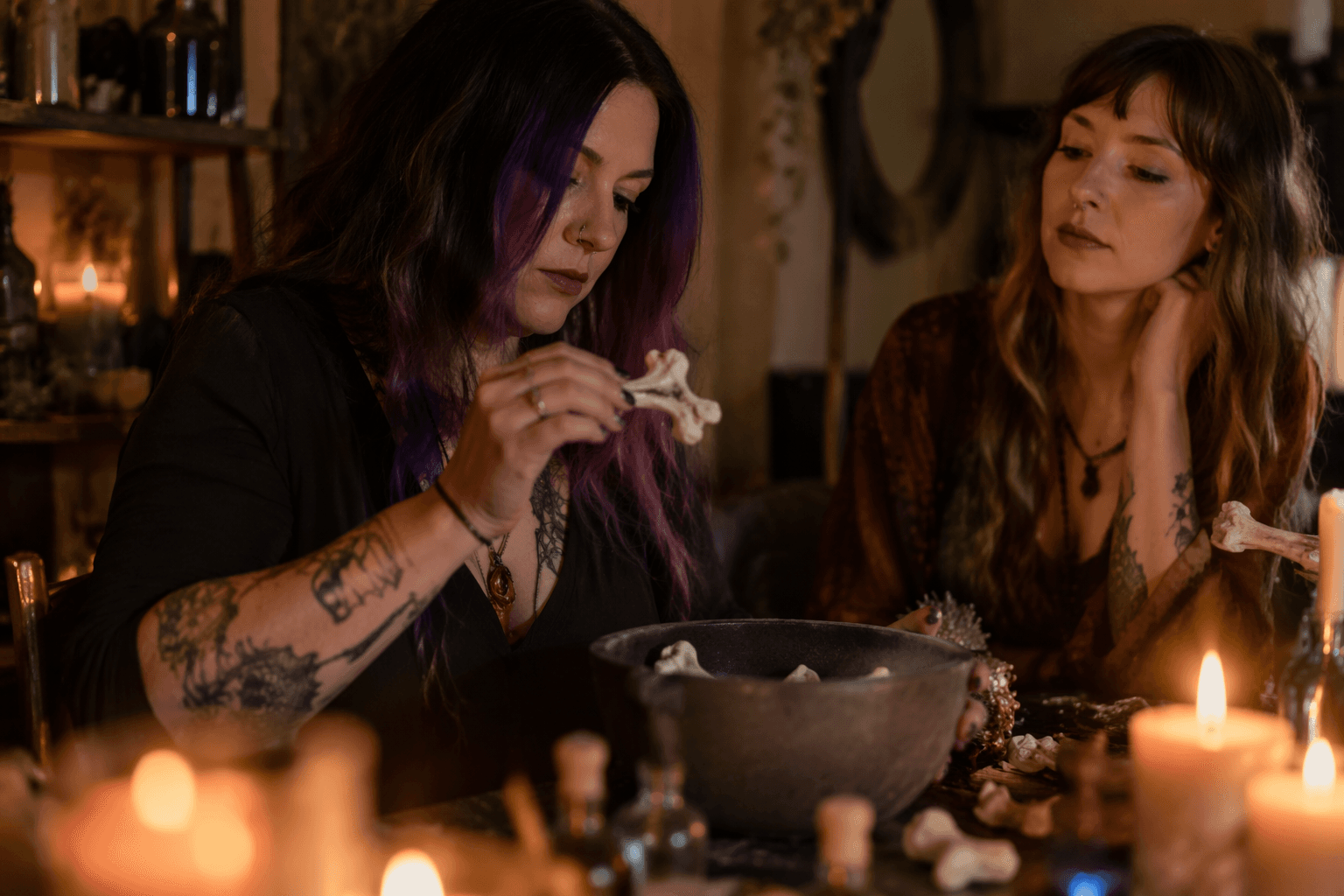
The same pattern showed up again in 2022, when a Whidbey News-Times article on a metaphysical shop in Langley noted that word of those businesses spreads slowly in the “laid-back nature of island living.” That slow circulation is part of the local economy of belief: people hear about a reading, a shop or a class through a friend, an artist, a market booth or a community gathering, then decide for themselves whether to step inside. On Whidbey, interest often grows the same way the island’s other small institutions do, by repeat contact and personal recommendation.
The places that make room for it
The Wyrd Systers fit into a wider network of venues and organizations that keep arts and spirituality visible across the island. The Whidbey Institute, founded in 1972, says it has “nourished, inspired, grown and changed” people since then, and describes its mission around transformational learning, ecological stewardship and community connection. That language reflects a civic culture where workshops, retreats and reflective practices are not isolated from public life but woven into it.
Cultus Bay Gardens adds another piece of that ecosystem with classes and markets centered on crafts, herbalism, basketry and other hands-on skills. The Whidbey Island Arts Council, a 501(c)(3) nonprofit, supports local artists and arts organizations through grants, fiscal management and sponsorship, which helps keep the island’s creative infrastructure active beyond any single event or business. Together with places such as the Whidbey Island Center for the Arts, the Langley Visitor Center and Chamber of Commerce, the Island County Historical Museum and community businesses across Langley, Freeland, Coupeville and Oak Harbor, these institutions give residents regular touchpoints with work that sits between art, ritual and public gathering.
Langley and the island’s taste for the uncanny
Langley remains one of the clearest examples of how Whidbey absorbs the unusual and makes it feel local. The town’s long-running Mystery Weekend has been going for 40 years, a sign that playful puzzle-solving and theatrical misdirection have never been strangers to the community. That appetite for the mysterious helps explain why a bone-casting practice can feel at home there, especially when it appears alongside shops, markets and events that already invite people to step out of routine.
The sisters’ work also reflects how Whidbey’s social life is built through small, overlapping circles. Artists, herbalists, shop owners, volunteers and longtime residents often cross paths in the same rooms, at the same markets and in the same community spaces, so a spiritual practice can spread without needing a large institution behind it. That kind of intimacy gives the island a distinct cultural rhythm: unusual practices do not have to dominate public life to become durable parts of it.
What the Wyrd Systers signal about Whidbey
The Wyrd Systers are not just selling readings. They are helping normalize a worldview in which symbolism, intuition and ritual sit comfortably beside everyday decision-making, and they are doing it in a place that has repeatedly shown it can support that kind of exchange. Whidbey’s arts-and-spirituality ecosystem does not operate on the margins as much as it operates in plain sight, through institutions, markets and neighborhood networks that residents already know how to use.
That is why bone-casting on Whidbey lands as more than a quirky attraction. It is another sign of an island culture that has long made space for alternative healing, creative practice and communal learning, and that continues to treat mystery as something residents can gather around rather than keep at arm’s length.
This article was produced by Prism’s automated news system from verified source data, official records, and press releases, then run through automated quality and moderation checks before publishing. The system is built and supervised by the people who set the standards it runs under. Read our full AI policy.
Did this article answer your question?