Winter Walks on Whidbey Island, Safety Tips and Access Information
Winter on Whidbey Island offers quiet scenic walks and coastal outings, but shorter days, tides and unpredictable weather mean a little local knowledge matters for safety and access. This article outlines accessible options in Coupeville, Oak Harbor, Langley and Freeland, practical safety tips, and resources residents can use before they go.

Winter brings crisp light and quieter trails across Island County, making short hikes and beach walks some of the best ways to stay active and connected during the darker months. For residents, the island offers a range of accessible outings from bluff top views to flat waterfront loops, but each site carries its own safety considerations that affect public health and community access.
Ebey’s Landing National Historical Reserve on the Coupeville bluff provides classic views of the Strait of Juan de Fuca, surrounding farmland and migrating birds. Trails range from easy to moderate with some exposed slopes, so windproof layers and attention to cliff edges are important. Fort Casey State Park around Admiralty Head features historic fort installations, a lighthouse and shoreline walks with paved sections and parking, but visitors should expect muddy spots after rain and keep dogs leashed in busy areas.
Deception Pass State Park near Bowman Bay and Rosario Beach is ideal for brisk winter walks, wildlife watching and tidal pool exploration. Access varies from easy to moderate with stairs and rocky shoreline areas. Tide awareness is essential for safe beach exploration. Holmes Harbor in Freeland and the nearby waterfront boardwalks offer short accessible routes well suited to quick outings, birdwatching and combining a walk with a café visit, though parking can be limited when events draw crowds. The Coupeville Wharf and waterfront loop provide a very easy flat route around Penn Cove, popular for short winter strolls, but wharf surfaces may become icy during cold snaps.
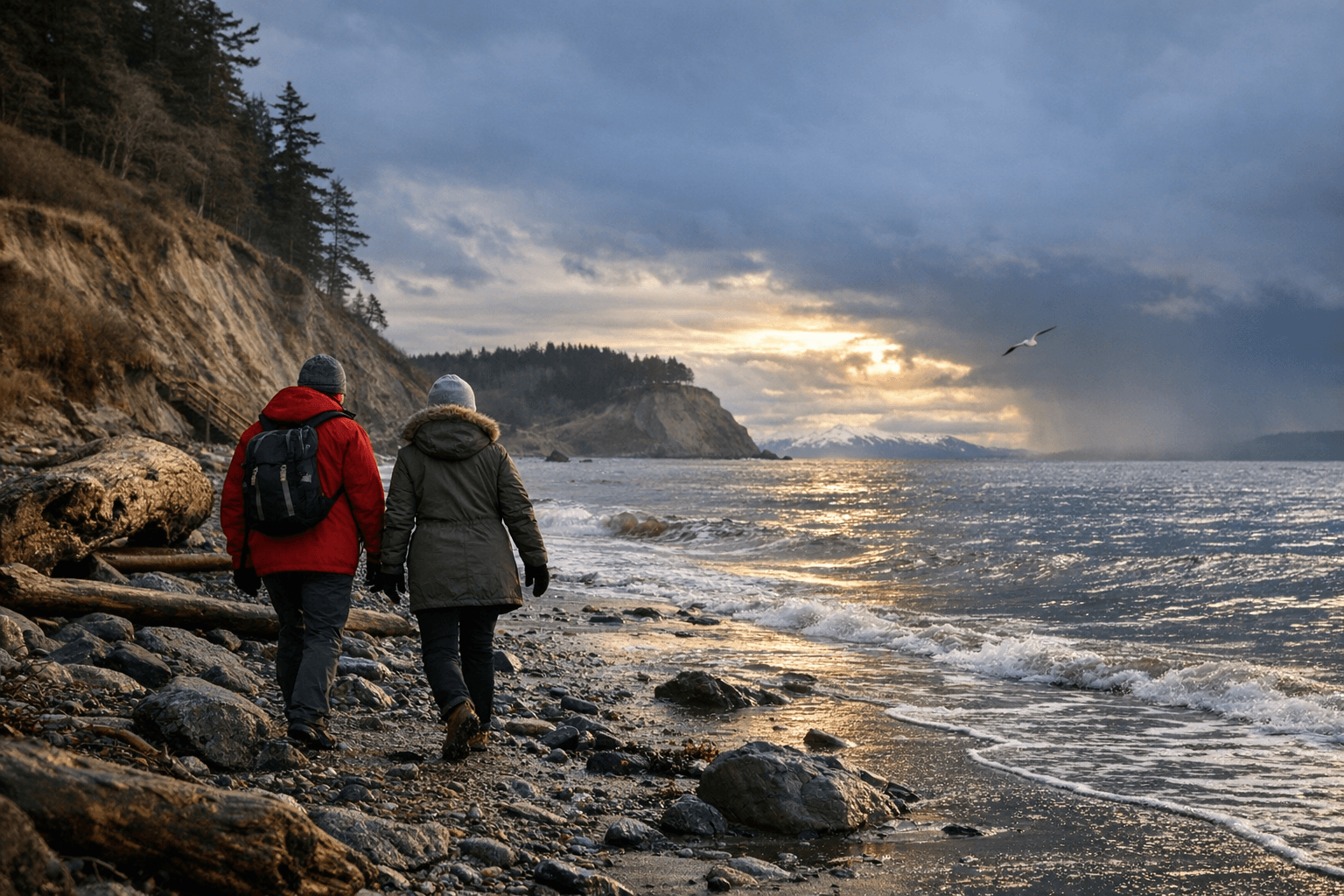
From a public health perspective, safe, accessible outdoor spaces support physical activity and mental well being, especially for older adults and families during winter. Transportation, parking limitations and trail maintenance affect equitable access, so residents without cars or with mobility needs may rely on shorter town routes and clear signage. Respecting parking rules, private property boundaries and protected habitat helps preserve access for everyone.
Plan outings to finish well before dusk, bring waterproof outer layers, warm hat and gloves, and consult tide charts published by the Washington Department of Ecology and the National Weather Service. Island County Parks maps and state park pages list closures, seasonal advisories and parking details, and visitor centers in Langley and Oak Harbor can provide printed maps and current trail conditions. Check those resources before you go to avoid storm impacts, temporary closures or pier restrictions.
Know something we missed? Have a correction or additional information?
Submit a Tip

