Year-Round Guide to Ebey’s Landing and Whidbey Island Attractions
A concise year‑round guide to Ebey’s Landing and nearby Whidbey attractions, with practical tips, local context and community-focused advice for residents.
1. Why Ebey’s Landing matters
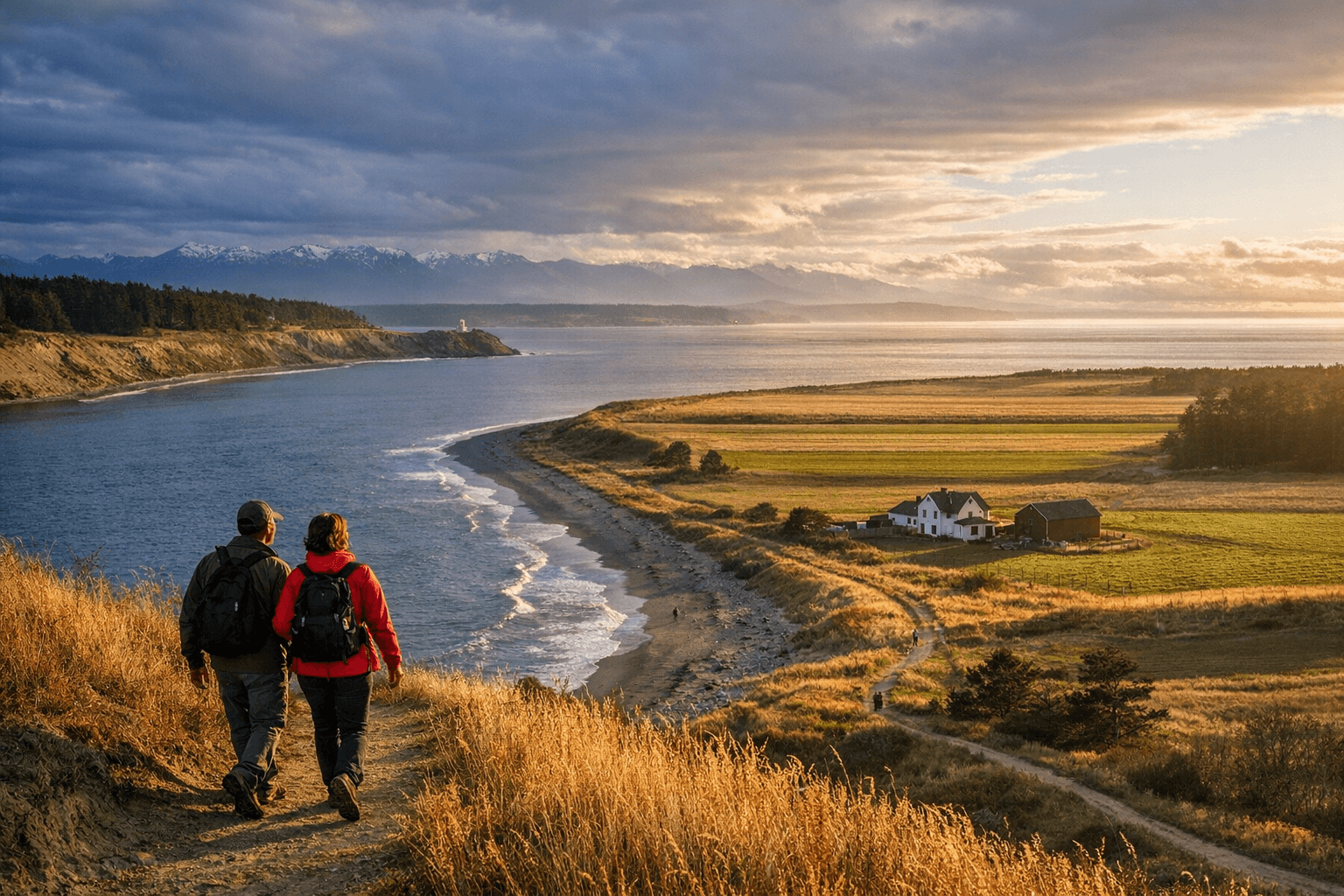
Ebey’s Landing National Historical Reserve protects a living, working agricultural landscape on Central Whidbey Island, combining historic farms, maritime heritage and coastal prairie. That dual mission, preserving cultural history while keeping farms operational, shapes land‑use decisions, limits sprawl and helps maintain the island’s rural economy. For residents, the Reserve is both classroom and commons: it anchors local identity, supports farm incomes through agritourism and provides open space that buffers development pressures.
2. Walk the Bluff Trail (Coupeville)
The Bluff Trail delivers panoramic views across Admiralty Inlet to the Olympics, making it a go‑to for sunrise and sunset photography and short, steep coastal hikes. Trail terrain is mostly packed dirt and bluffside grassland; seasonal winds and wet sections mean sturdy shoes and layered clothing improve comfort. Parking at trailheads can fill early on weekends and holidays, so plan for off‑peak visits or combine the walk with other Coupeville stops to spread demand.
3. Visit historic Coupeville
Front Street in Coupeville is the island’s small‑town showcase: shops, galleries, seafood eateries and the Island County Historical Museum sit within walking distance of the waterfront. Seasonal events and farmers’ markets draw both locals and visitors, routing tourist spending back into Main Street businesses and supporting local employment. Treat visits as microeconomic support, every coffee, gallery buy or museum donation helps keep storefronts open through the slower months.
4. Tour local farms and seasonal farm stands
Local farms and seasonal stands offer fresh produce, cut flowers and artisan goods, key income streams for Island County producers during the growing season. Farms here are active operations, so tours and purchases should be scheduled around farm hours; many producers rely on direct sales and agritourism to diversify revenue. Respect farm signage, follow posted visitor rules and consider buying value‑added items (jams, bouquets, preserves) to maximize your local economic impact.
5. Beachcombing and tide pooling
Beaches within the Reserve host tide pools and shelling opportunities that reveal intertidal life, ideal for family exploration when tides cooperate. Before collecting or consuming anything, check Island County shellfish and health advisories: safety rules exist to prevent illness and to protect resource sustainability. Practicing low‑impact viewing (no overturning rocks, no removing live creatures) preserves habitats that are both ecological assets and a community amenity.
- Parking and access: Trailheads and viewpoint lots are limited; arrive early, carpool or park in official lots to avoid encroaching on private driveways.
- Dogs and pets: Many Reserve areas require leashes, follow posted rules to respect livestock and nesting birds.
- Weather and clothing: Coastal weather changes quickly; layer, bring wind/rain protection and expect greater exposure on bluff sections.
- Preservation etiquette: Stay on trails, avoid disturbing farm operations, and pack out trash, treat the Reserve like your neighbor’s front yard.
6. Practical tips for year‑round visits
Following these practices reduces congestion, protects private working land and keeps the Reserve open to public use.
7. Local resources and official checks
Use National Park Service and Ebey’s Landing Reserve partner pages for maps, trail descriptions and the Reserve’s land‑use background. For public‑health and harvesting guidance, consult Island County Public Health and shellfish advisory pages before gathering or consuming shellfish. For current trail conditions, events and seasonal market schedules, check municipal and community calendars to avoid surprises and support planned local activities.
8. Why residents care: economic and community significance
Ebey’s Landing sustains Island County’s agricultural base, supports tourism that feeds cafes and shops, and preserves cultural landscapes that shape property values and quality of life. Maintaining working farms and public access requires coordinated policy, zoning, conservation easements and reserve management, that balances private rights with public benefit. Residents benefit directly through education opportunities, local markets and the recreational value of open space; protecting these assets preserves long‑term resilience against development pressures.
9. Practical wisdom to apply now
Plan visits with local rhythms in mind: arrive early on busy days, check tide charts and advisories, dress for wind and rain, and buy directly from farm stands to circulate dollars locally. Treat the Reserve as both neighbor and classroom, stay on trails, obey signage and share stewardship by picking up litter or volunteering at community events. Little daily choices, timing a visit, supporting a market vendor, following leash rules, add up to keeping Ebey’s Landing and Whidbey’s small‑town character thriving for residents and future visitors.
This article was produced by Prism’s automated news system from verified source data, official records, and press releases, then run through automated quality and moderation checks before publishing. The system is built and supervised by the people who set the standards it runs under. Read our full AI policy.
Did this article answer your question?