Alice Cemetery tells the story of Alice’s growth and heritage
Alice Cemetery is a living record of the railroad move that built modern Alice, with 3,727 graves, early families, and civic decisions still visible in town today.
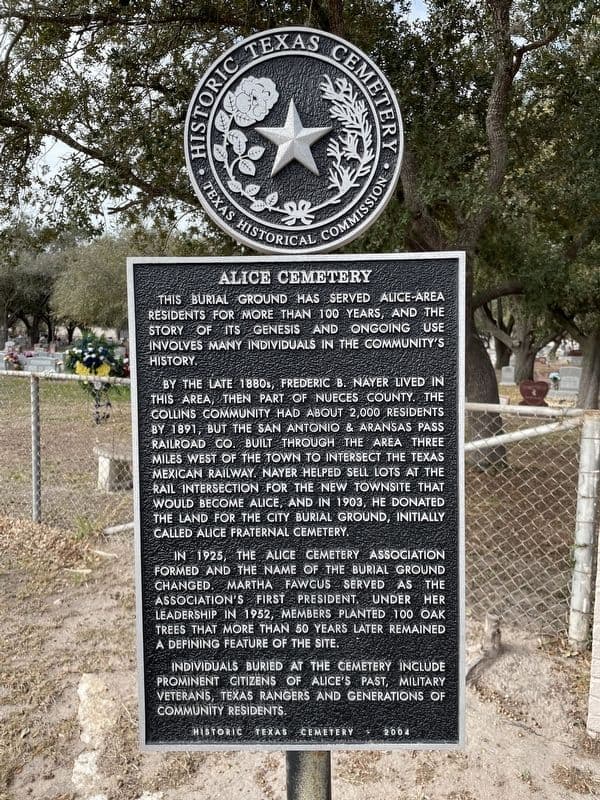
Alice Cemetery is more than a resting place on Martin Luther King Blvd. It is one of the clearest physical records of how a railroad town formed, shifted, and took root in Jim Wells County. The graves, the marker text, and the town’s own history line up to show how Collins gave way to Alice, how the rail junction pulled the community west, and how local families turned a burial ground into part of the city’s civic memory.
From Collins to Alice
The story begins with Collins, the community that once sat three miles east of present-day Alice. The Texas State Historical Association says Collins was established in 1878 on the Los Preseños grant and had 500 residents, a railroad station, a hotel, stores, and houses by 1880. That growth did not last once rail geography changed. When the San Antonio and Aransas Pass Railway bypassed Collins in 1888 and joined the Texas-Mexican Railway three miles west, the town that would become Alice emerged at the new junction.
That shift matters because Alice Cemetery sits directly inside that larger relocation story. The marker text identifies Frederic B. Nayer as a key figure in the transition. By the late 1880s, when the land was still part of Nueces County, Nayer was already working in the area. He helped sell lots at the rail intersection for the new townsite, then donated the land for the burial ground in 1903. The cemetery therefore marks not just where people were buried, but where the town chose to settle its own history after the railroad rewrote the map.
The town’s civic identity followed the tracks. TSHA says the town was renamed Alice in 1888, the Alice post office opened that same year, and the Collins post office was moved to Alice in 1892. By 1900, Collins had become a ghost town. Jim Wells County was later created on March 11, 1911, organized on May 6, 1911, and Alice became the county seat as the largest town in the new county. The July 25, 1912 cornerstone ceremony for the Jim Wells County courthouse drew more than 2,000 people, a sign of how quickly the county’s government and public life centered itself in Alice.
A cemetery that is still being written
The Texas Historical Commission Atlas identifies Alice Cemetery, also known as Alice Fraternal Cemetery, as a Historic Texas Cemetery with cemetery ID JW-C028. The commission lists 3,727 graves and burial dates running from the early 20th century to the present, which means the site is not frozen in the past. It is an active burial ground that continues to hold multiple generations of Alice families, and it still appears in public cemetery records today.
That ongoing presence gives the cemetery unusual value for family research and local history. Find a Grave currently lists 3,432 memorial records for Alice Cemetery, a figure that closely tracks the scale of the site but also reminds readers that documentation keeps growing as families add names, dates, and biographical fragments. The cemetery’s designation date, Aug. 24, 2004, places it inside the state’s formal preservation framework, while the location on Martin Luther King Blvd. keeps it firmly inside the daily geography of modern Alice.
The name Alice Fraternal Cemetery also points to a broader tradition of mutual care. Fraternal and civic burial grounds often developed through local organization rather than distant institutions, and Alice Cemetery fits that pattern. Its records preserve not only the dead but the decision-making habits of a town that built institutions one by one, from rail access to post office to county seat to cemetery association.
The Alice Cemetery Association and the landscape it left behind
The Alice Cemetery Association was filed as a Texas nonprofit corporation on June 8, 1925. That date gives the cemetery a formal civic structure and shows that local residents were organizing for long-term maintenance by the early 20th century, well before the cemetery became a historic designation. Martha Fawcus served as the association’s first president, placing a named local leader at the center of that stewardship.
The landscape itself carries that legacy. In 1952, association members planted 100 oak trees, and the marker says they remained a defining feature more than 50 years later. That is the sort of physical detail that helps explain why the cemetery still reads like part of the town rather than a separate preserve. The trees, paths, stones, and family plots together show that Alice’s civic memory was intentionally cultivated, not left to chance.
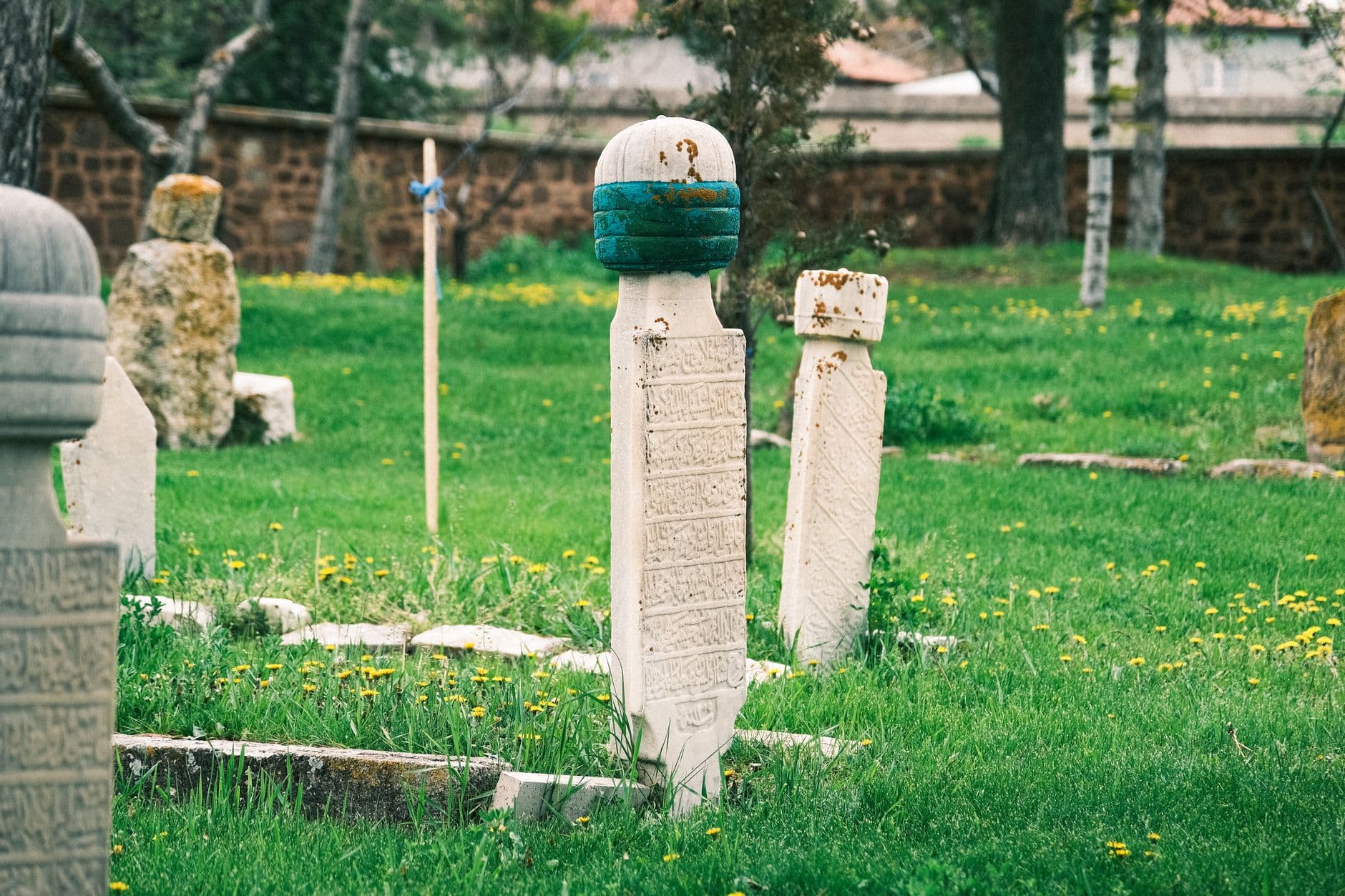
The marker also says people buried there include prominent citizens of Alice’s past, military veterans, Texas Rangers, and generations of community residents. That mix makes the cemetery useful as a snapshot of public life in a county seat that grew out of railroad ambition. It holds public servants and private families in the same ground, which is exactly how a town’s history often lives on after the original rail lines and street patterns have changed around it.
How to read the site as a guide to modern Alice
Alice Cemetery makes the most sense when read alongside the older rail geography of the city. Collins still has a footprint in memory, and TSHA notes that the Old Collins Cemetery remains in southeast Alice. Taken together, Old Collins Cemetery and Alice Cemetery preserve the two halves of a town that moved with the railroad. One marks the earlier settlement east of the junction; the other sits in the city that replaced it.
That comparison helps explain why Alice’s streets, institutions, and civic center are where they are today. Alice is now the county seat and largest town in Jim Wells County, about 44 miles west of Corpus Christi and reached through the road network that includes U.S. Highway 281 and state highways 44 and 359. Those routes, like the rail lines before them, turned Alice into the county’s practical center for government, business, and family life. The cemetery belongs to that same pattern of movement and settlement.
For anyone tracing a surname or trying to understand a family’s place in Jim Wells County, Alice Cemetery offers a direct entry point. The 3,727-grave count, the early 20th century-to-present burial range, the 1925 association, and the 1952 oaks all point to the same conclusion: Alice was built by rail geography, then held together by civic organization and family continuity. The stones on Martin Luther King Blvd. still record how the town arrived, who stayed, and how its heritage was built into the ground.
This article was produced by Prism’s automated news system from verified source data, official records, and press releases, then run through automated quality and moderation checks before publishing. The system is built and supervised by the people who set the standards it runs under. Read our full AI policy.
Did this article answer your question?