Federal agencies demo drone technology in Jim Wells County to fight screwworm
Federal drones scanned Jim Wells County ranch country as officials raced to blunt a screwworm outbreak that could hammer Texas cattle operations.
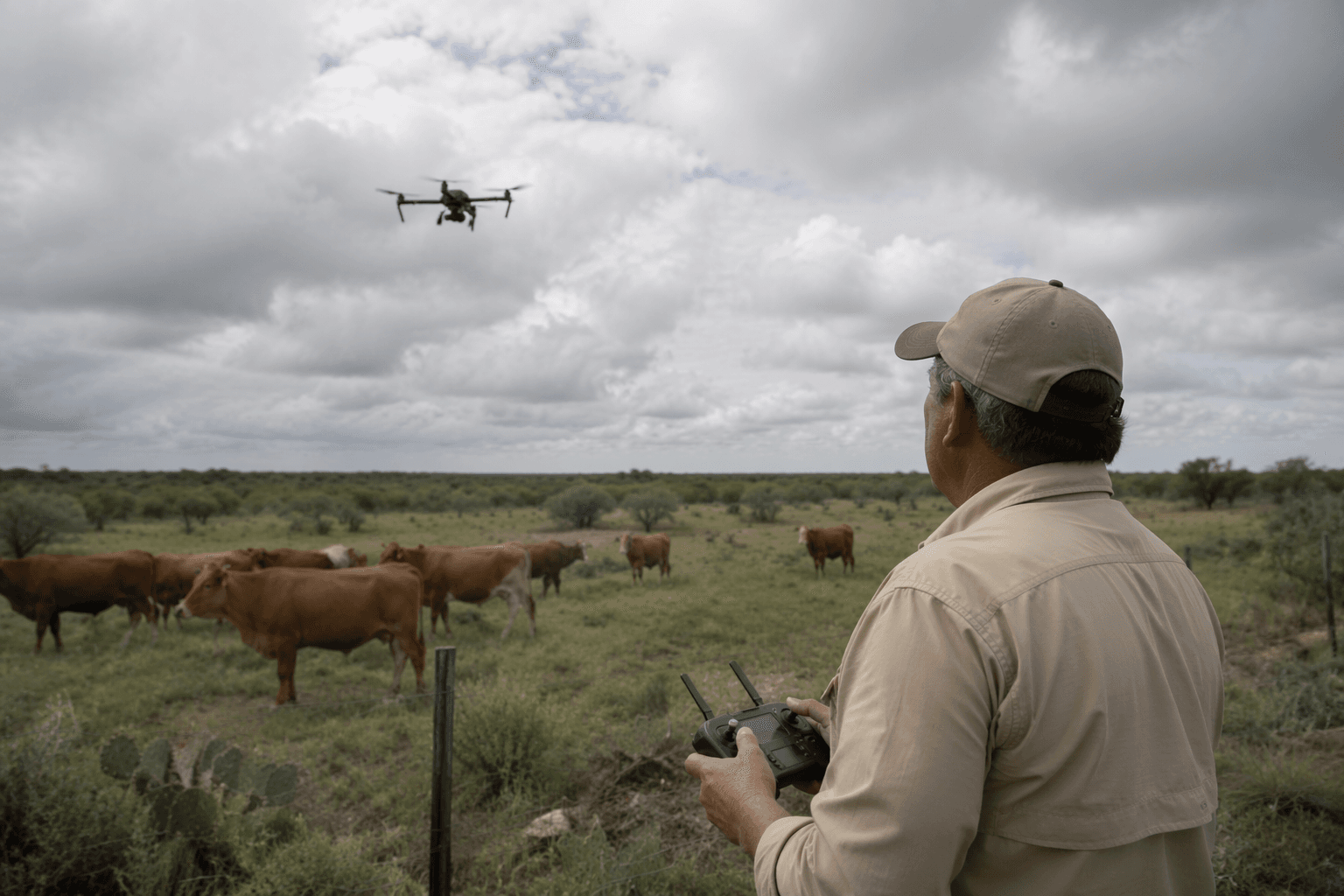
A federal drone demo in Jim Wells County put new technology in front of ranchers worried about a pest that can turn small wounds into big losses. With Texas cattle production valued at about $41 billion a year, officials are treating the new world screwworm as an economic threat as much as an animal-health emergency, and they say surveillance from the air could help spot trouble faster across South Texas.
The demonstration came as USDA, the Centers for Disease Control and Prevention and Texas animal-health officials intensify their response to the outbreak. USDA first confirmed the current U.S. animal case on June 3 in a three-week-old calf in Zavala County, and the CDC says no locally acquired human infestations have been reported in the United States. USDA says all southern ports of entry are closed to livestock trade, while its current-status page, last modified June 18, says the sterile insect dispersal area is being adjusted based on science and modeling.

Officials say the drone work is part of a larger push to make the response faster and more targeted. USDA announced funding for 40 projects totaling about $105 million to strengthen screwworm preparedness and response, including the use of AI drones to monitor wildlife and possible coordination with the Department of Homeland Security. That matters in places like Jim Wells County, where ranchers are not just watching cattle herds but also the wildlife that can move through brush country without warning.
The history is driving the urgency. Texas officials say New World screwworm was eradicated from the United States in 1966 using the sterile insect technique, but earlier infestations in the 1950s and 1960s often involved white-tailed deer and rabbits. That old pattern is part of what worries state and federal officials now, because South Texas has changed, with more wild hogs and a larger captive wildlife industry making monitoring more difficult than it was decades ago.
Local ranchers got a closer look at the threat during a June 17 seminar in Jim Wells County that drew more than 200 ranchers and livestock owners for a discussion of beef cattle herd health and screwworm prevention. Susan Kibbe, who said she first encountered screwworms in the early 1970s, is already taking preventive measures. For producers here, the next step is plain: check animals more often, watch for suspicious wounds and report anything unusual immediately, because the response now depends on catching the pest before it spreads further.
This article was produced by Prism’s automated news system from verified source data, official records, and press releases, then run through automated quality and moderation checks before publishing. The system is built and supervised by the people who set the standards it runs under. Read our full AI policy.
Did this article answer your question?