Jim Wells County rancher recalls first screwworm threat as cases rise
A Zavala County calf case has Jim Wells County ranchers watching closely as Susan Kibbee recalls the last screwworm scare she saw in the 1970s.
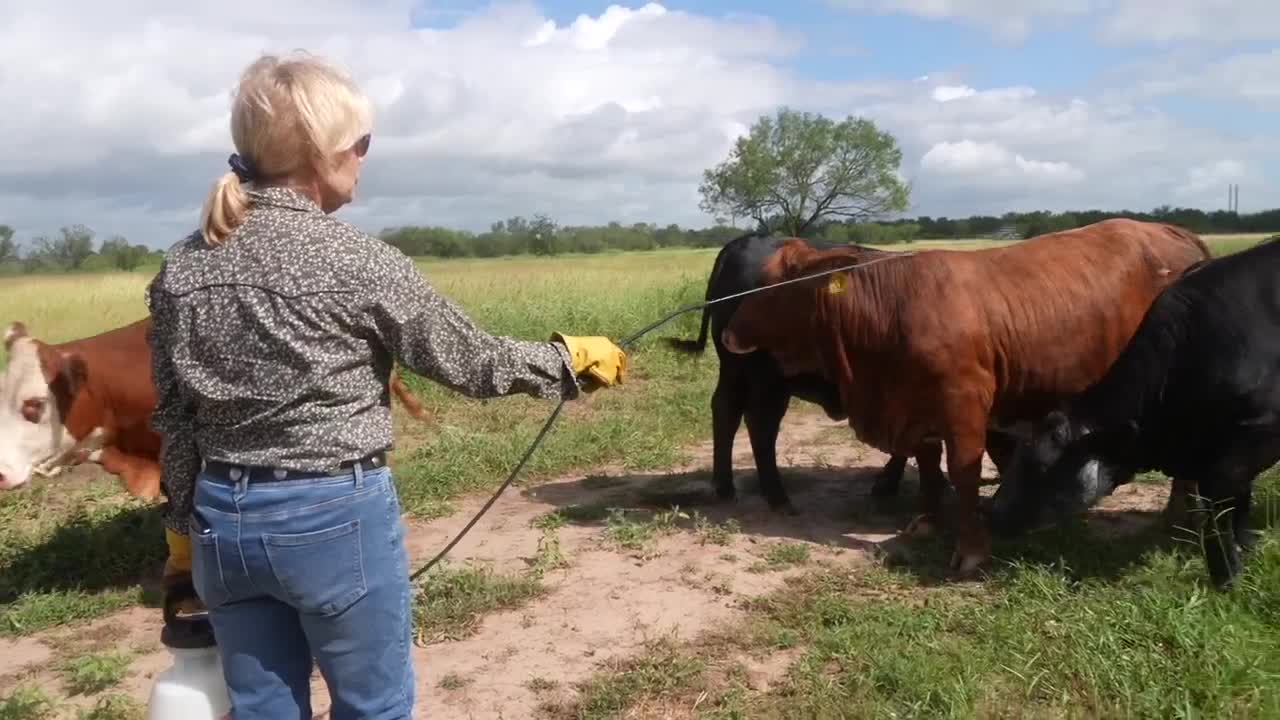
A screwworm case in neighboring Zavala County has turned a decades-old ranch memory into a current warning for Jim Wells County. Susan Kibbee, who first saw the parasite in the early 1970s, is thinking about what a renewed threat could mean for cattle, ranch work and the local farm economy.
Federal officials confirmed the first Texas detection on June 3 in a 3-week-old calf with larvae in its umbilical area. By June 9, the U.S. Department of Agriculture said there had been six confirmed U.S. detections, including new cases in Texas and New Mexico, while containment and eradication measures were already underway.

USDA said it was dispersing 100 million sterile insects each week in Mexico and along the U.S.-Mexico border as part of the response. The agency also said New World screwworm was eradicated from the United States in 1966 using the sterile insect technique, and that a small outbreak in the Florida Keys was eliminated in 2017.
For Jim Wells County, the concern reaches beyond one pasture in South Texas. A screwworm outbreak can mean closer inspection of calves, quicker treatment of wounds and more calls to veterinarians, especially in a county where livestock operations and rural businesses are tied closely to one another. Texas officials warned lawmakers in May that the parasite could carry a billion-dollar economic toll, a figure that underscores the stakes for auction barns, feed stores and agricultural service companies that depend on healthy herds.
State and university agencies have already moved into response mode. Texas A&M AgriLife said its experts were supporting state and federal agencies and providing educational programming and resources for livestock producers, wildlife managers, veterinarians, public health professionals and families. The Texas Animal Health Commission said federal and state partners were conducting animal and fly surveillance, epidemiological investigations and response protocols in the infested zone.
USDA guidance tells Texas producers who suspect screwworm to contact the Texas Animal Health Commission Region Office or the state veterinarian on call at 1-800-550-8242. USDA said the only current New World screwworm sterile fly production facility in North America is jointly managed and funded by USDA and Panama’s Ministry of Agriculture Development, and it said a sterile fly dispersal facility at Moore Air Base in Edinburg was projected to begin operating in early 2026.
For ranchers like Kibbee, the threat is not theoretical. It is a reminder that one infected calf can ripple through a county’s livestock market, land management decisions and bottom line long before the first sick animal is found.
This article was produced by Prism’s automated news system from verified source data, official records, and press releases, then run through automated quality and moderation checks before publishing. The system is built and supervised by the people who set the standards it runs under. Read our full AI policy.
Know something we missed? Have a correction or additional information?
Submit a Tip