Orange Grove Faces Summer Water Emergency as Aquifer Levels Drop
Orange Grove's aquifer has dropped to 157 feet deep with salt levels hitting 1,100 ppm; the city is 13 feet from triggering Stage 1 drought restrictions before summer.
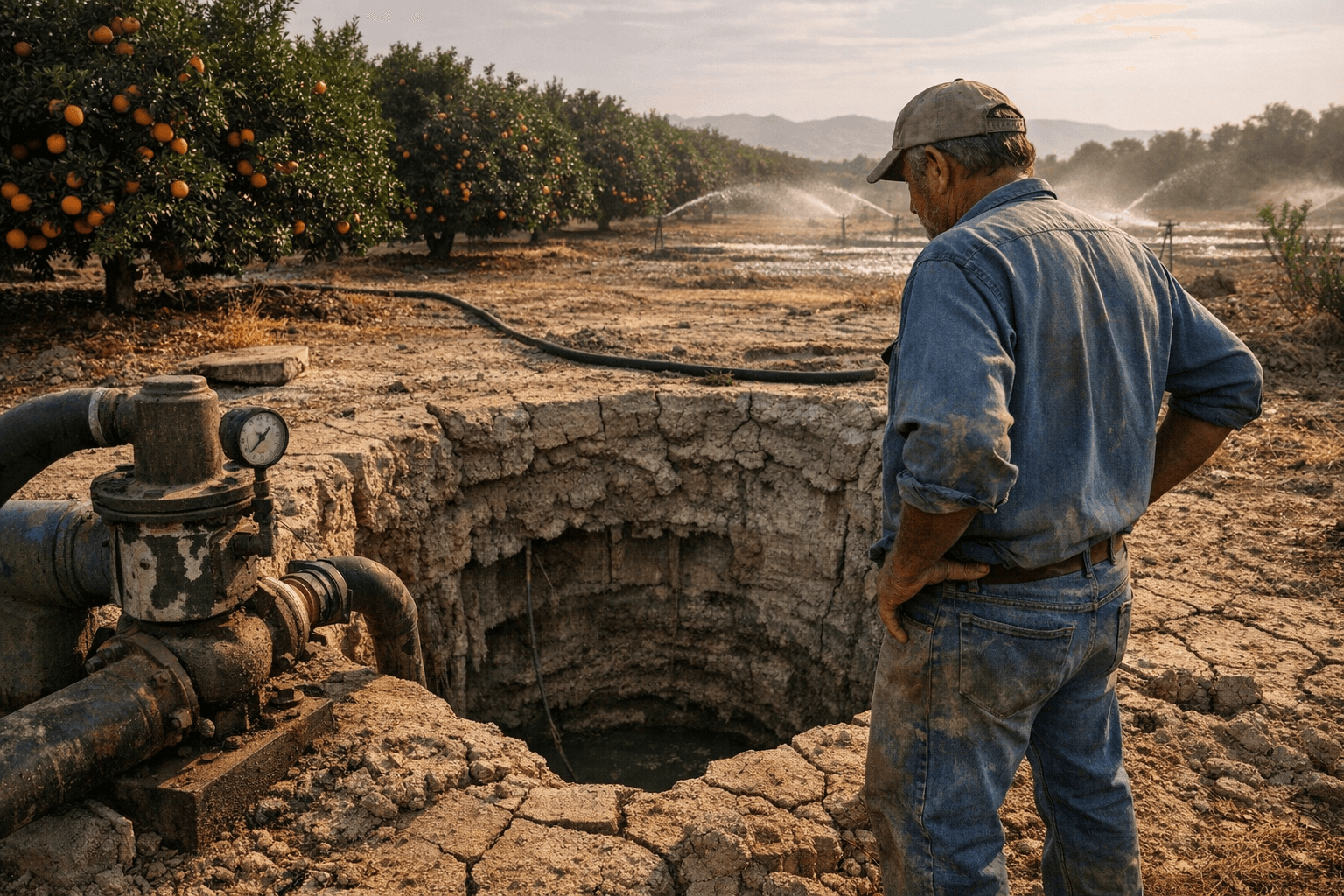
The Evangeline/Goliad Sands Aquifer, Orange Grove's sole drinking water source for 90 years, has dropped to 157 feet below ground level while salt contamination climbed to 1,100 parts per million, and City Manager Todd Wright warned that a full water emergency could arrive before summer ends.
Wright said the numbers are already outside anything the city has recorded. "We trend normally in the high 800s to low 900s," he said, referring to total dissolved solids. "But over the last year, we've reached the 1,100 range." Under Orange Grove's drought contingency plan, Stage 1 voluntary restrictions activate when the aquifer reaches 170 feet below the surface, putting the city 13 feet from that threshold. Mandatory restrictions follow in subsequent stages as the decline deepens.
On April 3, the city council voted to hire a hydrogeologist and an Austin-based environmental law firm specializing in water issues, the sharpest escalation yet in the city's response. Wright said the outside experts are needed to map Orange Grove's options before those options narrow further.
The crisis accelerated in late March after the governor signed emergency orders fast-tracking rural pumping permits. "On Thursday, March 19th, that following Monday we recorded our largest drawdown event on the aquifer where it dropped 17 feet," Wright said. A 17-foot plunge in roughly 72 hours compressed what might have been months of gradual decline into days, illustrating how little buffer the city holds if regional pumping continues at scale.
Wright linked the decline to Corpus Christi's expansion of its western well field, a connection Corpus Christi City Manager Peter Zanoni disputed at a joint meeting in Orange Grove, saying a hydrogeologist he consulted did not see how the city's wells could be impacting Orange Grove's supply at that distance. Wright framed the dispute as a regional problem regardless of cause. "This is a shared aquifer," he said. "It's not isolated or confined or restricted to just one city. It's for all of South Texas." The city has also been coordinating with Sinton and Alice and has engaged state leaders on long-term groundwater management.
For local ranchers, the threat moved from abstract to immediate months ago. Bruce Mumme, owner of Triple M Ranch outside Orange Grove, said he has already spent thousands of dollars drilling a second well and dropping his pump after his water supply suddenly cut out. "One day the spigot didn't come on, no water," Mumme said. "I got all these cows that drink about 20 gallons of water a day just to keep them going."
Wright said the city had been tracking the decline since June 2025. "We want the public to know, our residents to know, that we have been monitoring conditions as early as June of last year," he said. The months of tracking have not slowed the aquifer's fall. "This is not a theoretical concern for our community," Wright added. "It is something we are actively seeing in our system."
With mandatory restrictions potentially weeks away depending on summer demand and regional pumping rates, Wright's message to the community was direct: "It's all of us going into that same drink of water. We have to take a conservative approach to its use.
This article was produced by Prism’s automated news system from verified source data, official records, and press releases, then run through automated quality and moderation checks before publishing. The system is built and supervised by the people who set the standards it runs under. Read our full AI policy.
Did this article answer your question?