Premont history page highlights ranching roots and early families
Premont’s past still shapes its present, from ranch land and rail stops to schools and census shifts. The town’s survival story is written into Jim Wells County.
Premont’s civic story begins far from city limits and long before the first storefronts lined U.S. Highway 281. The land was part of the Los Olmos y Loma Blanca grant issued to Ignacio de la Peña on December 9, 1831, and the community that followed still reflects the ranching, family settlement, rail access, oil, and school systems that took shape there over time. That history matters in Jim Wells County because Premont’s present-day identity is still tied to how South Texas land was used, occupied, and organized for generations.
Ranch land and early settlement
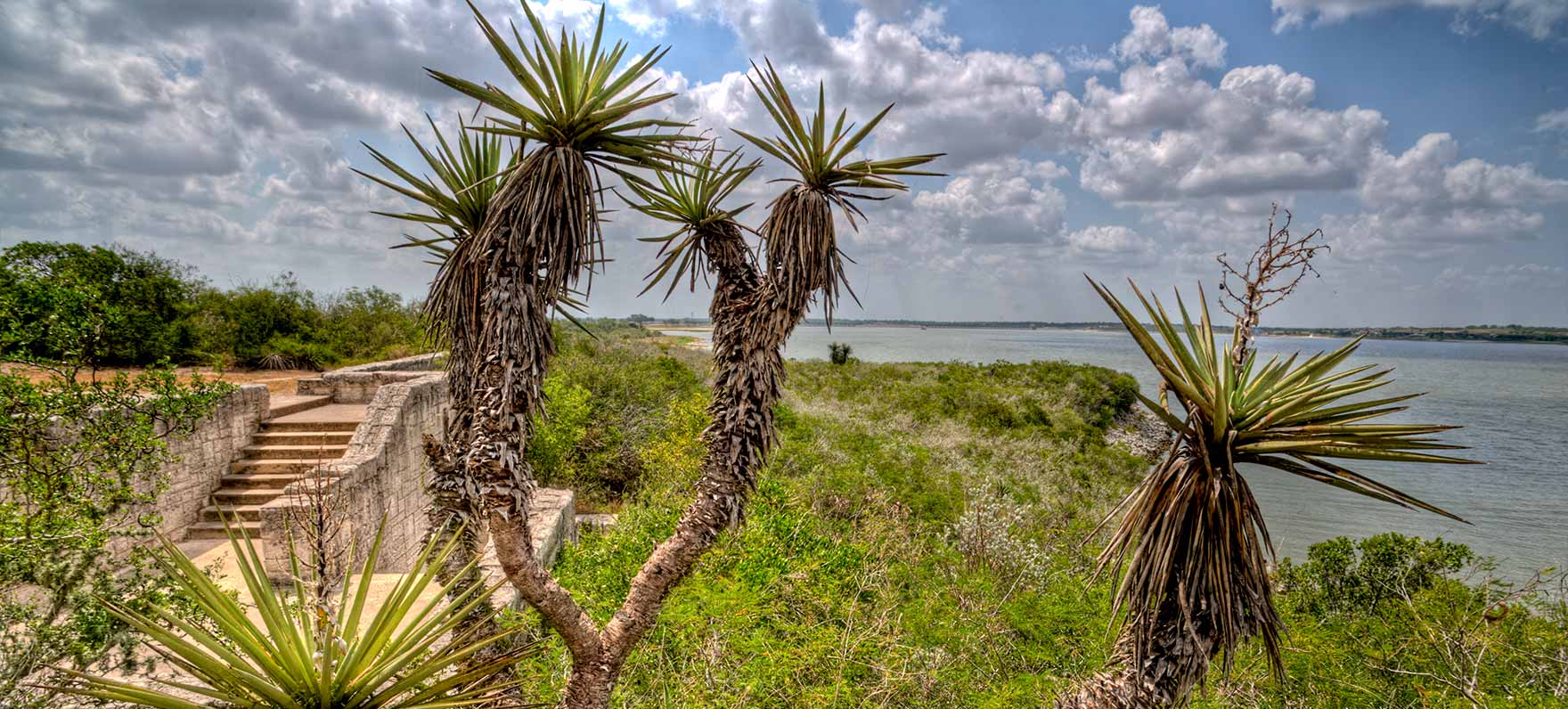
Premont sits in south central Jim Wells County, and its earliest chapter was written on open land rather than in a planned townsite. De la Peña and his heirs occupied the grant for roughly the next thirty years, a reminder that long before incorporation, the area functioned as ranch country shaped by large tracts, family stewardship, and sparse settlement. The city’s own history page captures that tradition in plain terms, presenting Premont as a place formed by rural settlement and ranching families whose labor defined the landscape.
That ranching base still helps explain the town’s structure now. Communities built on wide land holdings often grow around a few anchored institutions, not dense blocks, and Premont’s early development followed that pattern. The old grant, the ranching economy, and the later spread of homes, schools, churches, and businesses across a rural catchment all point to the same reality: Premont was never just a stop on the road, but a service center for a broader agricultural area.
How a town formed along the highway and the tracks
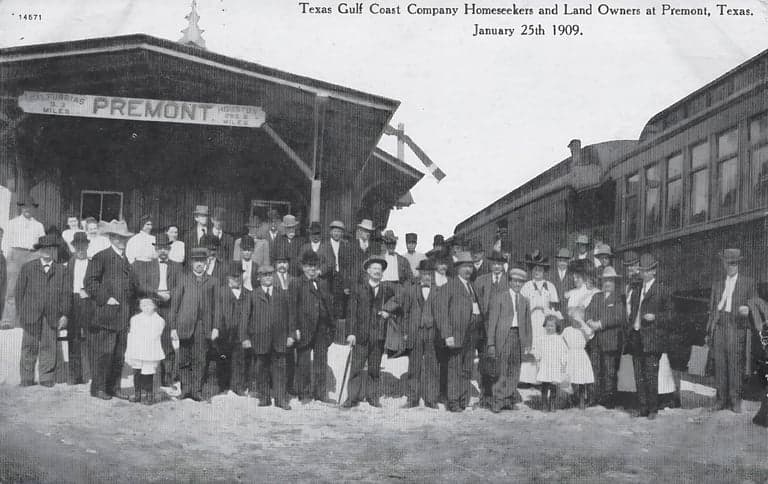
Modern Premont traces its formal beginning to 1908, when Charles Premont and Andrés Canales founded the community. Charles Premont also gave money for Santa Theresa Catholic Church, tying the town’s early identity to both settlement and faith-based institution building. A post office opened in 1909, giving the growing settlement an official civic foothold and making it easier for residents, farmers, and merchants to connect with the outside world.
By 1912, Premont was being described as a productive agricultural region with an estimated population of 800, ten businesses, three churches, a school, and the post office. The San Antonio and Aransas Pass Railway added a stop there in 1914, linking the town more firmly to regional trade and travel. For a small South Texas community, that combination of post office, church, school, railroad stop, and farm economy was not decorative. It was the infrastructure that let the town survive.
Schools, oil, and incorporation
Premont Independent School District was established in 1921, and the district later became the largest school district in Jim Wells County. That matters because schools are not just a public service in Premont, they are one of the main institutions knitting together the city and the surrounding rural area. Premont ISD says it serves students in the city of Premont and in rural areas of southern Jim Wells and southeastern Duval counties, with enrollment of about 747 students as of December 2024.
The town’s economy shifted again when its first producing oil well was drilled on May 12, 1933. Oil production, alongside dairy farming, helped revitalize the local economy after an earlier population drop, and Premont incorporated in 1939. These changes show how the town adapted when one rural economy alone was not enough. Ranching remained part of the story, but oil and education became equally important to civic survival.
What the population counts reveal
Premont’s population history shows a town that grew quickly, then settled into a smaller but still durable role. The estimated population reached 1,080 in 1941, then jumped to 2,538 with fifty-two businesses in 1952. By 1963, the town had seven schools, seven churches, forty-three businesses, and an estimated 3,049 residents, one of the clearest signs of postwar expansion in local institutions and commerce.
The later counts show a different pattern. Premont had 2,914 residents in 1990 and 2,772 in 2000, and the 2020 census counted 2,455 residents. Census Reporter’s ACS 2024 5-year data places the population at 2,428. Taken together, those figures suggest a community that no longer grows on the same scale it once did, even as it continues to serve a broad rural area. In that kind of town, the real civic question is not simply how many people live inside the city limits, but how many families still depend on its schools, roads, churches, and public services.
Why this history still matters in Jim Wells County
Premont’s place in Jim Wells County is best understood through its institutions as much as through its dates. The city operates as a general law Type A municipality, and that local framework sits alongside the larger reach of the school district, county services, and regional travel corridors that connect residents to the rest of South Texas. U.S. Highway 281 keeps Premont visible and accessible, but the town’s deeper continuity comes from the same forces that shaped it in the first place: land use, family networks, agriculture, and the need to build institutions where people actually live.
That is why a history page about ranching roots is more than a nostalgic summary. It explains why Premont still looks like a rural county seat-era community without being a county seat, why its school district serves students across county lines, and why population shifts matter so much here. The town’s past remains present in the land, in the schools, and in the way Premont continues to hold together a wide stretch of rural Jim Wells County.
This article was produced by Prism’s automated news system from verified source data, official records, and press releases, then run through automated quality and moderation checks before publishing. The system is built and supervised by the people who set the standards it runs under. Read our full AI policy.
Did this article answer your question?