Brown Water Advisory Issued After Heavy Rains, Wastewater Spill on Kauai
Brown water warnings spread across Kauaʻi after 22 sites exceeded recreational standards and a 72,000-gallon Waimea spill reached Kikiaola Small Boat Harbor.
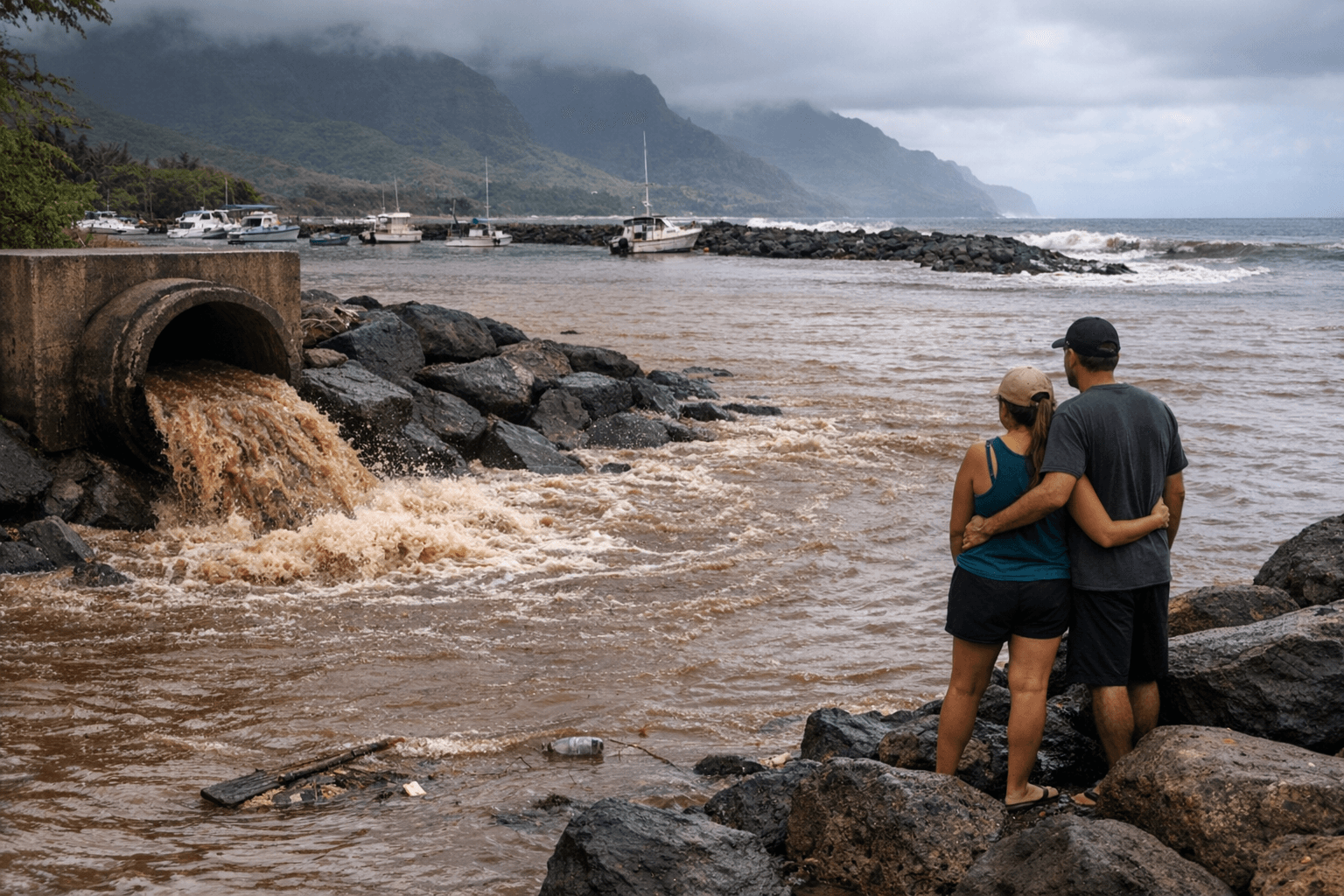
Kauaʻi beach plans were disrupted islandwide after heavy rains pushed 22 sites above recreational water-quality standards and a wastewater spill sent about 72,000 gallons toward Kikiaola Small Boat Harbor. The immediate risk is not just muddy water, but fecal contamination that can expose swimmers, surfers and paddlers to illness.
The Hawaiʻi Department of Health’s Clean Water Branch issued a Brown Water Advisory for the island after storm runoff raised concern about coastal waters. The department says brown-water contamination can carry pathogens and pollutants from overflowing sewage systems, cesspools, septic tanks and polluted runoff. Surfrider’s volunteer-run Kauaʻi Chapter Blue Water Task Force said elevated Enterococcus levels were found at 22 sites, and health officials use that bacteria as a warning sign because it indicates fecal pollution may be present. Surfrider says water is considered unsafe when Enterococcus exceeds 130 enterococci forming units per 100 mL.
For swimmers and families deciding whether a beach day is still worth it, the timing matters. The Department of Health says coastal waters are usually safe again after tidal flushing, often around 48 hours, but residents should wait for official updates. That warning is especially important after heavy rain, when runoff can keep carrying contamination long after the sky clears.
The wastewater problem added another layer of concern on the west side. Kauai Wastewater Management Division said the April 10 spill at the Waimea Wastewater Treatment Plant was caused by high flows from heavy rains and high infiltration and inflow. The spill, first reported on April 11 at about 7:50 a.m., was isolated to overflow from the effluent tank after biological treatment and ultraviolet disinfection. By early afternoon, about 72,000 gallons had spilled, and county officials believed it had reached Kikiaola Small Boat Harbor, where warning signs were posted.
The spill was not an isolated flare-up. A separate Waimea plant spill on March 14 was reported at about 64,000 gallons under similar heavy-rain conditions, underscoring how stormwater keeps testing the plant’s capacity. The county said it was working on immediate repair projects and on expanding capacity for injection wells and reuse distribution to handle higher storm flows.
Surfrider’s Kauaʻi monitoring adds a broader public-health context. The organization says it has tested beaches around the island since 2011. In its 2024 report, 18 regularly tested sites were monitored, and eight exceeded health standards in more than half of samples. Surfrider also says Hawaiʻi has about 83,000 cesspools discharging an estimated 52 million gallons of sewage a day, and 14 of 15 Kauaʻi and Oʻahu sites that exceeded recreational standards more than 50% of the time were in Priority 1 and 2 cesspool areas.
This article was produced by Prism’s automated news system from verified source data, official records, and press releases, then run through automated quality and moderation checks before publishing. The system is built and supervised by the people who set the standards it runs under. Read our full AI policy.
Did this article answer your question?