Hanapēpē’s rich history shapes Kauai’s biggest little town
Hanapēpē’s bridge, Friday Art Night, and compact historic core still power its economy and identity. The town also carries labor history and new housing pressure.

Hanapēpē still matters because it is not a museum piece. In barely 0.9 square miles, the town holds a working historic core, a weekly arts market, and a road network shaped by nearly a century of bridge building, all inside a place that the community still calls Kauai’s “biggest little town.”
A valley that became a town of its own
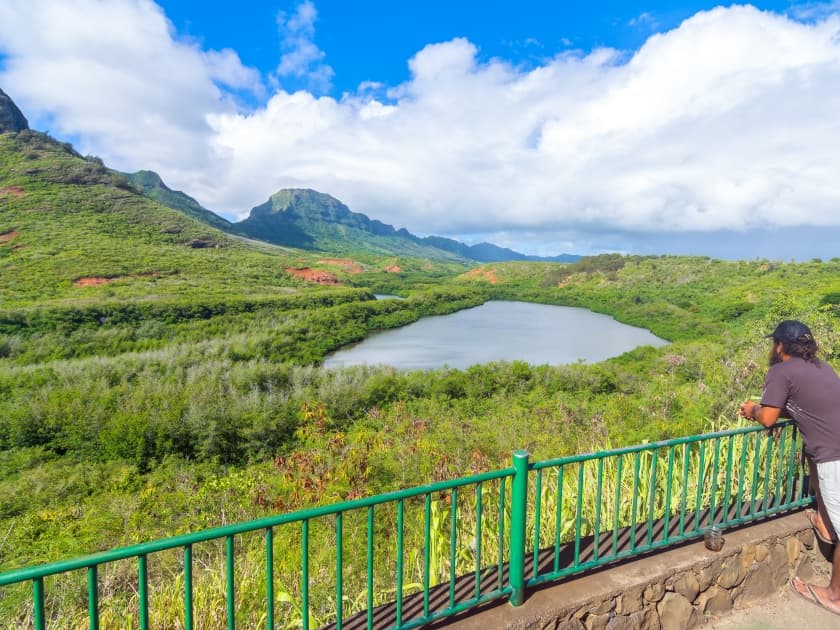
Kanaka Maoli lived in the Hanapēpē valley for centuries before Captain Cook arrived in 1778, and the name Hanapēpē is generally understood to mean “crushed bay,” a reference to the cliffs and landslides that frame the shoreline. The valley was fertile enough to support banana, sugar cane, sweet potato, kalo, and salt production, and salt trading became the area’s earliest entrepreneurial legacy.
That matters because Hanapēpē developed differently from many plantation towns on Kauai. Its built identity came from entrepreneurial immigrants, including former sugar workers who set up farms and small businesses rather than living in plantation camps. That pattern still shapes how the town is understood today: as a place of independent commerce, community organizing, and preservation rather than a single-company settlement.
The numbers underline how concentrated that identity is. The U.S. Census Bureau says Hanapēpē CDP covers about 0.9 square miles. The 2020 census counted 2,678 residents, while Census Reporter’s ACS profile lists 2,638. In a place that small, a few blocks of storefronts, a bridge, and a weekly event can carry outsized weight for the whole community.
The bridge corridor that still defines the street
Hanapēpē’s bridge story begins with the Hanapēpē Road Bridge, built in 1911 and later altered in 1927 with an elevated walkway and metal railings. Historic Hawaii Foundation identifies it as the oldest reinforced concrete deck girder bridge in Hawaii and the longest bridge of its type in the state. That is more than an engineering footnote. It is part of the physical frame that gives the town center its recognizable scale and street life.
A second span followed in 1938, when the Hanapēpē River Bridge on Kaumualii Highway was built as part of Federal Aid Highway Project 12-J. The contract cost $272,676, split evenly between federal and territorial funds. By 2018, the Hawaii Department of Transportation said the bridge would be replaced over the next two years because the new structure would improve safety, width, railings, transitions, approaches, and load capacity.
The old bridge did not disappear from public memory when the replacement came online. By 2023, interpretive signs and remnants of the 1938 bridge had been placed in Hanapēpē Community Park, turning the site into a visible reminder of how much the town’s daily movement has depended on public works. In Hanapēpē, the bridges are not separate from the historic district. They are part of how the district works.
Friday Art Night is the town’s weekly engine
Hanapēpē Economic Alliance formed in 1997 to support economic revitalization, historic preservation, beautification, and promotion. That same year, it established Friday Art Night, the event that still helps set the rhythm of the town’s commercial life. Its current listing says the art market runs every Friday, which means the event is not a one-off festival but a standing appointment in the week.

That recurring traffic is why Hanapēpē’s arts scene has endured. Go Hawaii describes the town as the art capital of Kauai and points to Friday art events, shops, galleries, and the swinging bridge as core attractions. The appeal is not only visual. People come for the experience of moving between galleries, stores, and the compact historic street grid, which keeps foot traffic circulating through local businesses instead of isolating art as a standalone attraction.
This is where Hanapēpē’s old scale becomes an economic advantage. A town that small can turn one evening into a meaningful retail and cultural pulse. The same narrow footprint that once supported salt trade and local farming now supports artists, shop owners, and event organizers who keep the area active after regular business hours.
Memory of labor remains part of the landscape
Hanapēpē’s public story also carries the Hanapēpē Tragedy, a defining and painful chapter in Hawaii labor history. For the centennial commemoration, the Hawaii State Archives digitized and posted more than 1,000 pages of records in partnership with the Filipino-American Historical Society of Hawaii. State materials say 16 Filipino strikers and four police officers died in the 1924 clash.
That history is not separate from the town’s preservation work. It gives Hanapēpē a layer of interpretation that goes beyond art walks and storefront charm, and it helps explain why memorialization remains active. State agencies are planning a Battle of Hanapēpē memorial with a target installation date of late 2026, which keeps the town in the middle of an ongoing public conversation about labor, memory, and civic recognition.

For residents and visitors alike, that means Hanapēpē is still being read in public. Its streets carry not just commerce and tourism, but also the record of conflict that helped shape Hawaii’s labor rights story.
The next pressure point is land and housing
The town’s historic core is not the only force shaping its future. The State Department of Hawaiian Home Lands is developing a Hanapēpē Homestead Community on about 365 acres. That introduces a major land-use and housing dimension to a place already defined by preservation, tourism, and a dense commercial center.
The stakes are straightforward. If Hanapēpē remains a living town, then preservation cannot be treated as a decorative layer on top of the economy. The bridges, the Friday art market, the labor memorials, and the homestead plan all point to the same reality: Hanapēpē is still being built around by policy, organized by community effort, and sustained by people who use the town every week, not just photograph it once.
This article was produced by Prism’s automated news system from verified source data, official records, and press releases, then run through automated quality and moderation checks before publishing. The system is built and supervised by the people who set the standards it runs under. Read our full AI policy.
Did this article answer your question?