Invasive Green Algae Found Along Kauai's South Shore, State Warns
State surveys found invasive green algae smothering over 80% of seafloor in some Kauai south shore patches, with boat anchors the likely vector spreading it.
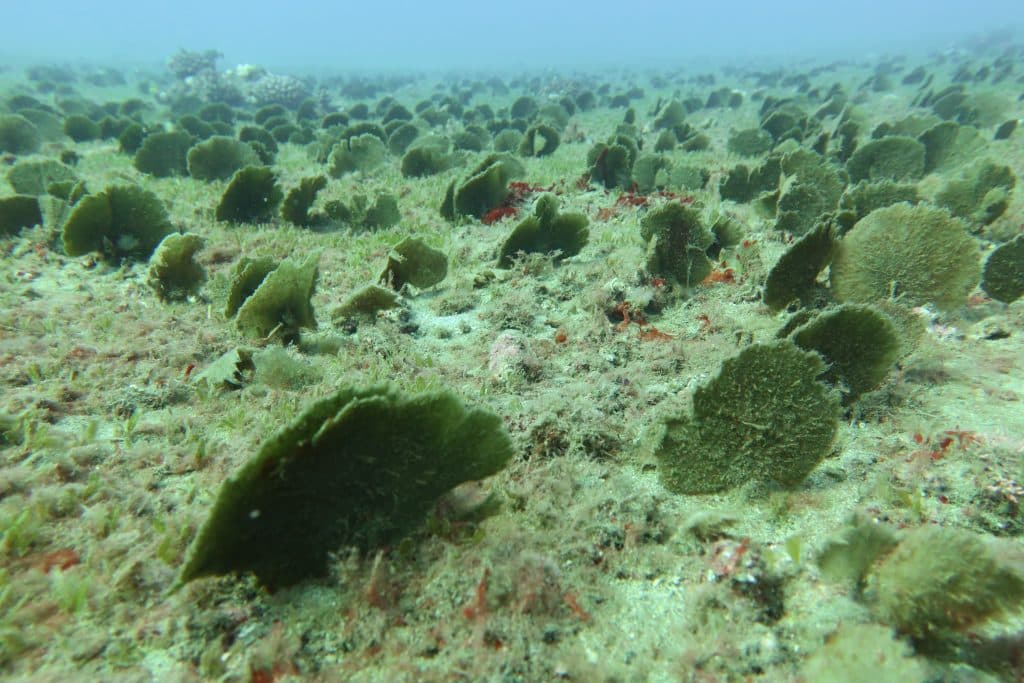
An invasive green algae is blanketing portions of Kauai's south shore seafloor at densities exceeding 80% cover in some patches, and state officials believe boat anchors are the primary vector carrying it to new sites.
The Hawaii Department of Land and Natural Resources' Division of Aquatic Resources issued an advisory April 2 after October 2025 surveys confirmed Avrainvillea erecta at multiple locations along the south shore corridor. Documented sites stretch from Kaumakani and Lāwai Kai to Spouting Horn, and from offshore Kōloa Landing to Kiahuna Beach in Poʻipū. The species was newly recorded on Kauai in 2025, though it had been documented elsewhere in the Hawaiian Islands.
The surveys found the algae primarily in sandy-bottom habitats, typically around 60 feet deep, with confirmed sightings down to 120 feet and likely deeper still. Patch densities ranged from sparse to dense, with some areas recording more than 80% bottom cover.
The anchor connection is particularly alarming. Circular patch patterns documented at Kaumakani point directly to anchoring activity: when anchor chains drag across the seafloor, they dislodge fragments of Avrainvillea erecta, and those fragments can root and establish new colonies elsewhere. DAR asked boaters and fishers to avoid anchoring where the algae is known to occur. When anchoring is unavoidable, the agency recommended cleaning anchors and lines into a bucket or container to capture plant material, then sanitizing gear with spray alcohol or a diluted bleach solution before moving to another site. Rinsing gear back into the ocean, even incidentally, risks new introductions.
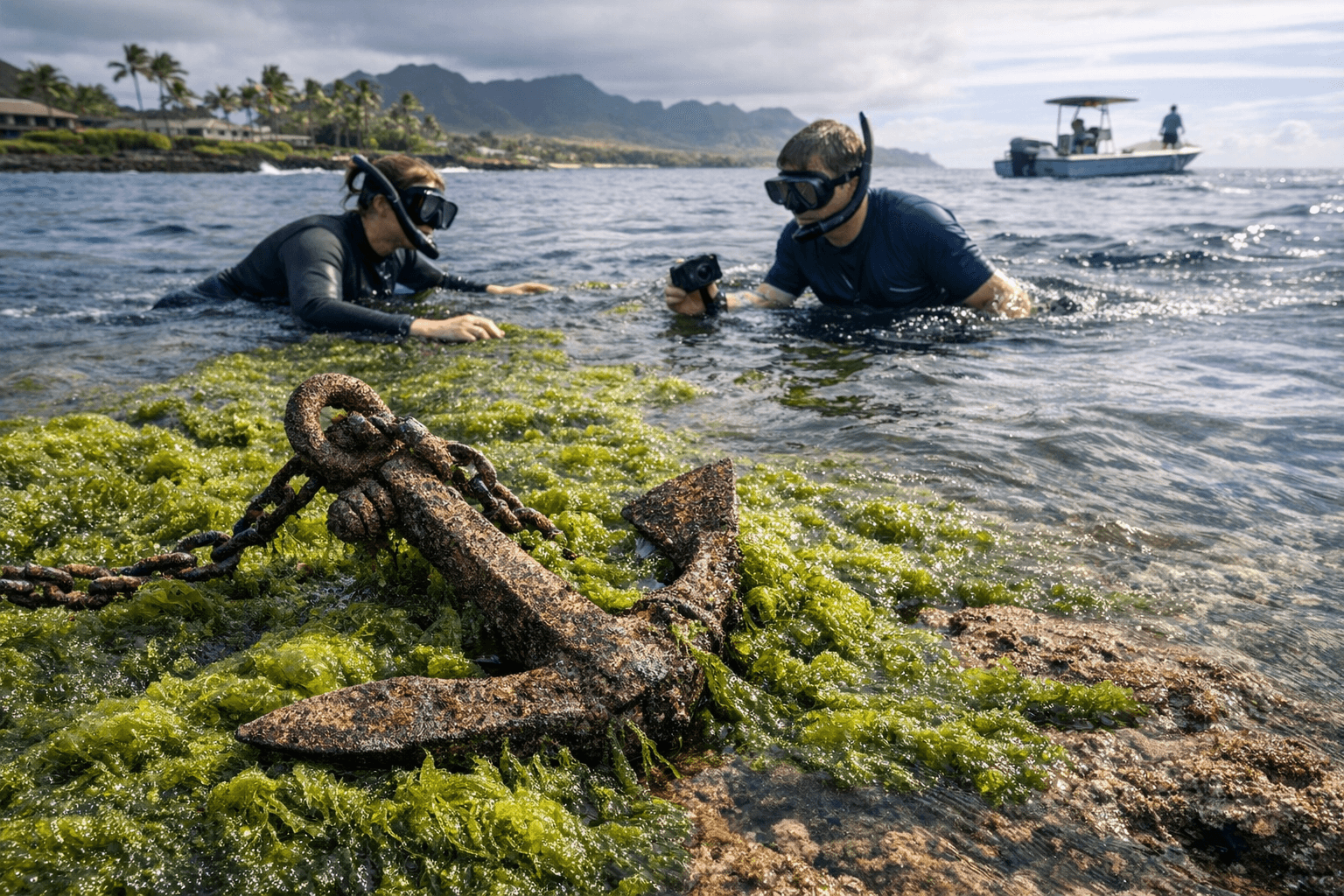
The algae's biology compounds the challenge. Growing on sandy bottoms beyond snorkeling depth, Avrainvillea erecta can spread silently and go undetected until well established. In dense patches it traps sediment, alters substrate conditions and can outcompete native algae and seagrasses, reducing the habitat complexity that nearshore fisheries depend on.
The affected corridor supports active nearshore fisheries and anchors the dive and snorkel tourism concentrated around Poʻipū and Kōloa Landing. The Kauaʻi Invasive Species Committee and community volunteers have prior experience with algae removal programs, but early cooperation from ocean users will determine how much ground the species gains before targeted response is possible. Removing a spreading invasive from sandy seafloor at depth is substantially costlier than keeping it from spreading in the first place.
Ocean users who spot Avrainvillea erecta along the south shore are asked to report sightings to DAR.
This article was produced by Prism’s automated news system from verified source data, official records, and press releases, then run through automated quality and moderation checks before publishing. The system is built and supervised by the people who set the standards it runs under. Read our full AI policy.
Did this article answer your question?