Kauai Fire Department warns residents about lithium-ion battery safety risks
A Kapaʻa vehicle scare showed how quickly lithium-ion batteries can fail, and Kauaʻi firefighters say homes, cars and garages all need safer charging habits.
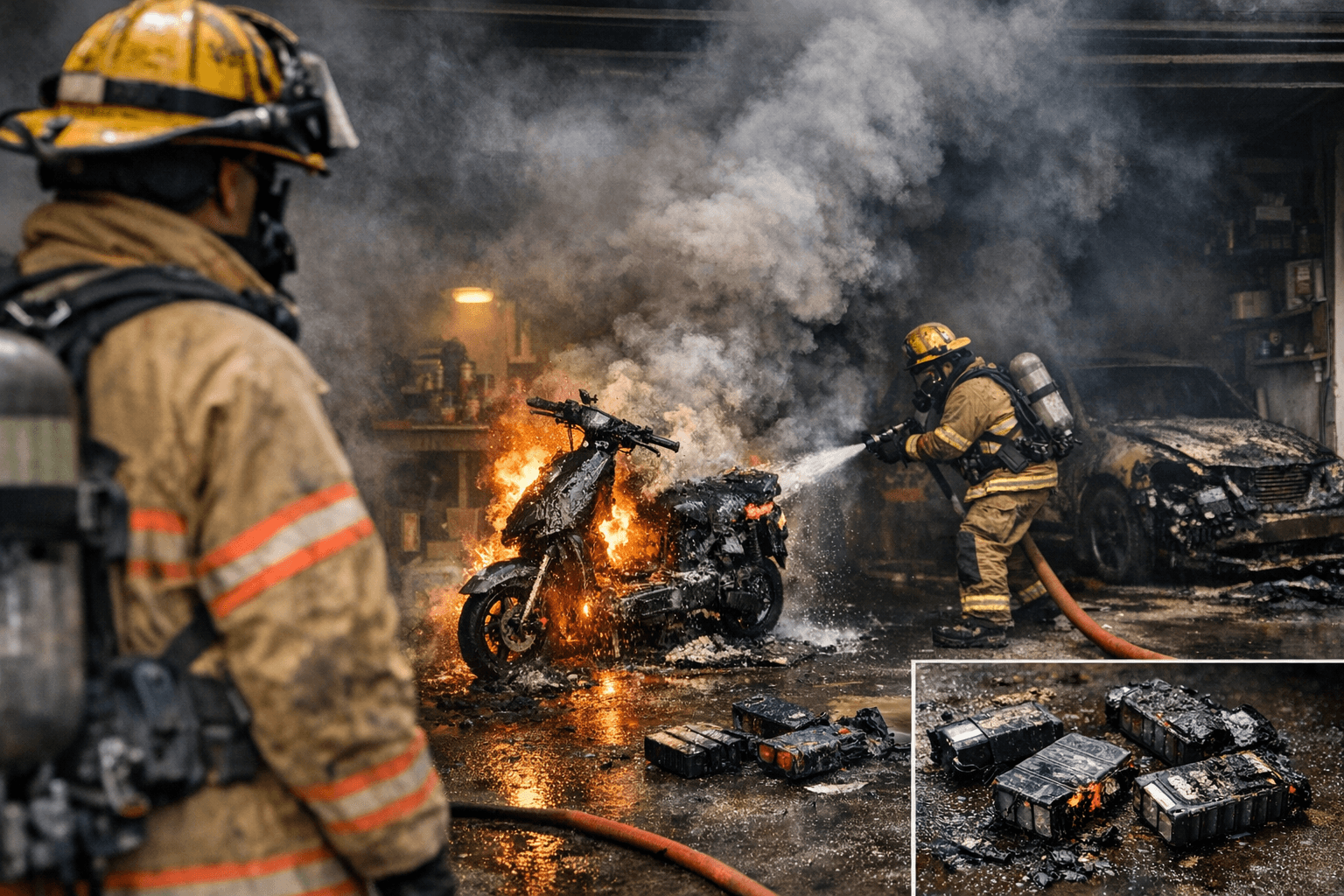
A lithium-ion battery inside a 3-wheel Akimoto vehicle in Kapaʻa went into thermal runaway last week, sending smoke into the air and forcing firefighters to keep the vehicle under watch until the hazard subsided. No tow company would move it right away, so the Kauaʻi Fire Department and Department of Public Works had to work together to move and monitor it.
That incident is now part of a broader warning from the Kauaʻi Fire Department, which said lithium-ion batteries are packed into everyday devices and can become dangerous when they are damaged, misused or charged improperly. In an April 15 public-safety message, Chief Michael Gibson said the batteries hold a large amount of energy in a compact package, which means overheating can lead to fast-moving fires and toxic off-gassing.
The department tied the reminder to the National Fire Protection Association’s Fire Prevention Week campaign, whose 2025 theme was Charge into Fire Safety: Lithium-Ion Batteries in Your Home. The national campaign focused on how to buy, charge and dispose of lithium-ion batteries safely, and pointed to the devices that now rely on them: smartphones, tablets, laptops, power tools, lawn tools, e-cigarettes, headphones, toys, e-bikes, e-scooters, drones and portable chargers.
KFD urged residents to buy devices and replacement batteries from reputable manufacturers and to use the charger that comes with the device when possible. The department warned against counterfeit or off-brand chargers and said batteries should be charged on hard, flat surfaces, not on beds or couches where heat can build up. The U.S. Consumer Product Safety Commission says people should stay present while micromobility devices are charging and never charge them while sleeping or away from home, noting that many lithium-ion battery fires and deaths have happened at night while families were asleep.
The warning signs are hard to ignore if people know what to look for: swelling, unusual warmth, popping sounds, smoke, leaking or strange odors. The department also advised residents not to leave batteries in hot vehicles, puncture or crush them, or ignore a device that is acting differently. If a battery starts smoking or burning, residents should call 9-1-1 immediately.
For worn-out batteries, the county is pointing people to the Kauaʻi Resource Center at 3460 Ahukini Road in Līhuʻe. The center accepts resident recycling for alkaline, NiCad and lithium batteries and is open Monday through Friday from 7:45 a.m. to 4:30 p.m. County guidance says lithium-ion batteries should not go in the trash because they can ignite in a landfill or cause environmental contamination, and that small-format lithium-ion batteries, including some rechargeable tools up to 4 pounds, can be dropped off year-round. It also says 9-volt batteries and higher should have taped terminals before recycling.
This article was produced by Prism’s automated news system from verified source data, official records, and press releases, then run through automated quality and moderation checks before publishing. The system is built and supervised by the people who set the standards it runs under. Read our full AI policy.
Did this article answer your question?