Kauai police gun seizure rules draw scrutiny after homicide suspect case
A Kīlauea man under multiple TROs was later indicted after police say he kept 20 guns, exposing how Kauai’s seizure rules rely on registration, consent or a warrant.

Kauai’s gun seizure rules are under fresh scrutiny after a Kīlauea man who was subject to multiple temporary restraining orders was later accused of keeping an arsenal that included 20 firearms. The case has sharpened questions about what Kauai police can take immediately, what they must first prove in court, and why repeated warnings from neighbors did not stop the violence that ended in homicide.
William Robert Sinclair, 51, of Kīlauea, was indicted by a Kauai grand jury on June 18 on 28 counts. Prosecutors say he is accused of killing Sergio Reyes Hernandez, 37, on or about June 5. Kauai police said Hernandez was found dead at his workplace in Hanalei at about 12:50 a.m. on June 6, and another Kīlauea resident was grazed by a bullet about four hours later, at around 4:45 a.m.
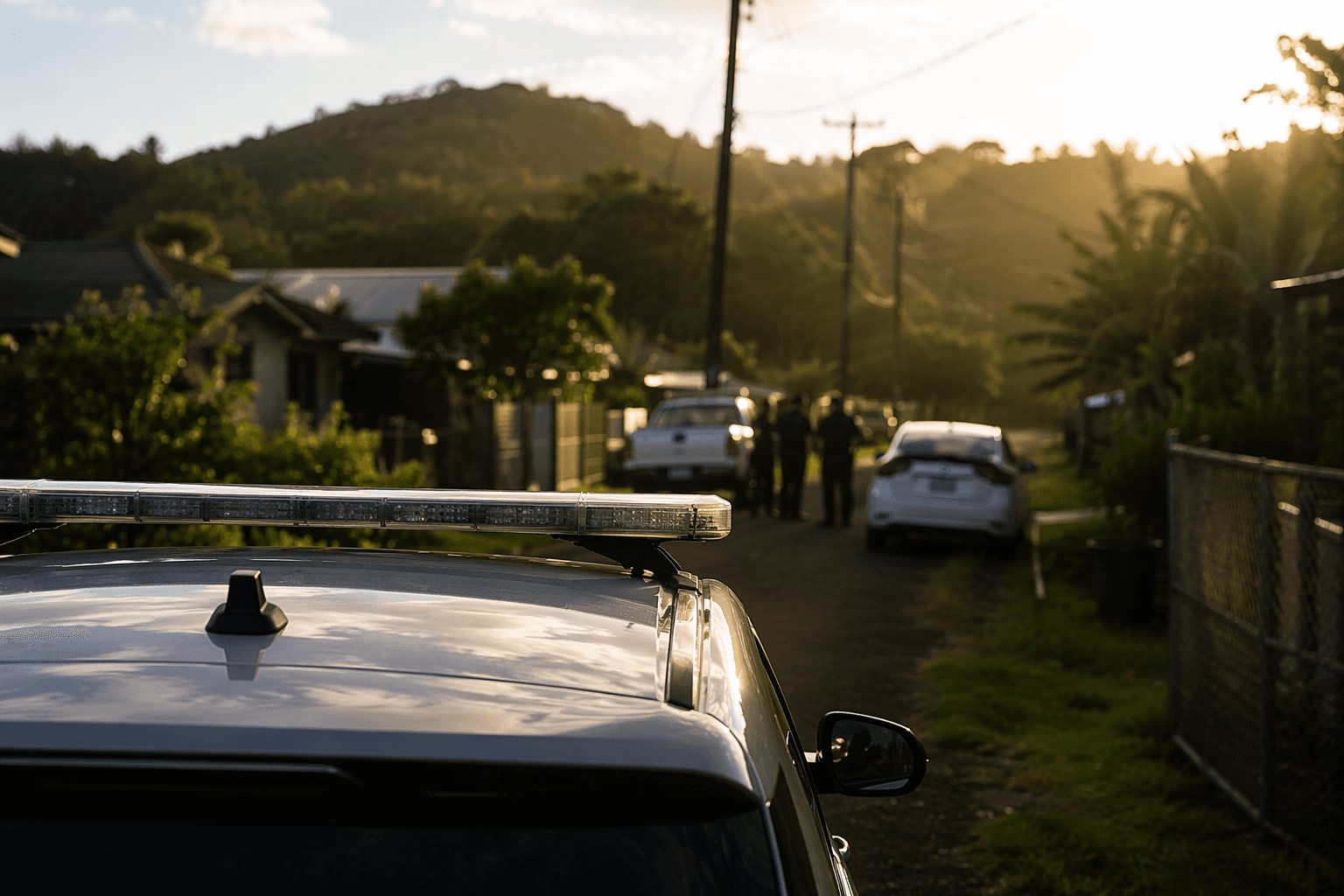
The manhunt that followed began in Kīlauea and ended in Kapaa, where Sinclair was captured on June 8. A later report said his bail was raised from $500,000 to $1.5 million. After his arrest, officers reportedly recovered three pistols, two shotguns, two semi-automatic handguns, 13 rifles, three suppressors and ammunition. The indictment says he possessed 20 firearms, three suppressors and ammunition while prohibited as a convicted felon.
That is where the policy gap becomes central. Hawaii law prohibits firearm possession by people subject to domestic violence protective orders, but it does not force police to remove every gun in every case. Officers may seize firearms in plain view or during a consensual search, and if they cannot locate firearms they know are being kept, they may seek a search warrant. In practice, Kauai police have said they review firearm registration records when a TRO is served and can recover registered guns. But Sinclair, as a convicted felon, could not lawfully register firearms in Hawaii, which meant any weapons he kept off the books could be harder to seize without a warrant or surrender.
Neighbors said they had repeatedly called police over the prior year to report Sinclair waving guns, making threats and shooting on his property. They also said they obtained restraining orders because they feared him. Those complaints are now driving the county’s larger accountability question: who knew what, what steps were taken after each call, and whether the response matched the danger that was already playing out in Kīlauea and Hanalei.
This article was produced by Prism’s automated news system from verified source data, official records, and press releases, then run through automated quality and moderation checks before publishing. The system is built and supervised by the people who set the standards it runs under. Read our full AI policy.
Know something we missed? Have a correction or additional information?
Submit a Tip