Kauai tourist rescue fees bring little revenue amid ongoing safety concerns
Kauai’s tourist rescue fee brings in little money even as Waimea Canyon claims alone could cost taxpayers $550,000 and rescue calls keep coming.

Tourist rescue fees on Kauai are producing only a small return, even as the county and state keep absorbing the costs of injured hikers, helicopter responses and legal claims tied to some of the island’s most popular trails. In Waimea Canyon State Park alone, Hawaii taxpayers were tentatively on the hook for $550,000 in two injury claims, including a $450,000 settlement for a Utah visitor hurt on the Waipoo Falls trail in May 2021 and another possible $100,000 payment for a hiker injured there in June 2023.
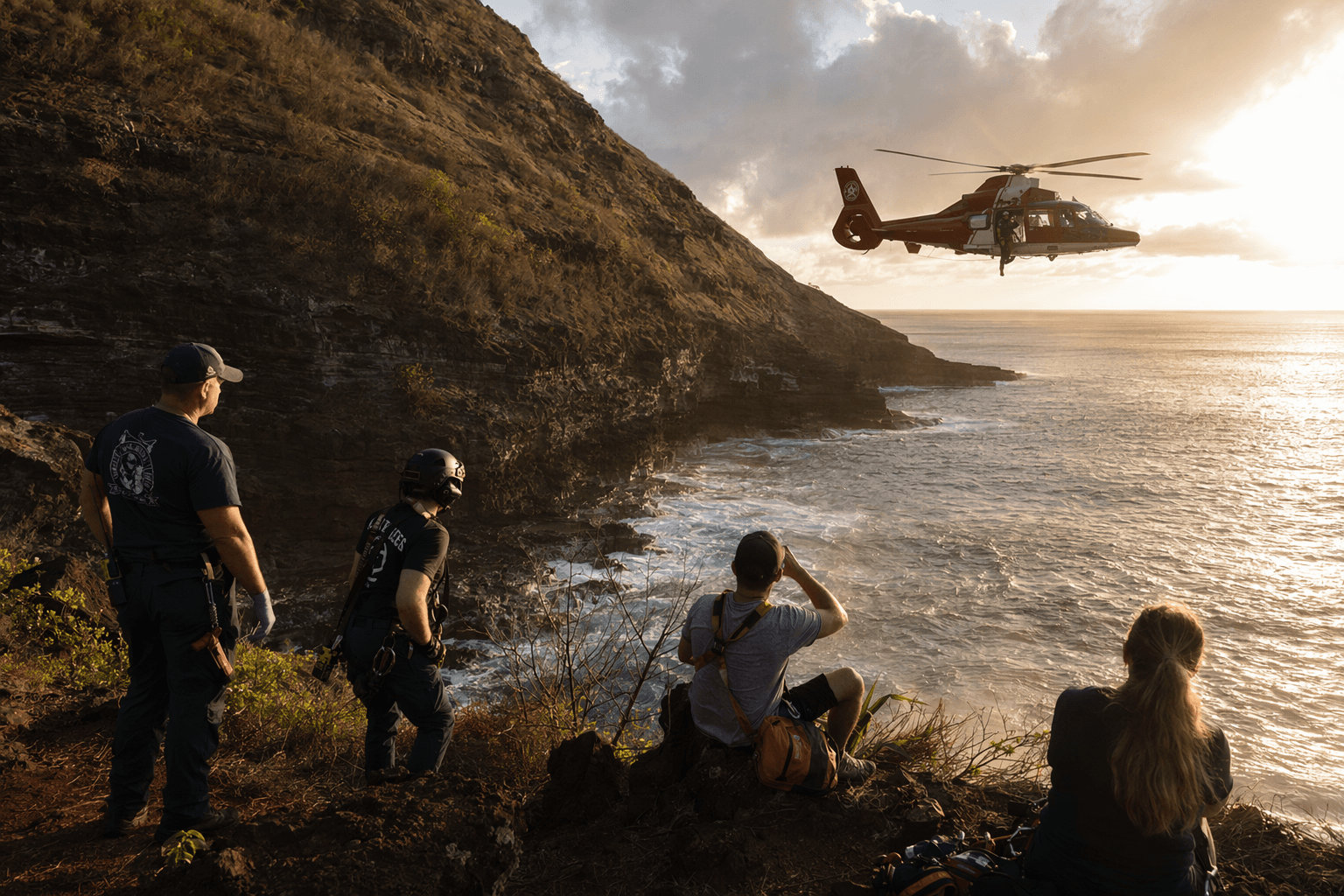
The safety problem is not abstract. On March 23, 2025, Kauai County Fire Department crews rescued an injured hiker on the Makaleha Falls Trail and a Utah visitor on the Kalalau Trail near mile marker 1.5. Those calls came on top of repeated rescue activity at places where visitors often underestimate distance, weather, terrain and trail conditions, especially around Waimea Canyon State Park, Kōkee State Park and the steep north shore routes that attract hikers year-round.
Kauai County Fire Department’s FY 2025 annual report shows the scale of the response burden. The department has 225 employees, including 72 uniformed ocean safety personnel, one roving beach patrol and three roving jet ski patrols, one in each district. Search, rescue and fire suppression are also supported by the department’s air operations helicopter, a reminder that every trail emergency can quickly become an expensive, multi-agency operation.
That is why the county’s tourist rescue fee matters, even if it is bringing in little revenue. The program is supposed to help offset the taxpayer cost of rescues that are often triggered by visitors, but the gap between what the county collects and what one serious incident can cost appears wide. With backlogged trail maintenance and hazardous conditions still creating liabilities, the fee looks less like a full solution than a narrow patch on a much larger problem.
Kauai has already shown one answer at Haena State Park. Before the redesign, average daily visitor counts were about 3,000. The new system, launched in mid-2019, set a 900-person daily cap, added an advance reservation shuttle system and increased law enforcement. Hui Makaāinana o Makana won a revocable permit in July 2021 to manage parking, online reservations and the shuttle system, and Act 72 later opened the door to a more stable 10-year contract for place-based nonprofits to handle parking reservations and concessions at certain state parks.
The state has now taken the same logic statewide. In May 2025, Hawaii became the first U.S. state to enact a visitor green fee, a .75 percentage point increase to the transient accommodations tax that is expected to raise about $100 million a year. For Kauai, the question is no longer whether visitors should help pay. It is whether the county’s rescue fee is too symbolic, too limited or simply too poorly designed to meet the costs the island keeps carrying.
This article was produced by Prism’s automated news system from verified source data, official records, and press releases, then run through automated quality and moderation checks before publishing. The system is built and supervised by the people who set the standards it runs under. Read our full AI policy.
Know something we missed? Have a correction or additional information?
Submit a Tip