Kauai urges dry-land activities as quake, high surf keep beaches unsafe
Beach plans stayed off the table in Kauai County as quake recovery, high surf and bacteria alerts kept north- and west-facing shores unsafe.

Kauai County residents and visitors were being steered toward dry-land plans, not the ocean, as earthquake recovery on Hawaii island overlapped with high surf and public-health advisories that kept swimming and other beach recreation risky along exposed shores. For the next 24 to 72 hours, the safest choices were indoor activities or walks in areas such as Poipu, where people could stay clear of the surf.
The concern began with a magnitude-6.0 earthquake near Hōnaunau-Nāpōopoo on Hawaii island at 9:46 p.m. HST on Friday, May 22, 2026. The U.S. Geological Survey said the quake was widely felt across the Hawaiian island chain and potentially damaging, and Hawaii County Civil Defense reported road closures, power outages and structures shifting on their foundations.
Civil Defense also urged residents and businesses to check buildings, utilities, water catchment systems and roadways for damage. That message matters beyond Hawaii island because a strong quake can disrupt the systems Kauai depends on, from transportation to emergency response, even when the shaking is centered elsewhere in the state.
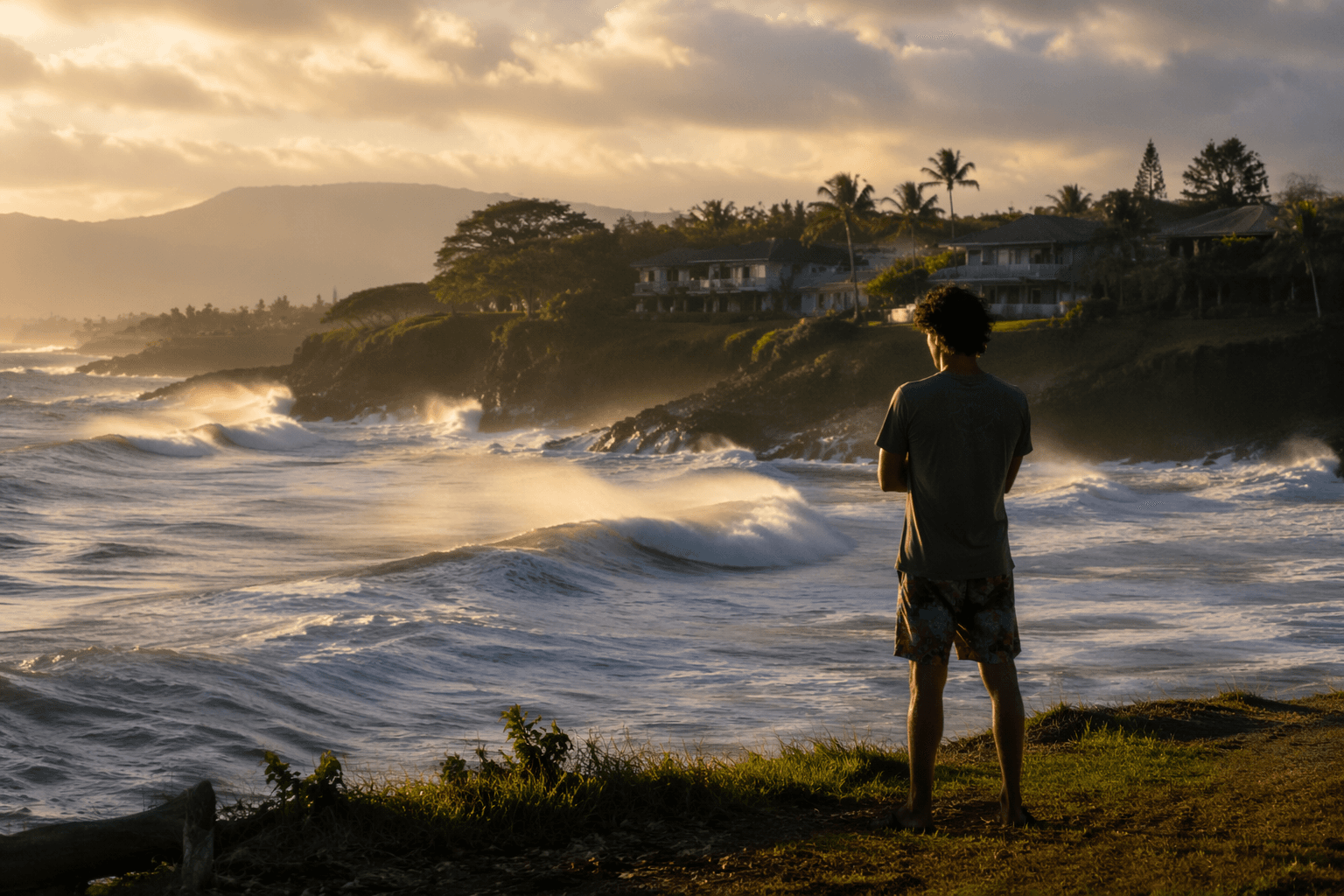
On Kauai, the immediate coastal risk was amplified by surf and water-quality warnings. County advisories in Hawaii have warned that high surf along north-facing shores and west-facing shores can make swimming dangerous, and Kauai County continues to direct people to official weather-and-surf information before heading out. That means families planning beach time should assume conditions can change quickly and keep children out of the water unless local guidance says otherwise.
The health risk is just as important as the wave hazard. The Hawaii Department of Health’s Beach Monitoring Program issues public advisories when sewage leaks or spills, heavy rain or elevated bacteria levels could raise the chance of illness for people using the state’s beaches. After heavy runoff or contamination warnings, even calm-looking water can carry exposure risks that make ocean recreation a bad tradeoff.

Kauai Emergency Management Agency says its mission is to protect lives and property by coordinating preparedness, response and recovery from natural disasters, and that broader recovery lens fits the moment. Until surf eases and water advisories clear, Kauai’s safest plan is simple: stay on land, check official county updates, and wait for conditions to improve before returning to the shoreline.
This article was produced by Prism’s automated news system from verified source data, official records, and press releases, then run through automated quality and moderation checks before publishing. The system is built and supervised by the people who set the standards it runs under. Read our full AI policy.
Did this article answer your question?