KEMA Urges Kauai Residents to Prepare for Tsunamis This April
If a tsunami warning hit Kauai tonight, a local wave could reach shore in minutes. KEMA wants you to know your zone now.
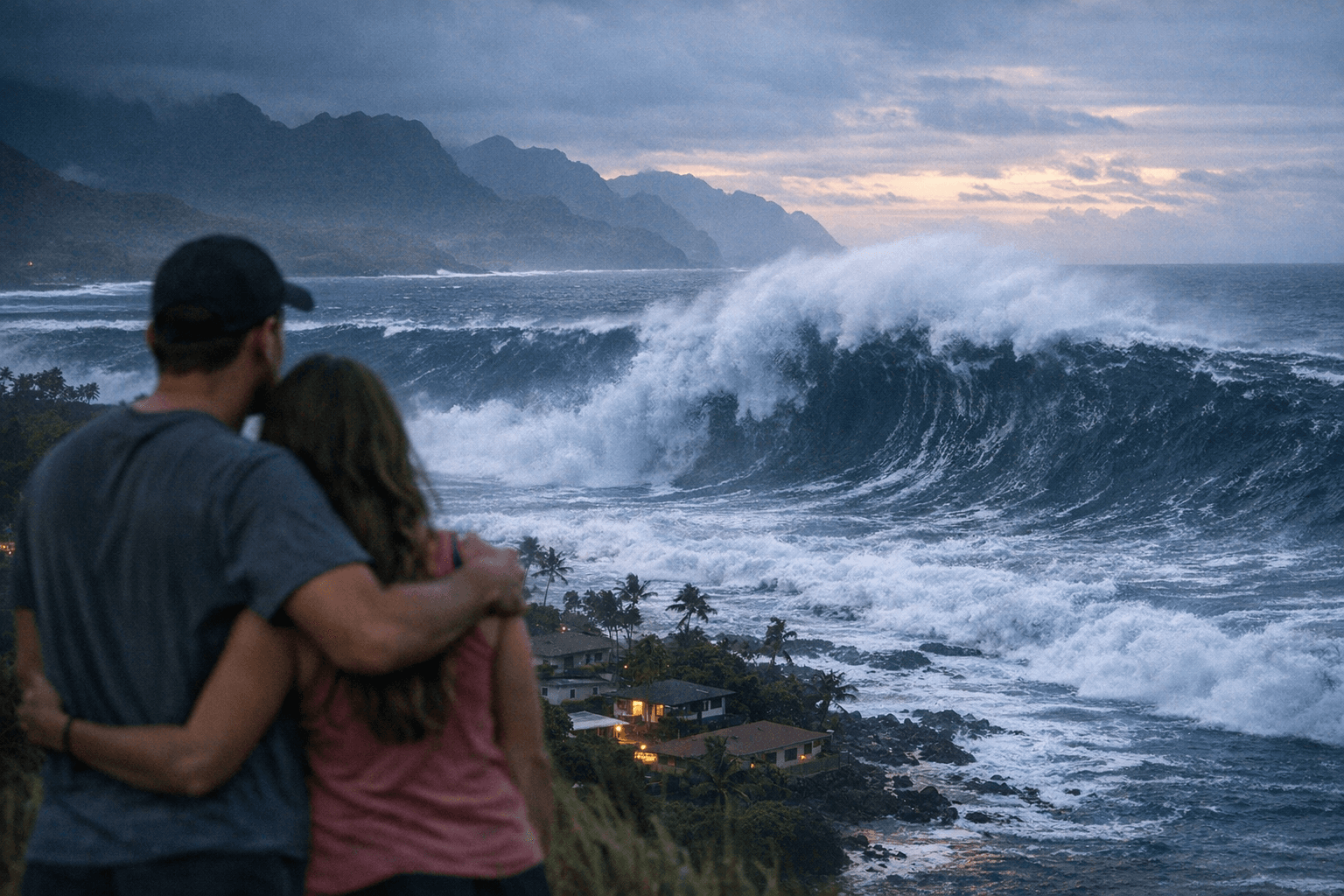
If a tsunami warning sounded tonight, would you know which direction to run? Kaua'i Emergency Management Agency is counting on that question staying uncomfortable enough to prompt action. In a county press release issued April 2, KEMA joined statewide emergency partners to kick off Tsunami Awareness Month with a direct message to residents of Kaua'i's most exposed coastlines: plan now, not when sirens are already wailing.
The critical distinction KEMA wants every island household to understand is the difference between a local and a distant tsunami. A distant event, triggered by a major earthquake in Alaska, can give Hawai'i roughly five hours of warning; a quake from Chile may allow as many as 14. But Kaua'i sits at a geographic disadvantage no preparation can change: it is the first Hawaiian island in the path of a distant tsunami arriving from the northwest Pacific. During the 2025 Kamchatka tsunami event, Hawaii County Civil Defense confirmed that waves were expected to reach Kaua'i's coastline before any other island in the chain. A locally generated earthquake near the south flank of Hawai'i Island, according to University of Hawai'i modeling cited by the U.S. Geological Survey, can produce waves reaching nearby shores in as few as four to five minutes, well before an official alert can reach most phones.
KEMA specifically called out the low-lying coastal communities of Līhu'e, Kapa'a, Kōloa, and Hanapēpē as areas where residents should identify high-ground evacuation points and physically practice their routes. Evacuation zone maps for the island are available through the county at kauai.gov. Hawai'i's statewide outdoor warning sirens are tested monthly at 11:45 a.m. on the first day of each month; knowing what a steady attention alert tone sounds like before an emergency is part of what KEMA is urging residents to confirm this April.
The agency's go-bag standard: water, food, medications, and supplies sufficient for at least 72 hours. Visitors staying in coastal areas of Kaua'i, where hotel corridors often sit within inundation zones, are encouraged to ask front desk staff about the nearest evacuation route on arrival, not after a warning is issued.
This year's campaign carries added weight after a series of Kona low impacts battered the island earlier in the spring, reminding residents that multi-hazard scenarios, where flooding, storm surge, and tsunami risk overlap, are not theoretical. KEMA's April outreach includes educational sessions aimed at schools, businesses, and neighborhood organizations across the island.
Sign up for Kaua'i's official emergency alerts and access evacuation zone maps at kauai.gov/emergency-management. The Pacific Tsunami Warning Center, based in 'Ewa Beach on O'ahu, issues all official tsunami alerts for Hawai'i; its guidance, not social media, is the authoritative source when warning tones sound.
This article was produced by Prism’s automated news system from verified source data, official records, and press releases, then run through automated quality and moderation checks before publishing. The system is built and supervised by the people who set the standards it runs under. Read our full AI policy.
Did this article answer your question?