Nawiliwili Harbor Serves as Kauai's Vital Commercial and Cruise Gateway
Nawiliwili Harbor moves every container of consumer goods, barrel of fuel, and cruise passenger that keeps Kauai running — here's what that means for the island's economy.
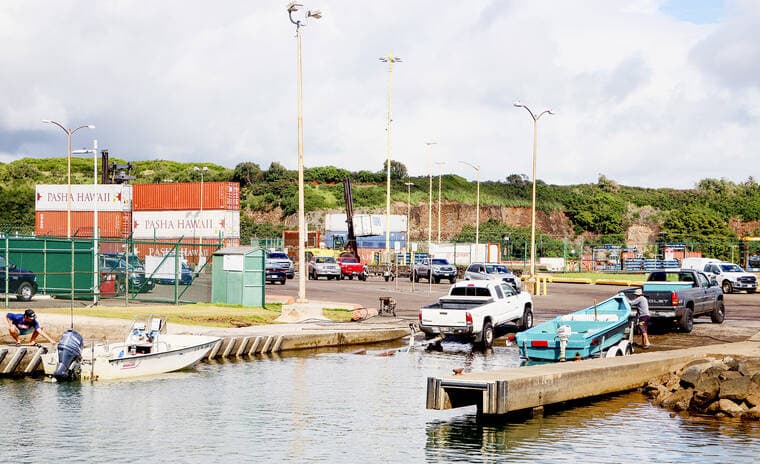
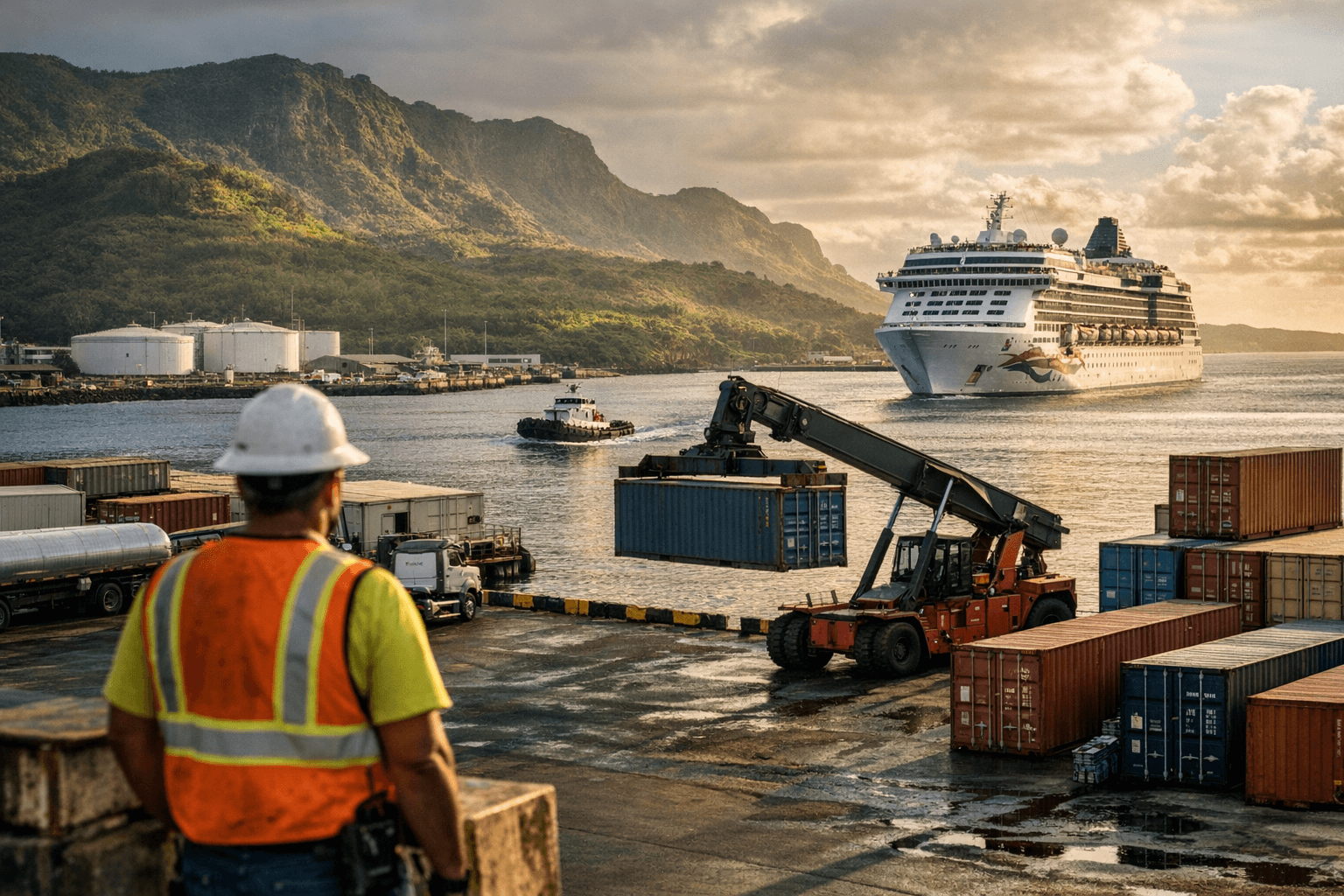
Nawiliwili Harbor sits at the southeastern edge of Kauai, and virtually every gallon of fuel, bag of cement, and flat-screen television that reaches the Garden Isle passes through it. As the island's primary commercial harbor and cruise pier, Nawiliwili is not simply a port: it is the physical mechanism that makes daily life on Kauai possible.
The Harbor's Core Function
Nawiliwili Harbor is the primary commercial harbor and cruise pier for the island of Kaua'i, serving as a crucial logistics and visitor gateway. The harbor supports the flow of consumer goods, construction materials, fuel, and freight, meaning that the shelves at grocery stores in Lihue, the rebar at construction sites in Koloa, and the diesel powering generators across the island all move through this single facility. Because Kauai has no land connection to any other island or the continental United States, the harbor's operational reliability is not a convenience but a necessity.
Together with Lihue Airport, Nawiliwili forms the paired backbone of the island's transportation infrastructure. County planning materials describe both facilities as "central facilities for airline and cruise ship passengers and cargo," underscoring how completely the island depends on this southeastern corridor for both people and goods. A disruption at either facility ripples immediately into supply chains and visitor arrivals across every district of Kauai.
Nawiliwili's Place Within the Lihue Economy
The harbor does not operate in isolation. It is embedded in Lihue, which county planning documents describe plainly as "the heart of Kauai" and "the hub of transportation, culture, government, and commercial center." Lihue provides roughly 50 percent of the island's jobs, and planned urban development has deliberately concentrated around Lihue Town as a result. The harbor, sitting at the edge of this employment and commercial core, amplifies Lihue's economic gravity: freight-dependent businesses, warehousing, distribution, and hospitality services that serve arriving cruise passengers all cluster within or near Lihue because of Nawiliwili's location.
Lihue is also identified as the primary entry point for visitors to Kauai, with ample visitor accommodations in the area. The cruise pier at Nawiliwili plays a direct role in that dynamic, delivering day visitors and extended passengers into an economy already oriented around receiving and serving them.
How Tourism Flows Across the Island
Not all of Kauai's visitor economy concentrates in Lihue. County planning materials describe a geographic distribution of tourism that shapes how the harbor's arriving visitors fan out across the island.
Poipu, on the South Shore, is predominantly a resort area accommodating both residents and almost 40 percent of Kauai's visitors. Its outdoor activities and beaches draw a large share of the island's tourism economy, making it the dominant resort corridor despite its physical distance from Nawiliwili.
The North Shore draws a different kind of traveler. Rich in natural and scenic resources and outdoor recreation opportunities, it anchors Kauai's ecotourism and adventure visitor industry, with the Na Pali coast serving as a signature destination for that market. The North Shore is also experiencing a high rate of residential growth by Kauai standards, and Princeville, the area's master-planned resort community, is expected to absorb the majority of that growth and serve as the primary employment center for the region, though tourism-related development there has not proceeded as quickly as originally planned.
Island-wide, resort expansion faces a structural constraint: there are few significant vacant parcels zoned for resort use, meaning the ceiling on new resort construction is largely set by land availability rather than demand. In areas like the Koloa corridor, renovations that do occur are subject to adherence to the "Old Koloa Town" architectural style, preserving visual continuity even as properties are updated.
Infrastructure Pressures and Waste Management
Nawiliwili's role as the island's import gateway has a direct relationship to the volume of waste the island generates. Every product shipped in eventually produces packaging, worn goods, and discarded materials. County planning documents, citing the Kauai General Plan, projected that the amount of solid waste generated by residents and visitors on Kauai was expected to increase by nearly 50 percent, from approximately 67,590 tons in fiscal year 1999 to a projected 100,840 tons by 2020. That trajectory placed significant pressure on the island's waste infrastructure.
Diversion efforts were underway even before those projections were issued. From 1997 to 1999, municipal solid waste diverted from the landfill accounted for approximately 19 percent of the total amount of solid waste generated on the island, a meaningful but incomplete offset against rising generation volumes.
One response to those pressures was the establishment of the Kauai Resource Exchange Center, a facility located next to the Lihue Transfer Station. The center was designed to function as a market for discarded materials, including major appliances, furniture, building materials, and electronics, giving reusable goods a second life rather than routing them directly to the landfill. Its proximity to the Transfer Station positions it at the practical endpoint of the same supply chain that begins at Nawiliwili: goods arrive at the harbor, circulate through the island's economy, and eventually reach the Transfer Station corridor when their useful life ends.
What the Harbor Means for Businesses and Residents
For any business on Kauai that imports inventory, construction supplies, or fuel, Nawiliwili Harbor's schedule and capacity are operational facts as fundamental as the business's own lease. Delays at the harbor translate directly into empty shelves, stalled building projects, and service interruptions. The harbor's function as a cruise pier adds a secondary commercial dimension, bringing visitors directly into Lihue and generating spending that supports retail, food service, and tour operations throughout the district.
Residents experience the harbor's influence most acutely through pricing: because all surface freight for the island moves through a single port, any inefficiency or bottleneck has no alternative routing. The cost of goods on Kauai reflects, in part, the economics of moving everything through Nawiliwili before it reaches any store.
Looking Ahead
The planning documents that frame Nawiliwili's importance are frank about the scale of growth the island faces. Population increase on the North Shore, continued visitor demand across all districts, and the projected expansion of solid waste generation collectively place increasing demands on the infrastructure corridor that runs from Nawiliwili Harbor through Lihue. The harbor's capacity to absorb that growth, and the county's ability to manage the downstream effects of increased freight volumes, will shape the livability and economic health of Kauai for the decades ahead. Operational data on cargo tonnage, cruise calls, and fuel throughput at Nawiliwili remain critical gaps that county planners and the public would benefit from seeing quantified and updated on a regular basis.
This article was produced by Prism’s automated news system from verified source data, official records, and press releases, then run through automated quality and moderation checks before publishing. The system is built and supervised by the people who set the standards it runs under. Read our full AI policy.
Did this article answer your question?