Pāulaula historic site in Waimea reflects Kauai's layered history
Pāulaula's river-mouth setting, Kaumualii ties and restored Hawaiian name make it a key Waimea stop for understanding Kauai's layered history.
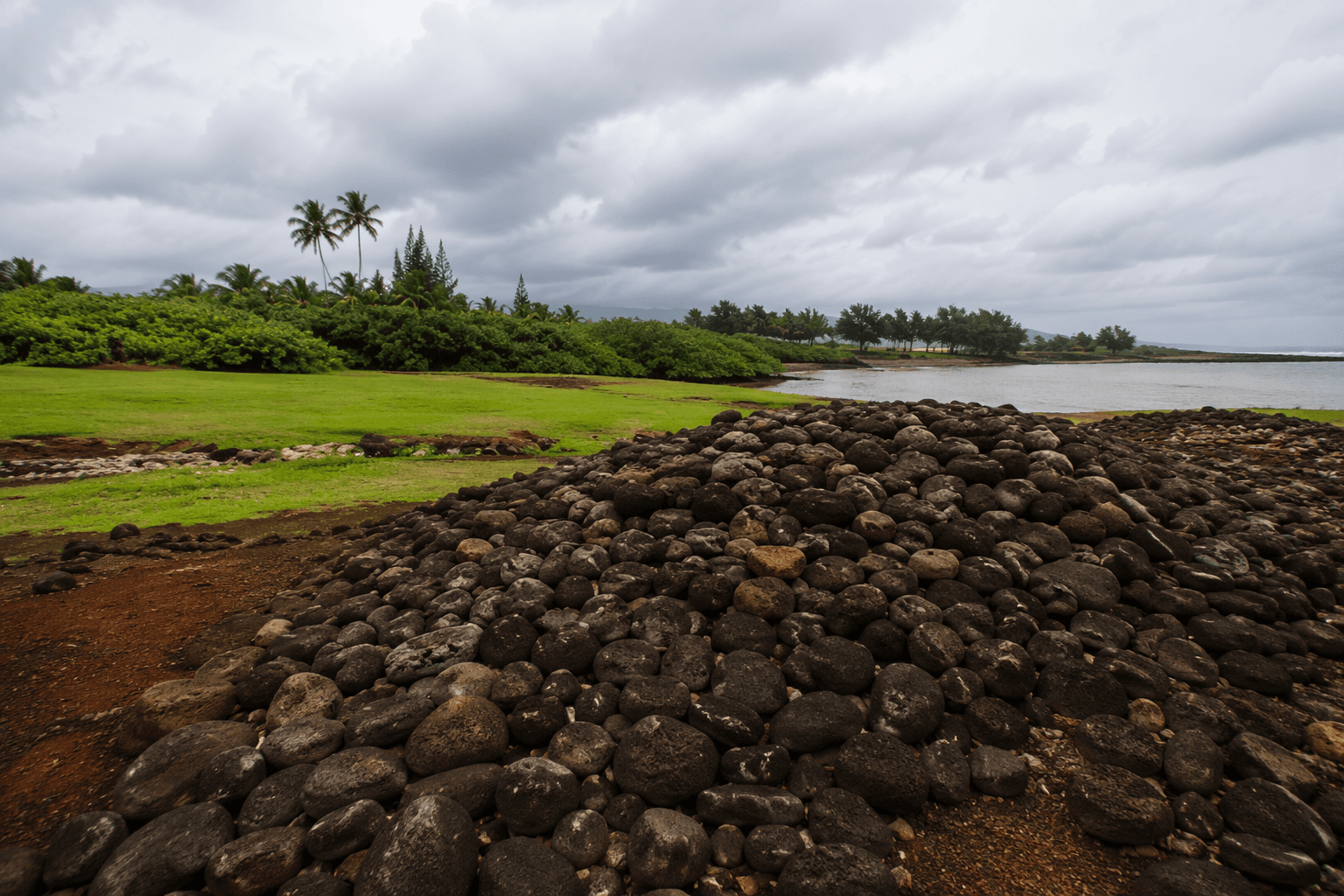
Pāulaula State Historic Site sits on 17.2 acres at the mouth of the Waimea River in Makaweli, where water access, coastal access and travel routes once converged on Kauai’s dry west side. The place looks modest from the road, but its setting explains why it has remained part of island history, from Hawaiian leadership to foreign intrusion to modern preservation. The National Park Service places it near the Waimea River bridge area, a reminder that geography still tells the story here.
Why this Waimea site still matters
The river mouth made Waimea an important landing and staging area, and that practical geography is the reason the site continues to matter now. A place that controlled access to the river and the coast was never just a scenic stop, especially in a district where movement across dry west Kauai depended on a few critical routes. The National Park Service classifies the historic place as associated with exploration and settlement, which fits the way the site connects land use, movement and early outside contact.
That is what gives Pāulaula its force as a residents’ stop rather than a generic heritage site. The park is small enough to read in one visit, yet it points to questions that still shape public memory on Kauai: which names survive, which stories are foregrounded, and how the state interprets places that once carried competing claims of power. At the river mouth, the landscape itself becomes the lesson.
How the name changed the frame
On June 9, 2022, the Hawaii Department of Land and Natural Resources asked the Board of Land and Natural Resources to approve changing the name from Russian Fort Elizabeth State Historical Park to Pāulaula State Historic Site. The board approved the change in June 2022, and the DLNR Division of State Parks now publicly lists the site under its restored Hawaiian name. The site’s tax map key in the submittal is (4)1-5-005:003, a detail that shows the name change was handled as part of the state’s formal stewardship records, not as a symbolic gesture alone.
The Hawaii State Aha Moku submitted testimony in support of the change. That support mattered because the shift did more than replace one label with another; it moved the site’s public identity toward the Hawaiian place name that belongs to the landscape, not the later colonial title attached to it. The result is a clearer historical frame for local families, school groups and visitors who are trying to understand what Waimea was before the modern road map flattened its history.
The Russian fort episode and King Kaumualii
Pāulaula is still tied to one of the most unusual chapters in 19th-century Hawaii history, the brief Russian presence on Kauai and the political maneuvering around King Kaumualii. The site is commonly associated with Russian Fort Elizabeth and Fort Elizabeth, and National Park Service records keep that name in circulation because it remains part of the documented history. The Russian fort episode is commonly dated to 1815-1817, and sometimes 1816-1817, a short period that nonetheless left a lasting mark on the island’s public record.
That short-lived episode is exactly why the site is useful for understanding Kauai’s layered history. It shows how quickly outside powers, local rulers and strategic landings could intersect in Waimea, and why the place became part of broader questions about sovereignty and influence. In 2020, DLNR sought right-of-entry approval to place an 8-foot bronze statue of King Kaumualii at Pāulaula, underscoring how central the king remains to the site’s meaning.
What to notice when you stand on site
A visit is most revealing when you pay attention to the relationship between the river, the bridge area and the park’s small footprint. The site is not large, but its position on the eastern riverbank at the mouth of the Waimea River makes clear why this was a place of landing, staging and control. The contrast between the restored Hawaiian name and the older Russian label is also part of the experience, because the site’s history is tied as much to how it has been remembered as to what happened there.
Look for these concrete details as you move through the area:
- The eastern riverbank setting, which explains the site’s strategic value.
- The proximity to the Waimea River bridge area, where modern circulation crosses a historic landing zone.
- The 17.2-acre park footprint, which makes the site compact enough to read in one stop.
- The restored Hawaiian name in state interpretation, which shifts attention back to the place and its language.
- The Kaumualii connection, which keeps the site anchored in Hawaiian political history rather than only in the Russian episode.
For families, the lesson is immediate: this is a place where geography shaped power. A river mouth that mattered for landing and travel also became part of a wider struggle over who named the land and how the island’s story would be told.
Why stewardship now matters
Pāulaula’s value depends on public access and careful interpretation. As a state historic site under the DLNR Division of State Parks, it remains part of the public landscape rather than a private memory, which gives residents a shared place to see how west Kauai was connected to settlement, authority and outside contact. If the site is overlooked, what disappears is not only a historic label but a way of reading Waimea itself, from the river mouth to the bridge area to the political history attached to King Kaumualii.
That is why Pāulaula matters beyond its modest footprint. It preserves a place where the history of Kauai can still be seen in the ground, the name and the state record, all in one stop on the island’s west side.
This article was produced by Prism’s automated news system from verified source data, official records, and press releases, then run through automated quality and moderation checks before publishing. The system is built and supervised by the people who set the standards it runs under. Read our full AI policy.
Did this article answer your question?