Archival photos revive Coeur d'Alene's most memorable local history moments
Old photos turn Coeur d'Alene's past into a map of fear, protest and identity, from the Chowchilla case to Black Sunday and a POW plate.
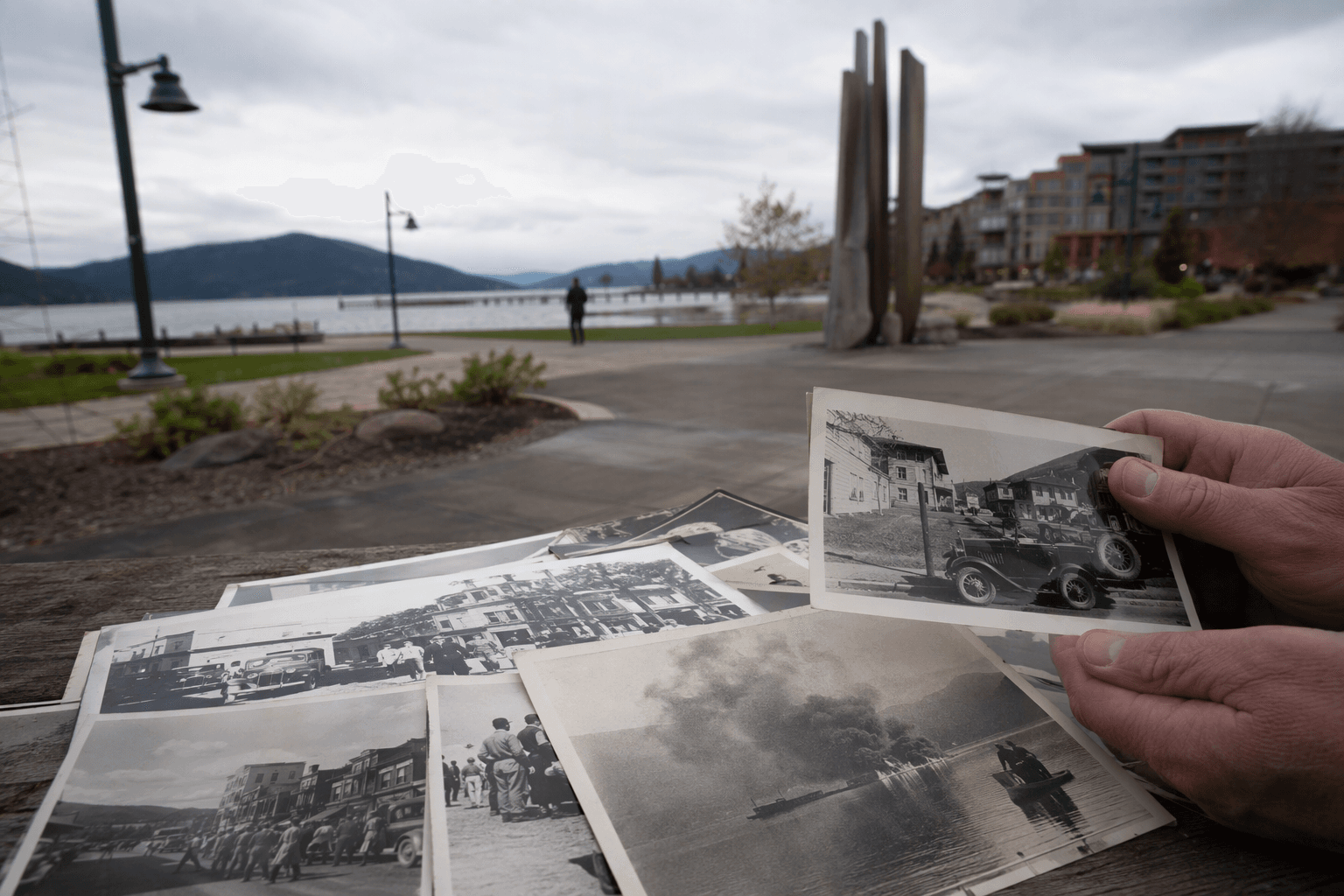
A fingerprinted car, a Silver Valley protest, and a POW plate clipped to a sedan do more than decorate a newspaper page. In Kootenai County, those archival images keep crime, dissent and identity in view long after the events themselves, showing how North Idaho's public memory was built in police lots, on Wallace streets and beside ordinary parked cars.
How the archive turns into a map
A Coeur d'Alene Press feature uses short captions and old photographs to pull current readers back into the region's past, and that structure matters. The images do not work like a novelty slideshow. They function as then-versus-now markers, letting readers place the history inside the streets, institutions and communities that still shape Kootenai County.
That approach gives the paper a civic role as a memory bank. As the county grows and familiar landmarks change, the archive keeps older versions of local life visible, from police work in Coeur d'Alene to protest in Wallace and the smaller personal symbols that newspapers once saved for posterity.
A 1976 clue that tied Coeur d'Alene to Chowchilla
One of the most arresting images shows Coeur d'Alene police Lt. Steve Schauer fingerprinting the vehicle of suspected kidnapper James Schoenfeld. The photo places local law enforcement inside a case that reached far beyond Idaho, linking a city street to the investigation that followed the Chowchilla school bus kidnapping in California.
On July 20, 1976, James Schoenfeld got $135 from a Coeur d'Alene salvage yard after selling bolt cutters, tools, two pistols and an electric item. That detail, preserved in contemporary reporting, shows how a single transaction in North Idaho became part of a much larger crime trail. The Chowchilla case involved 26 children and their bus driver, and it is widely described as one of the largest mass kidnappings in U.S. history.
The Coeur d'Alene image endures because it compresses several layers of history into one frame. There is the police procedure, the ordinary salvage yard, and the larger national crime story, all tied together in a way that makes Coeur d'Alene part of the record rather than a bystander to it.
Black Sunday and the Silver Valley's deeper wound
Another archival photo returns to 1991, when the Silver Valley protested the FBI's Black Sunday raid. The image still resonates because the raid was not just a law enforcement operation. It landed in a region already carrying a long and difficult history of mining wealth, union strikes and mining disasters.
A retrospective on Black Sunday notes that Wallace and the surrounding Silver Valley had been shaped by some of the richest silver mines in the United States, along with labor conflict and disaster. A Seattle Times report from July 28, 1991 said about 150 FBI agents swarmed Wallace and nearby northern Idaho communities looking for evidence of illegal gambling, public corruption and drug dealing. The same report described the raid as hard on the declining mining towns.
That context is what gives the protest photo its force. It captures a community pushing back against federal authority in a place where economic decline, labor memory and suspicion of outside power already ran deep. In Wallace, the raid became part of the same historical chain as the mines and strikes that defined the town before it.
Bob Silhavy and the quieter images of public memory
The third image in the feature is smaller in scale but no less rooted in local meaning. It shows Bob Silhavy attaching an Idaho POW plate to his car in 1986. Unlike the arrest scene or the protest, this photograph records a personal act of identification, one that turned a vehicle into a public statement.
Even without a long accompanying case file, the image carries weight as an archival object. It preserves a locally specific expression of veteran identity and remembrance, the kind of detail newspapers often saved because it said something about the people who lived here as much as the events they witnessed.
Taken with the other two photos, Silhavy's car plate shows how newspaper archives hold both public crises and private symbols. One image points to criminal investigation, another to political protest, and this one to the quieter ways residents marked memory and allegiance in everyday life.
Why these photos still matter in a fast-changing county
What makes the feature work is not nostalgia alone. It shows how local newspapers preserve the texture of civic life, especially in a county where growth can make older stories easy to lose. New neighborhoods, new roads and new businesses can quickly flatten the sense of what came before, but photographs and captions restore that continuity.
For longtime residents, these scenes can trigger personal memory. For newer arrivals, they offer a compact lesson in how North Idaho's identity formed through law enforcement, labor conflict, war memory and the ordinary places where those histories crossed. That is why the archive still matters: it keeps Coeur d'Alene's public past visible in the streets and institutions that still define the county.
This article was produced by Prism’s automated news system from verified source data, official records, and press releases, then run through automated quality and moderation checks before publishing. The system is built and supervised by the people who set the standards it runs under. Read our full AI policy.
Did this article answer your question?