Kootenai County towns page highlights local history and place names
Kootenai County’s town pages turn place names into a growth story, showing how Athol, Bayview and Cataldo market history to newcomers and visitors.
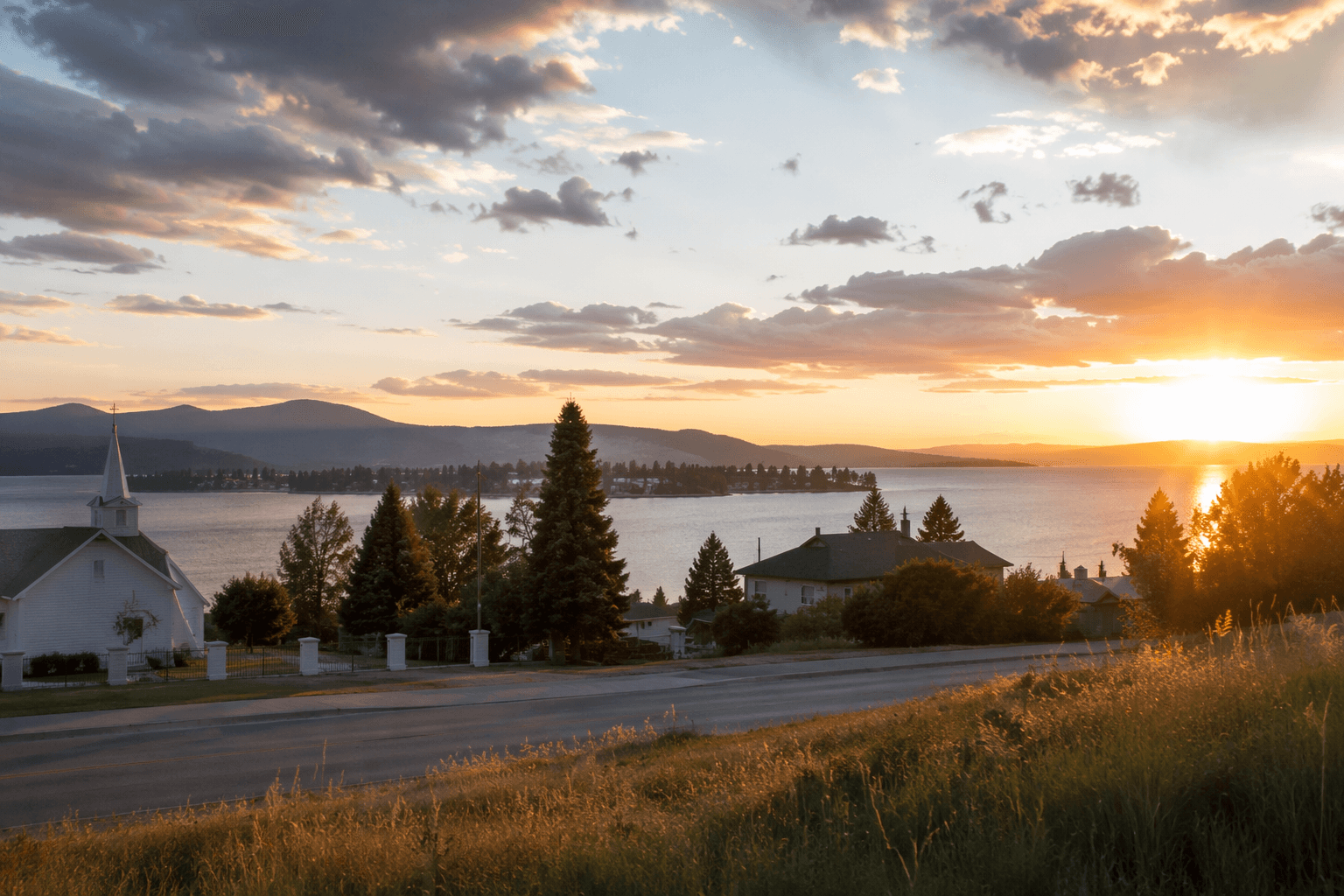
Kootenai County’s towns page reads like a compact civic storefront: a few short entries, each carrying a different version of local identity. Athol, Bayview and Cataldo do not present themselves as interchangeable points on a map. They point to different origins, different economies and different expectations for the people moving through them.
A county built from more than one center
That matters in a county where the preservation office says its mission is “to identify, document, and preserve Kootenai County’s significant history and archaeological resources to foster connections between the people and places of Kootenai County.” The county’s History page also says Kootenai County contains a significant portion of the center of the Coeur d'Alene Tribal Homeland and the primary east-west trail system for interior Salishan peoples traveling through the region. The towns page is part of that same effort: it explains that local place names are not just labels, but evidence of who moved through the area and who stayed.
The county’s geography makes that explanation practical. Kootenai County’s population page puts the county at 1,310 square miles, with 18 lakes, 56 miles of navigable rivers and 360,000 acres of National Forest. It listed a 2024 residential population of 188,323, while USAFacts estimated about 191,900 in 2025 and ranked the county as the third-most populous in Idaho. In a place growing across water, forest and highway corridors, a simple reference page helps residents understand why one town feels like a resort edge, another like a small inland settlement and another like a historic landmark district.
Athol: a small city with a layered name chain
Athol’s entry is brief, but it carries a long trail of naming history. The county says the town was first known as Colton, then renamed Athol by a settler who came from Athol, Massachusetts. That Massachusetts town, in turn, was named after a town in Scotland named for the Duke of Atholl, which gives the local name a chain that runs from North Idaho back through New England and across the Atlantic.
The scale of the place matches that modest but specific identity. Census-based profiles put Athol at 692 people in 2010, up from 676 in 2000. That kind of growth is small in raw numbers, but it tells new arrivals something useful: Athol is not trying to present itself as a dense commercial center or a resort town. It is a small city whose identity is rooted in continuity, and that affects what people expect to find when they drive in, shop locally or decide where to settle.
Bayview: from Squaw Bay to a planned tourist town
Bayview’s description is more economic than symbolic. The county identifies it as a logging, fishing and limestone-mining community that was first known as Squaw Bay, then changed its name after 1900. That shift alone signals a place moving from a frontier-era label into a more settled identity, but the bigger clue is what happened next.
In 1910, Spokane entrepreneurs formed the Prairie Development Company and platted the town site, hoping the new town would attract tourists and residents. The county says Bayview was laid out with 27 blocks, a detail that shows planning, not just settlement. In other words, Bayview’s image was shaped not only by extraction industries tied to Lake Pend Oreille and the surrounding limestone economy, but also by a deliberate attempt to create a destination with a walkable, legible town form.
That matters on the ground. A town laid out to attract visitors tends to develop different expectations around storefront traffic, seasonal business and waterfront use than a place built only around logging or mining. Bayview’s official story tells newcomers to expect both a working landscape and a place that has long tried to present itself as somewhere people would come to stay.
Cataldo: mission, homestead and older Indigenous history
Cataldo’s page carries the most layered history of the three. The county says the Coeur d’Alene Indians had a village there known as sq'wt'u, and it identifies the town as being named for Father Joseph Cataldo, SJ, who served at the Old Mission from 1865 to 1870. The page also says Patrick J. Whalen, the first homesteader in the area, platted the town of Cataldo and built a log cabin and ferry across the Coeur d'Alene River, tying the place name to transportation and settlement as much as to mission history.
The Mission of the Sacred Heart at Cataldo was built between 1850 and 1853, and the Idaho State Historical Society identifies it as the Coeur d'Alene Mission of the Sacred Heart. That chronology places the site well before the town’s later platted identity and explains why Cataldo continues to function as a historic marker as much as a community name. The result is a town identity built on overlapping layers: Indigenous village, missionary station, homestead and crossing point.
What the page means for growth and daily life
These town snapshots matter because Kootenai County is changing fast enough that older place meanings can get lost. A county population of 188,323 in 2024, paired with five-year growth of 14 percent, means more residents are learning the map without the inherited local memory that longtime families have. Official pages like this one give those newcomers a way to understand why one community leans on a transatlantic naming story, another on a planned tourist pitch and another on mission-era landmarks.
The practical value is not abstract. Athol’s small population suggests a quieter scale of daily commerce, Bayview’s 27-block plat and tourist intent point to visitor traffic and waterfront economy, and Cataldo’s mission history shapes the expectations of people stopping for heritage, not just passing through. Kootenai County’s towns page does more than explain names: it shows how the county wants its communities understood as distinct places with distinct pasts, even as the county keeps growing around them.
This article was produced by Prism’s automated news system from verified source data, official records, and press releases, then run through automated quality and moderation checks before publishing. The system is built and supervised by the people who set the standards it runs under. Read our full AI policy.
Did this article answer your question?