Kootenai National Wildlife Refuge protects habitat, offers public access
Kootenai National Wildlife Refuge pairs habitat protection with public access, from 40,000-bird migrations to auto-tour wildlife viewing near Bonners Ferry.
More than 220 bird species use Kootenai National Wildlife Refuge, and spring and fall migrations can bring peaks of 40,000 waterfowl through the valley. For people in Kootenai County, that makes the federal refuge near Bonners Ferry both a wildlife stronghold and a close-to-home place to drive, watch, and walk through wetlands, meadows, and riparian forest.
Why the refuge was created
Kootenai National Wildlife Refuge was established on June 24, 1964, by the Migratory Bird Conservation Commission, with a primary purpose of creating a resting area for migrating waterfowl. The refuge covers 2,774 acres in Idaho’s Panhandle, about 20 miles south of the Canadian border, so its role is tied directly to the migration corridor that runs through North Idaho.
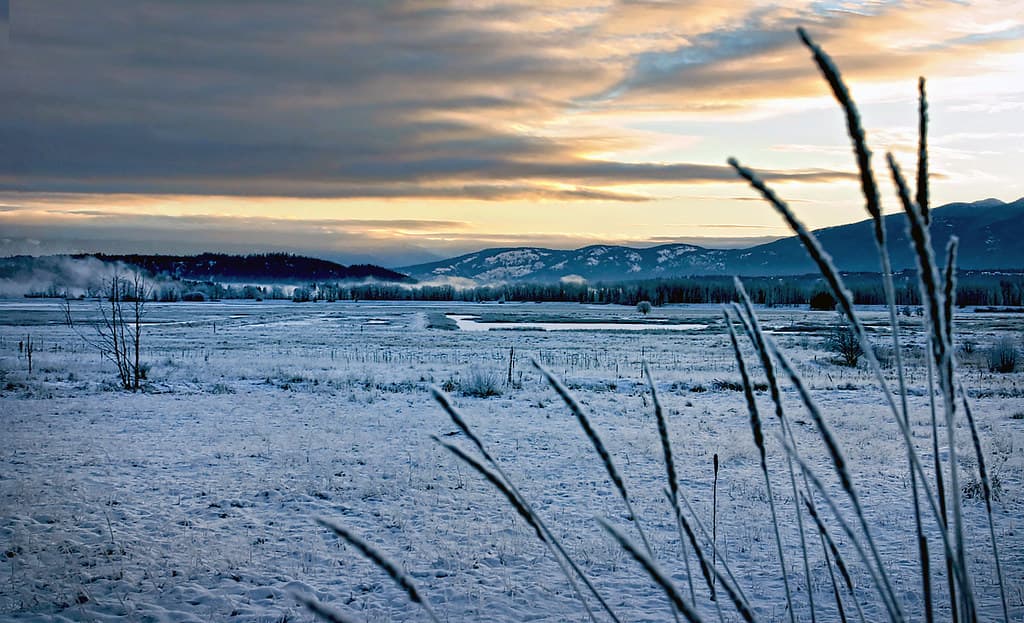
The U.S. Fish and Wildlife Service describes the refuge as sitting in a glacial valley flanked by the Selkirk Mountain Range to the west and the Purcell Mountains to the east. That setting matters because the refuge is not a generic park, but a conservation unit built to keep habitat intact while still giving the public a way in.
A landscape shaped by water
The refuge contains wetlands, meadows, riparian forests, and cultivated agricultural fields used to produce wildlife food crops. A 1969 comprehensive conservation plan said that for thousands of years, spring floods of the Kootenai River inundated the valley floor and created the largest complex of wetlands and floodplain forests in Idaho. That history explains why the area still draws birds and other wildlife in such numbers.
The same landscape also explains why restoration work is a recurring part of refuge management. A Visit North Idaho posting described a large habitat restoration project that, at the time of that posting, closed the auto tour route, the east parking lot, and part of Deep Creek Trail. A final environmental assessment dated April 2025 for the Floodplain Reconnection Project shows that habitat improvement remains part of how the refuge is managed.
What visitors can see and do
The refuge is designed for low-impact public use, and that gives families a practical way to experience it without needing a long backcountry hike. The auto tour route and Deep Creek Trail give visitors a way to move through the refuge at a slower pace, which works well for birding, photography, and quiet wildlife watching.
The seasonal show is the biggest draw. Visit Idaho says spring and fall waterfowl migration can peak at 40,000 birds, and refuge-related materials put the number of bird species using the area at more than 220. The usual cast includes swans, mallards, and teal, while larger mammals such as elk, bears, and otters add to the sense that the refuge is a living habitat, not just a scenic overlook.
Some of the most visible change has come through wildlife itself. In August 2023, the U.S. Fish and Wildlife Service reported sandhill cranes nesting at the refuge for the first time, a sign that the habitat can support species beyond the usual migration traffic. For visitors, that means the refuge is worth more than a one-time stop: the experience shifts with the season, the water, and the birds moving through.
Why it matters beyond the boundary line
Kootenai National Wildlife Refuge sits in Boundary County near Bonners Ferry, but its influence reaches into the broader North Idaho outdoor culture that Kootenai County shares. It offers a protected place where wildlife and people can coexist under federal management, which gives the region a public asset that is both recreational and ecological.
That combination matters in a place where open space can come under pressure from growth. The refuge helps preserve a landscape of wetlands and floodplain forests that would be difficult to replace once lost, while also giving nearby communities a destination for birding, snowshoeing, wildlife viewing, and family outings. The official refuge page works as a reliable starting point because it explains both the conservation mission and the public access side before visitors head north.
In practical terms, the refuge adds something to the local economy and culture that cannot be measured only in acreage. It brings seasonal traffic, supports outdoor habits that define North Idaho, and keeps a stretch of river valley functioning as habitat first and recreation second, which is exactly what federal refuge land is meant to do. Since 1964, that balance has been the refuge’s defining value, and it remains the reason the valley matters to both wildlife and the people who use it.
This article was produced by Prism’s automated news system from verified source data, official records, and press releases, then run through automated quality and moderation checks before publishing. The system is built and supervised by the people who set the standards it runs under. Read our full AI policy.
Did this article answer your question?