Spokane residents eye Coeur d'Alene, Sandpoint amid tax, cost concerns
A Spokane-area exodus could squeeze Kootenai County’s already tight housing market, where prices, traffic and school pressure are already part of daily life.

A new wave of Spokane-area residents looking north could land in a county already wrestling with fast growth, high housing costs and a tight labor pool. In a survey of 600 Spokane-area respondents, 65% said they were considering moving out of the region, and the pull toward Coeur d’Alene and Sandpoint comes as Kootenai County’s population has climbed to 188,323, up from 171,362 in the 2020 census.
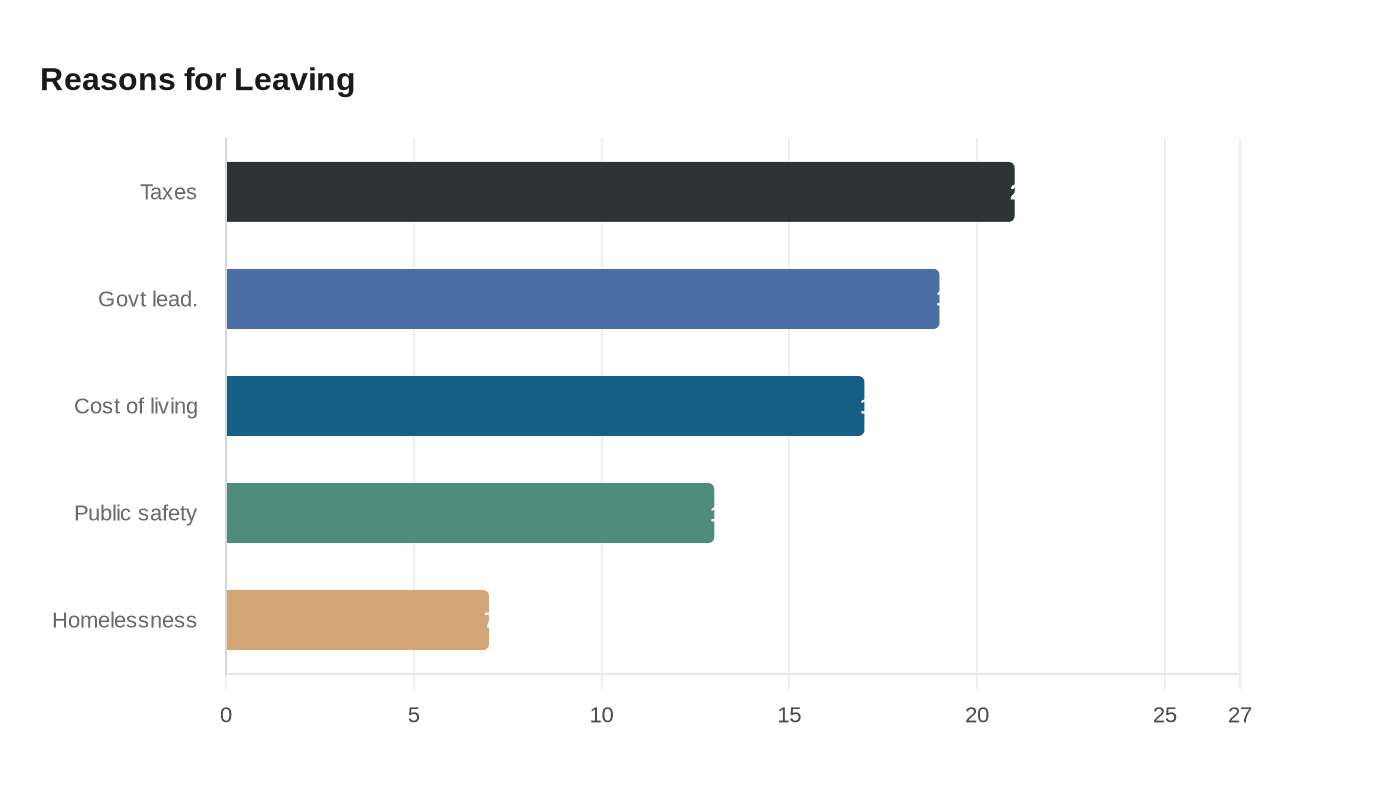
Among the 395 voters who said they were considering leaving, taxes ranked first at 21%, followed by government leadership at 19%, cost of living at 17%, public safety at 13% and homelessness at 7%. Across all respondents, 38% named homelessness as their top concern, down 8 points from the previous fall, a shift linked to Spokane City Council’s camping ban. The numbers suggest the relocation talk is being driven less by one issue than by a bundle of tax, housing and governance complaints.

That matters in Kootenai County because the pressure is already visible. The U.S. Census Bureau estimated the county’s population at 188,323 on July 1, 2024, after a 32% jump from about 139,000 in 2010. Spokane County grew too, rising from about 472,000 in 2010 to more than 549,000 in 2022, but Kootenai County has absorbed the spillover in a smaller footprint, with 1,310 square miles, 18 lakes, 56 miles of navigable rivers and 360,000 acres of National Forest.
Local leaders have been warning for months that growth is colliding with a housing shortage. A Spokane Journal of Business report said Kootenai County has strong economic growth prospects but faces a tight labor supply and a need for attainable housing. In February, Idaho Department of Labor economist Sam Wolkenhauer said Coeur d’Alene was the top-performing metro area in Idaho for job growth, reinforcing why the region keeps drawing workers, retirees and investors alike.
The policy debate is sharpening alongside that growth. In March, Mayor Dan Gookin called for local control and practical solutions to Coeur d’Alene’s affordable housing crisis during the annual State of the City & County Breakfast. Around the same time, he described growth as beneficial while discussing a possible visitor tax. The Coeur d’Alene City Council also approved a 2025-26 budget of $151.9 million that included the allowable 3% property-tax increase, a reminder that even a growing city is feeling fiscal strain.
Spokane’s own politics are feeding the migration story. The Spokane City Council passed an ordinance in 2025 dealing with unauthorized camping and obstruction, and councilmember Jonathan Bingle later criticized the anti-encampment policy as a diluted replacement for the voter-approved 2023 initiative. For North Idaho, the question is no longer whether Spokane’s unease exists, but how much of it will cross the state line and show up in Coeur d’Alene and Sandpoint as another round of buyers, renters and commuters starts looking for an exit.
This article was produced by Prism’s automated news system from verified source data, official records, and press releases, then run through automated quality and moderation checks before publishing. The system is built and supervised by the people who set the standards it runs under. Read our full AI policy.
Did this article answer your question?