Bill Williams River refuge showcases rare cottonwood-willow forest near Parker
A rare cottonwood-willow river corridor near Parker offers easy trails, all-day fishing access and a close look at one of Arizona’s last living riparian systems.

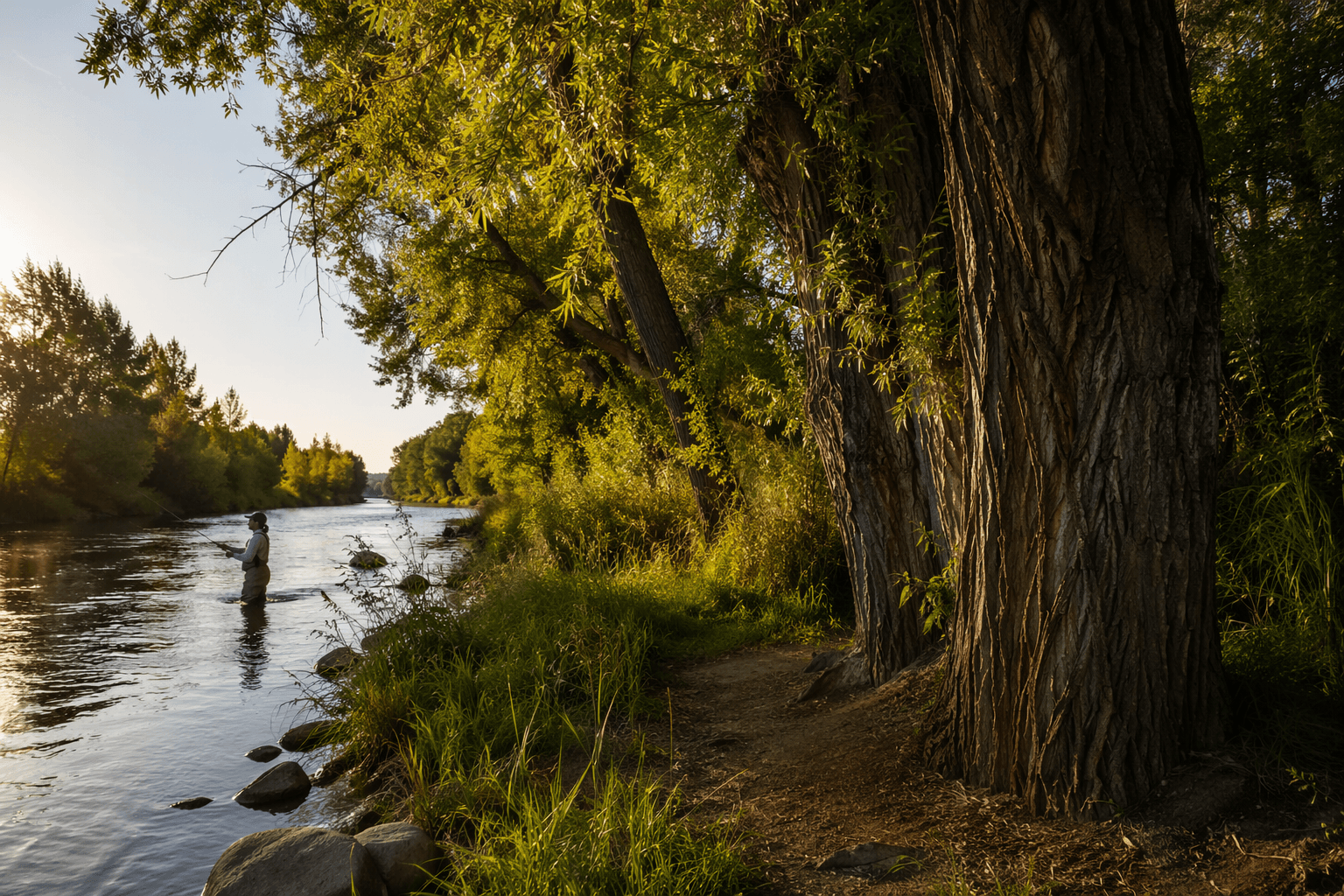
Along Highway 95, Bill Williams River National Wildlife Refuge protects a strip of river-bottom forest that feels almost out of place in western Arizona: cottonwoods, willows, marsh edges and waterfowl habitat instead of endless open sand and rock. It is one of the last naturally regenerated cottonwood-willow forests on the Lower Colorado River and one of the Southwest’s last ecologically functioning river habitats.
A rare river corridor at the edge of the desert
The refuge was set aside in 1993 from 6,100 acres of Havasu Lake National Wildlife Refuge. It protects the lower 10 miles of the Bill Williams River, a stretch within a river system that runs about 40 miles before it reaches the Colorado River at Lake Havasu. The refuge is a concentrated river corridor rather than a broad wilderness preserve far from town.
The bigger conservation story reaches back to 1941, when Havasu National Wildlife Refuge, then called Havasu Lake National Wildlife Refuge, was established by executive order from President Franklin D. Roosevelt for migratory bird habitat. Bill Williams River NWR now sits within the Lake Havasu National Wildlife Refuge Complex, which includes river, wetland and bird habitat in the lower Colorado River valley of western Arizona.
How to plan a half-day from Parker
The refuge is easy to use as a half-day outing from Parker. The address is 60911 Highway 95, Parker, AZ 85344-9528, and the visitor center is open Monday through Friday from 9 a.m. to 4 p.m. Lands, roads and trails open one-half hour before sunrise and close one-half hour after sunset, which gives you a wide window for an early walk, a midmorning stop or a late-afternoon visit.
A practical visit usually breaks down into a few simple stops:
- Start at the visitor center for orientation and restrooms.
- Walk the headquarters trails to look for birds and shade along the riparian edge.
- Stop at the Peninsula Trail trailhead, where vault toilets are available.
- Finish near the fishing docks or the canoe/kayak launch if you want time on the water.
Restrooms are inside the visitor center, with vault toilets at the Peninsula Trail trailhead and near the fishing docks.
What makes the habitat worth the drive
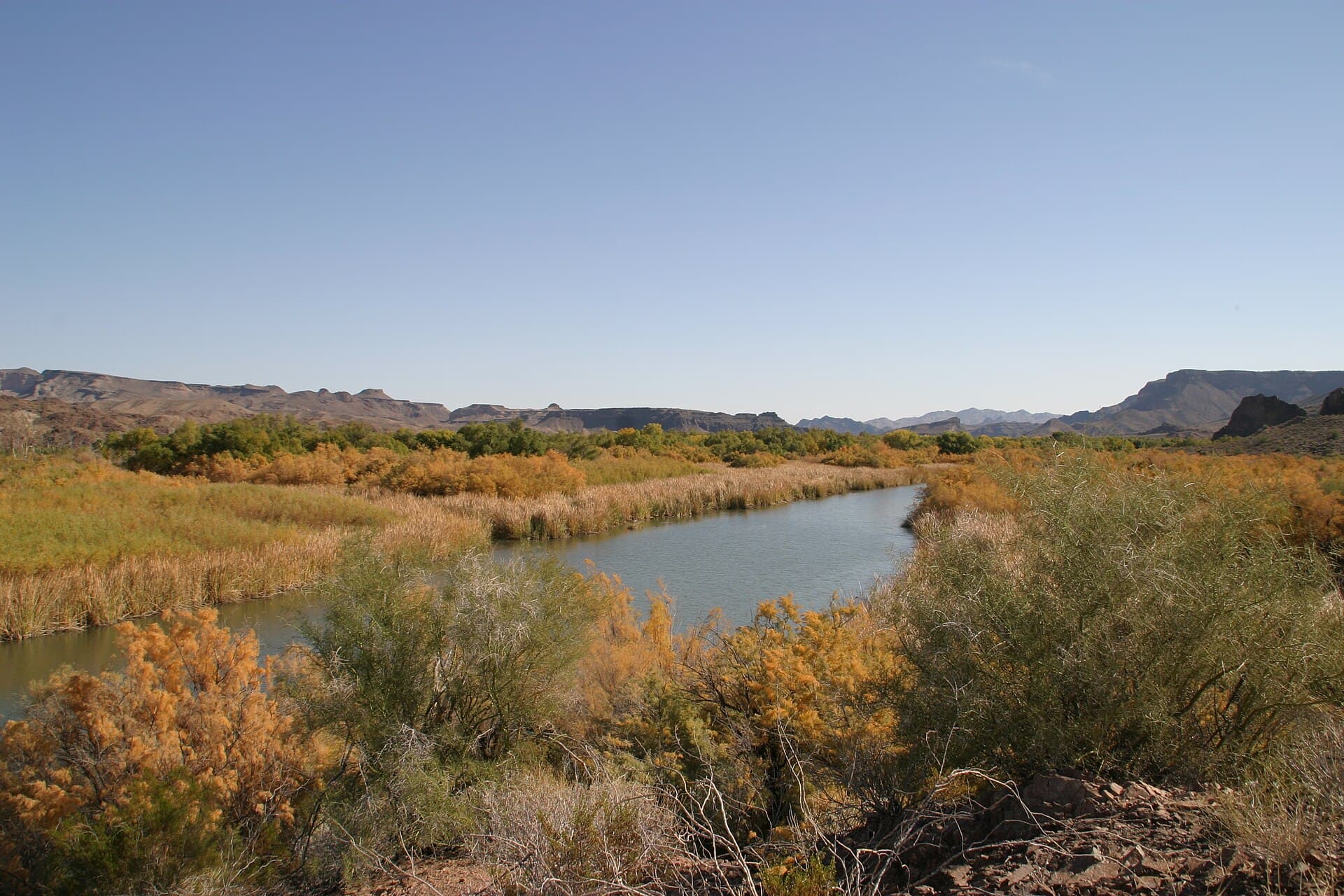
The first thing most visitors notice is the sharp change in vegetation. Marshlands and wetlands are bordered by cottonwood and willow, then by cactus and yucca more typical of the Sonoran Desert. You can move from riparian shade to arid desert plants in a short walk.
Wildlife is the other reason the refuge stands out. The headquarters trails are a good place to look for Abert’s towhee and verdin, and the floodplain forest provides nesting habitat for endangered southwestern willow flycatchers, threatened yellow-billed cuckoos and endangered Yuma Ridgway’s rails. A 2023 refuge environmental document lists six ESA-listed species associated with the refuge area: southwestern willow flycatcher, western yellow-billed cuckoo, Yuma Ridgway’s rail, bonytail chub, razorback sucker and northern Mexican gartersnake.
Anglers have their own reasons to come. The refuge’s fishing waters hold striped bass, largemouth bass, smallmouth bass, flathead catfish, channel catfish, bluegill and black crappie. Accessible fishing facilities are open 24 hours a day, seven days a week, and the canoe/kayak launch is open seven days a week during daylight hours.
What to know about access and etiquette
Public areas have defined hours, the visitor center has weekday-only service, and the fishing and launch areas run on separate schedules. Early morning and late afternoon are the easiest times to visit if you want cooler conditions and more active birdlife, especially because the lands and trails open before sunrise and close after sunset.
Use the designated access points. Stay on the trails near the headquarters area, use the visitor center and trailhead restrooms where they are provided, and treat the fishing docks and canoe launch as shared public infrastructure.
A refuge shaped by community stewardship
A Friends organization for the Bill Williams River and Havasu refuges operates as a 501(c)(3) nonprofit and supports volunteer work, education, events, invasive species removal, tree planting, monitoring, tours and outreach.
The refuge also participates in the larger national refuge system’s effort to understand who visits and why. Staff and volunteers took part in the 2019 National Wildlife Refuge Visitor Survey, part of a broader effort to measure visitor experience across public lands.
This article was produced by Prism’s automated news system from verified source data, official records, and press releases, then run through automated quality and moderation checks before publishing. The system is built and supervised by the people who set the standards it runs under. Read our full AI policy.
Did this article answer your question?