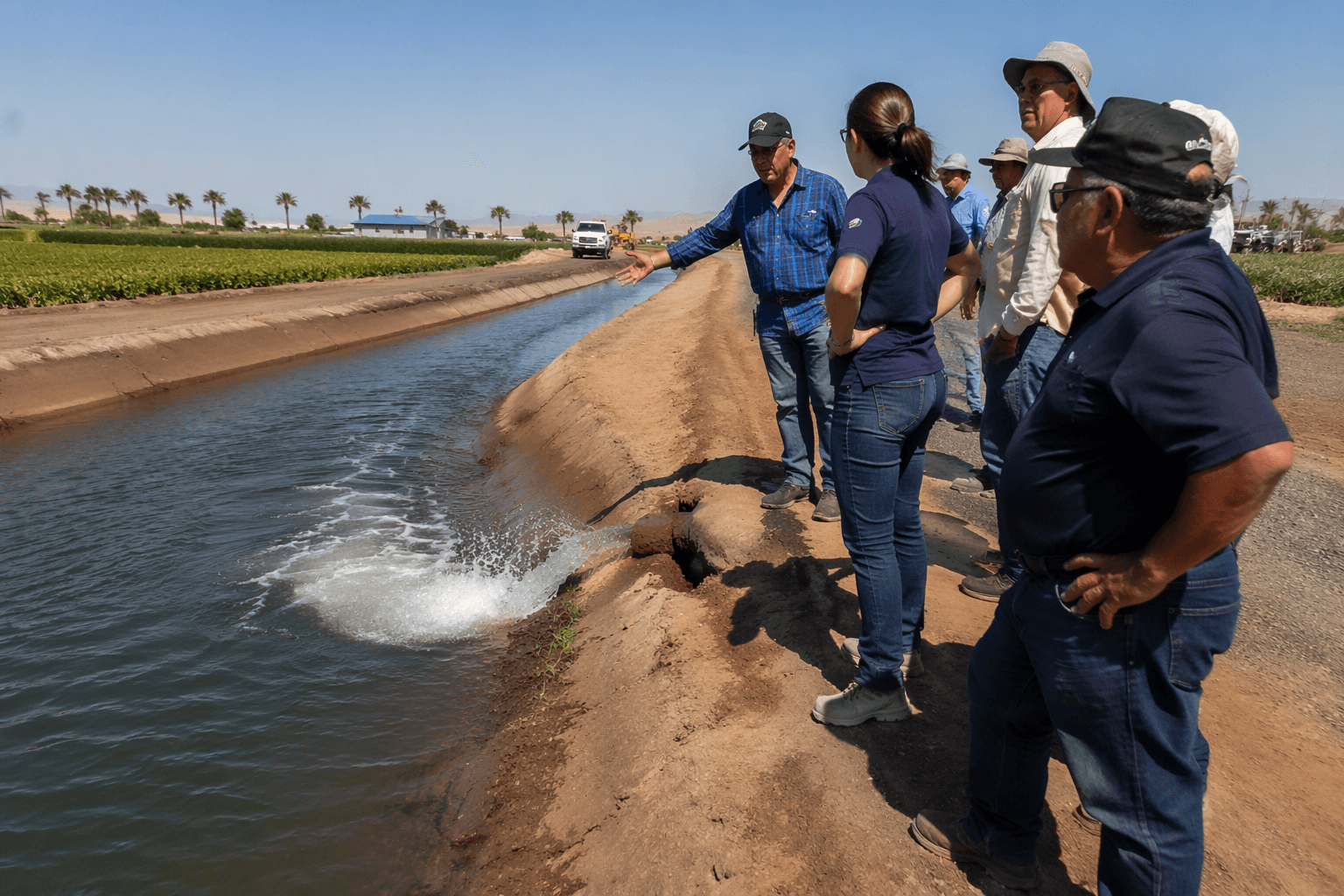
BLM Proposes Selling 640 Acres in La Paz County to Energy Developer
174 Power Global can buy a square mile of La Paz County desert without competing bids. Residents have until May 15 to comment before the sale becomes final.
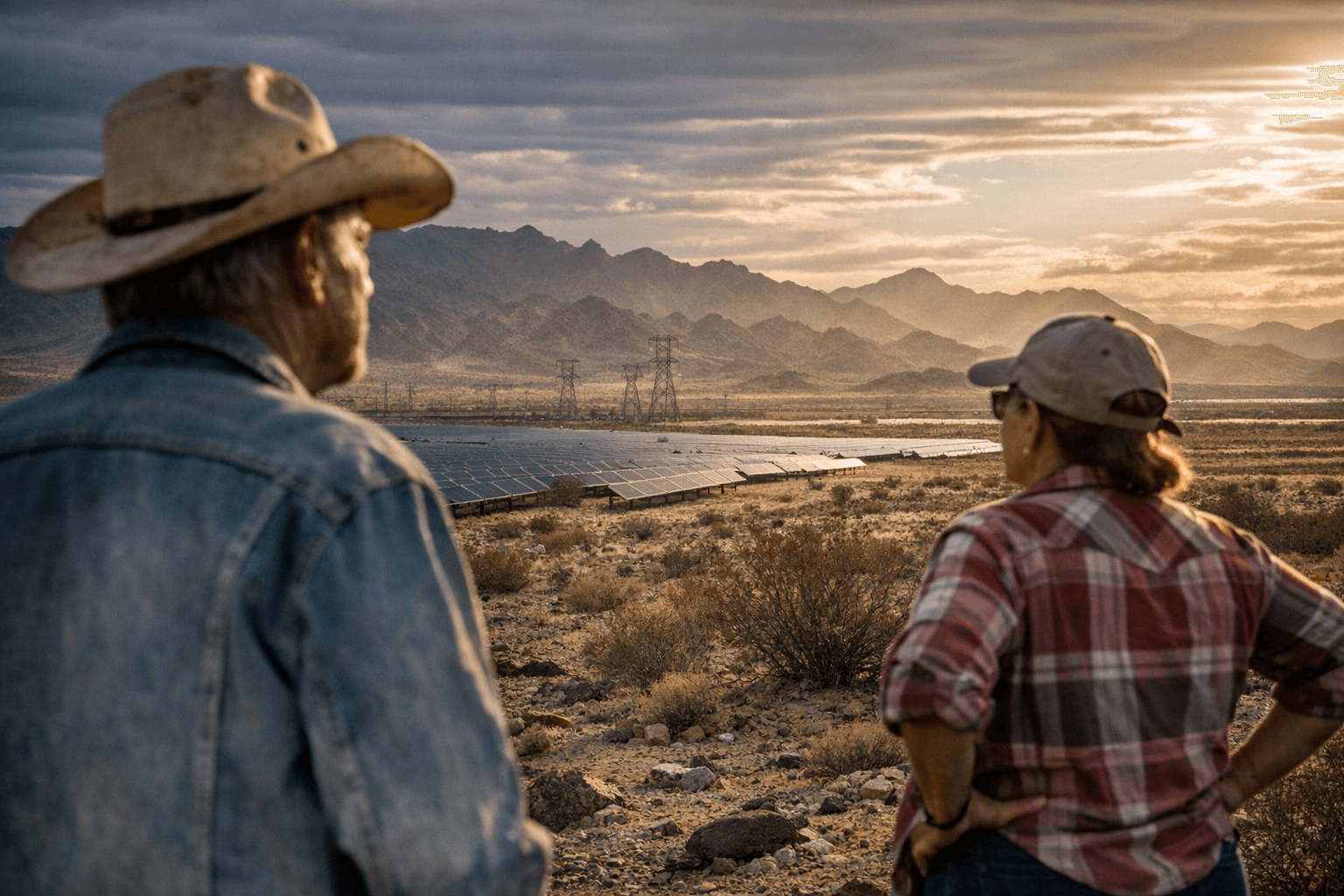
174 Power Global, the Hanwha subsidiary already developing what could become the nation's largest solar facility in eastern La Paz County, is in line to acquire another square mile of federal desert under a Bureau of Land Management proposal that bypasses public auction and gives the company an exclusive path to ownership.
The BLM published a Notice of Realty Action in the Federal Register on March 31 proposing a direct, non-competitive sale of a 640-acre parcel to 174 Power Global, LLC. At exactly one square mile, the block of land is equivalent to roughly 480 football fields. The agency describes the tract as an isolated piece of BLM-managed terrain with no public access and a split-estate condition, meaning surface and mineral rights are held by different parties, a configuration that complicates routine federal land management and that the BLM cites as justification for the direct-sale approach under the Federal Land Policy and Management Act.
174 Power Global is a U.S. subsidiary of Hanwha, the South Korean industrial conglomerate. The company already holds a development agreement with La Paz County to build an 850-megawatt solar facility on roughly 4,000 acres of former BLM land near Interstate 10. Its Atlas Energy Park project is designed to feed power into the Ten West Link Transmission Line, and congressional analyses have placed the project's full potential at up to 1,000 megawatts of solar capacity alongside several hundred megawatts of battery storage, a scale that would rank it among the largest solar-plus-storage complexes in North America. The 640-acre parcel would expand that already substantial footprint.
For people living near that eastern La Paz corridor, the implications cut in competing directions. Supporters of the broader development have pointed to construction employment and long-term property tax revenue as tangible local benefits. Critics have raised a different set of concerns: increased heavy truck traffic and road wear during construction phases, dust suppression demands in an arid high-desert environment, pressure on already scarce groundwater, disruption to cultural resources and wildlife habitat, and the permanent visual transformation of remote desert into an industrial energy campus.
The Federal Register notice opens a 45-day public comment window, with written submissions due no later than May 15, 2026. Comments must be postmarked or hand-delivered to the BLM Hassayampa Field Office in Phoenix. The BLM also maintains an ePlanning project page for the sale, sometimes referred to locally as "Section 16," where the full notice text, parcel maps, and submission instructions are posted for review.
Those comments carry real procedural weight. If substantive adverse comments are filed before the deadline, the Arizona State BLM director is required to review them and may sustain, modify, or cancel the proposed sale entirely. If no timely objections arrive, the Notice of Realty Action becomes final and the conveyance can proceed. Tribal governments, local elected officials, adjacent landowners, and any member of the public may submit input, and the BLM has made clear the land will not be offered for sale until after that comment period closes.
This article was produced by Prism’s automated news system from verified source data, official records, and press releases, then run through automated quality and moderation checks before publishing. The system is built and supervised by the people who set the standards it runs under. Read our full AI policy.
Did this article answer your question?