Judge keeps Fondomonte groundwater lawsuit on track in La Paz County
A judge refused to pause Arizona’s case against Fondomonte, keeping La Paz County’s groundwater fight alive as residents press for relief and a court deadline nears.

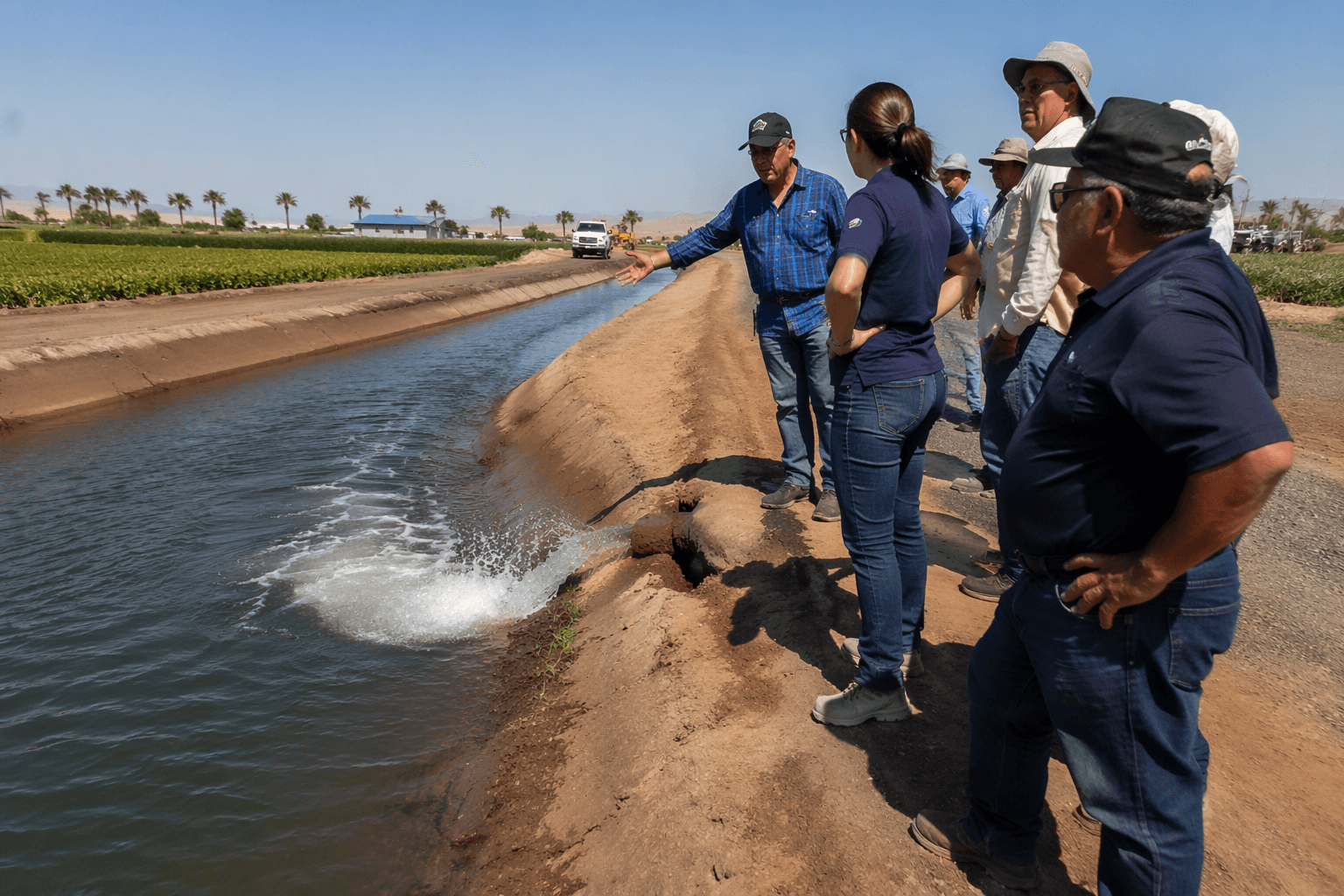
A Maricopa County judge has kept Arizona’s groundwater lawsuit against Fondomonte moving, a decision that matters immediately for La Paz County residents who worry about dry wells, declining water quality and what happens next in the Ranegras Basin.
Judge Scott Minder issued the order on May 12 and the Arizona Attorney General’s Office announced it on May 15. Minder denied Fondomonte Arizona LLC’s request to completely pause the public nuisance case while the Arizona Department of Water Resources studies the basin and develops an Active Management Area plan. The court said that kind of full delay was not appropriate because the state lawsuit is seeking relief, including an abatement fund, that the agency process cannot provide.
The ruling keeps the focus on the basin’s practical water problems rather than postponing them for years. Attorney General Kris Mayes has said the case is about protecting local water resources, and her office says Fondomonte pumped about 31,196 acre-feet of groundwater in 2023 alone to grow alfalfa for export to Saudi Arabia. State attorneys say one acre-foot can supply three single-family homes for a year, a figure that underscores how quickly large-scale pumping can affect rural households that depend on private wells.
The complaint, filed in December 2024 in Maricopa County Superior Court, alleges that Fondomonte dramatically increased pumping in the Ranegras Basin after buying nearly 10,000 acres in La Paz County in 2014. The state says the pumping has helped nearby wells run dry, degraded water quality and contributed to land subsidence in surrounding communities. A Fellowship Bible Church well reportedly ran dry by 2017, a sign for many residents that the basin’s groundwater decline was no longer a distant warning but a local loss.
The case now moves toward a new scheduling order. Minder directed both sides to file a joint schedule by June 15, 2026, and take the Arizona Department of Water Resources process into account. That process gained new weight in January 2026, when the agency designated the Ranegras Basin an Active Management Area, bringing the area its first groundwater protections and long-term management rules.
The legal fight has already reshaped the landscape around Fondomonte. In April 2023, Mayes intervened to stop two proposed deep wells on State Trust land leased to the company after finding discrepancies in the applications. Officials said those wells would have pumped a combined 6,000 gallons a minute. Months later, in October 2023, Gov. Katie Hobbs terminated and did not renew Fondomonte’s State Land leases in Butler Valley. For La Paz County, the latest ruling means the groundwater case remains alive, and so does the question of whether residents will get meaningful relief before more wells run dry.
This article was produced by Prism’s automated news system from verified source data, official records, and press releases, then run through automated quality and moderation checks before publishing. The system is built and supervised by the people who set the standards it runs under. Read our full AI policy.
Did this article answer your question?