Colorado River Basin faces critical dry winter, La Paz County at risk
Another dry winter could hit Parker first through shakier irrigation, weaker river traffic and faster conservation decisions, with CRIT and local water users facing the sharpest pressure.
Parker and the Colorado River Indian Tribes are among the first places in La Paz County to feel it if the Colorado River storage crisis deepens. The most immediate changes would show up in irrigation reliability, river recreation traffic, and the kind of conservation or allocation decisions that decide who gets water when the basin tightens.
A dry winter would land locally before the politics do
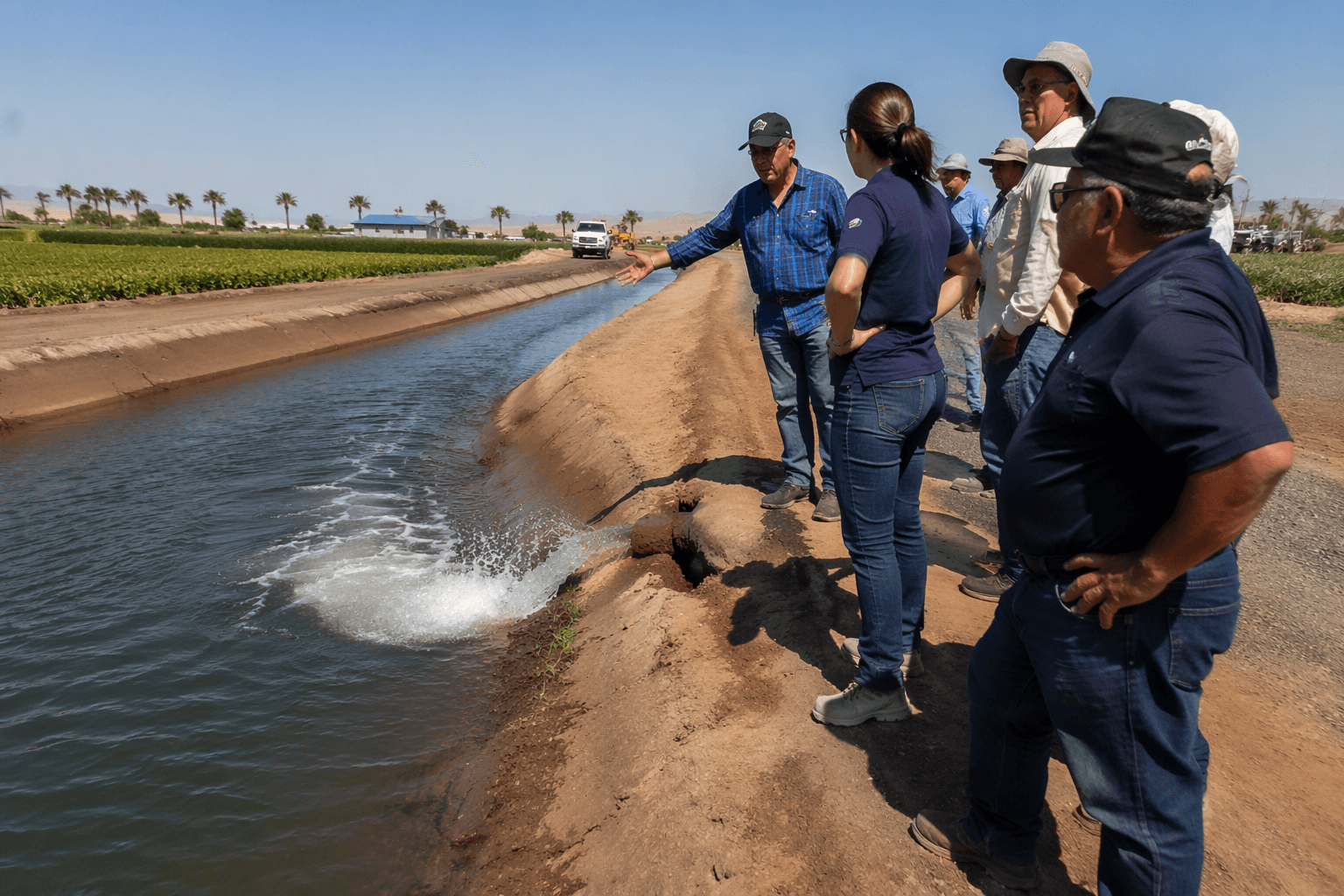
For farmers along the Parker corridor, the first concern is not abstract basin modeling but whether deliveries stay dependable enough to plan a season. The Colorado River underwrites agriculture, homes, tribal water uses, and the broader river economy in and around Parker, so even a modest drop in certainty can change what gets planted, when equipment gets deployed, and how much risk growers can afford to take.
River businesses would feel the pressure too. If reservoir levels weaken further, traffic tied to Lake Mead, Lake Powell and the Colorado River corridor can soften, and that affects the outfitters, service businesses and recreation-dependent stops that rely on steady visitation. In a place like La Paz County, where water is part of the local economy as much as the landscape, the warning is about customers, not just charts.
The basin is already running hot and dry
The Bureau of Reclamation’s June 8 update shows how stressed the system already is. Reclamation set Lake Powell’s water year 2026 release at 7.48 million acre-feet and forecast unregulated inflow at 3.27 million acre-feet, which is 34 percent of average. Its Jan. 1 projection put Lake Powell at 3,538.47 feet, about 162 feet below full pool and 48 feet above minimum power pool.
That matters because Lake Powell and Lake Mead are the main storage system for the river. A June 2026 report warned that another warm, arid winter could push both reservoirs toward levels that threaten dam infrastructure and downstream deliveries by the start of the 2028 water year. The same reporting said a wet winter would only delay the crisis, not solve it, if long-term demand stays too high.
The Basin Brief from CRIT Manataba Messenger makes the same central point in local terms: the future is being shaped by shrinking reservoir levels, uncertain runoff, rising demand, city-level planning, and a need for better information about who depends on the river and how much water is actually available. For Parker and the rest of La Paz County, that means the next dry season is not just another weather cycle. It is another test of how much slack is left in the system.

What the next shortage could change first
The first effects of another dry winter would likely arrive through policy, not panic. Water managers would be pushed closer to conservation rules, shortage accounting and allocation decisions that affect Arizona’s share of the river, including the water that reaches farms and communities near Parker.
Arizona, California and Nevada have already proposed a short-term Colorado River conservation plan through 2028 while longer-term rules are negotiated. At the same time, recent reporting says Arizona could face cuts of up to 77 percent to its Colorado River share if the seven basin states remain deadlocked on a new agreement. That kind of uncertainty makes it harder for local users to plan, even before any emergency cutbacks are imposed.
The basin-wide stakes are amplified by a simple physical fact: if the 2027 water year resembles one of the driest since 2000, the river system could use more water than its natural flow by millions of acre-feet. That would put the reservoirs close to critical operating levels and make future deliveries even more fragile.
Why CRIT is central to La Paz County’s water future
The Colorado River Indian Tribes sit at the center of this story because the reservation and the Parker area are tied directly to the river’s fate. CRIT is widely described as Arizona’s largest and most senior Colorado River water rights holder, and its water decisions carry local consequences for farms, homes, recreation and tribal uses across the corridor.
The tribal stakes are also legal and historical. Colorado River Basin tribes hold reserved water rights and unresolved claims to nearly 2.8 million acre-feet a year, while currently diverting nearly 1.4 million acre-feet a year, much of it for agriculture. A separate tribal water study says 22 tribal nations hold rights to about 3.2 million acre-feet annually, roughly 25 percent of the basin’s average annual water supply.
That is why CRIT leaders have been working on more than survival. In April 2024, Arizona officials said they signed documents implementing an agreement allowing the tribes to market portions of their Colorado River allocation to users off-reservation. CRIT’s Tribal Council has also said it is proposing federal legislation to lease part of its federal water allocation. Those moves show a tribe trying to convert a threatened water position into a measure of resilience.

The human and cultural stake on the reservation
The Colorado River Indian Tribes represent four tribes: Mohave, Chemehuevi, Hopi and Navajo. They are based along the Colorado River in La Paz County and hold a place in the basin that is both practical and deeply cultural.
CRIT water resources director Dillon Esquerra has said the river is the tribe’s “lifeblood,” a line that captures why this is not just a question of economics or engineering. Water here is tied to identity, sovereignty and continuity. When reservoir levels fall, the pressure reaches not just county budgets and farm plans but also the tribe’s ability to protect its own future on the river.
That context is why the April 2026 CRIT report mattered. It said CRIT, Arizona and the U.S. Department of the Interior signed agreements required under the Colorado River Indian Tribes Water Resiliency Act of 2022, with CRIT Chairwoman Amelia Flores, Interior Secretary Deb Haaland, Sen. Mark Kelly and Gov. Katie Hobbs present. The agreement reflects an effort to secure both drought response and economic flexibility at the same time.
What La Paz County should read in this warning
The clearest takeaway for Parker, La Paz County and the Colorado River Indian Tribes is that this is a structural shortage, not a one-season scare. A strong snow year could buy time, but the basin will still be governed by declining storage, unresolved rights, and the hard arithmetic of how much water is available versus how much has been promised.
That means the next round of decisions will matter locally whether they come from Phoenix, Washington, or basin-state negotiations. The people who depend on the river in La Paz County are already inside the system that is being renegotiated, and the consequences of another dry winter would not stay upstream for long.
This article was produced by Prism’s automated news system from verified source data, official records, and press releases, then run through automated quality and moderation checks before publishing. The system is built and supervised by the people who set the standards it runs under. Read our full AI policy.
Did this article answer your question?