Colorado River States Miss Deadline, Federal Intervention Threatens La Paz County
Seven basin states missed the Feb. 14 deadline to agree post-2026 Colorado River rules, prompting the Department of the Interior to begin formal rule revisions with 40 million people at stake.

Negotiators from the seven Colorado River basin states acknowledged they would miss the Bureau of Reclamation’s Feb. 14, 2026 deadline to deliver a consensus plan for post-2026 operating rules, and the Department of the Interior has begun a formal process to revise river guidelines in the absence of state agreement. The miss, announced in the day before the deadline, follows an earlier Nov. 11, 2025 deadline for a broad framework that also passed without consensus.
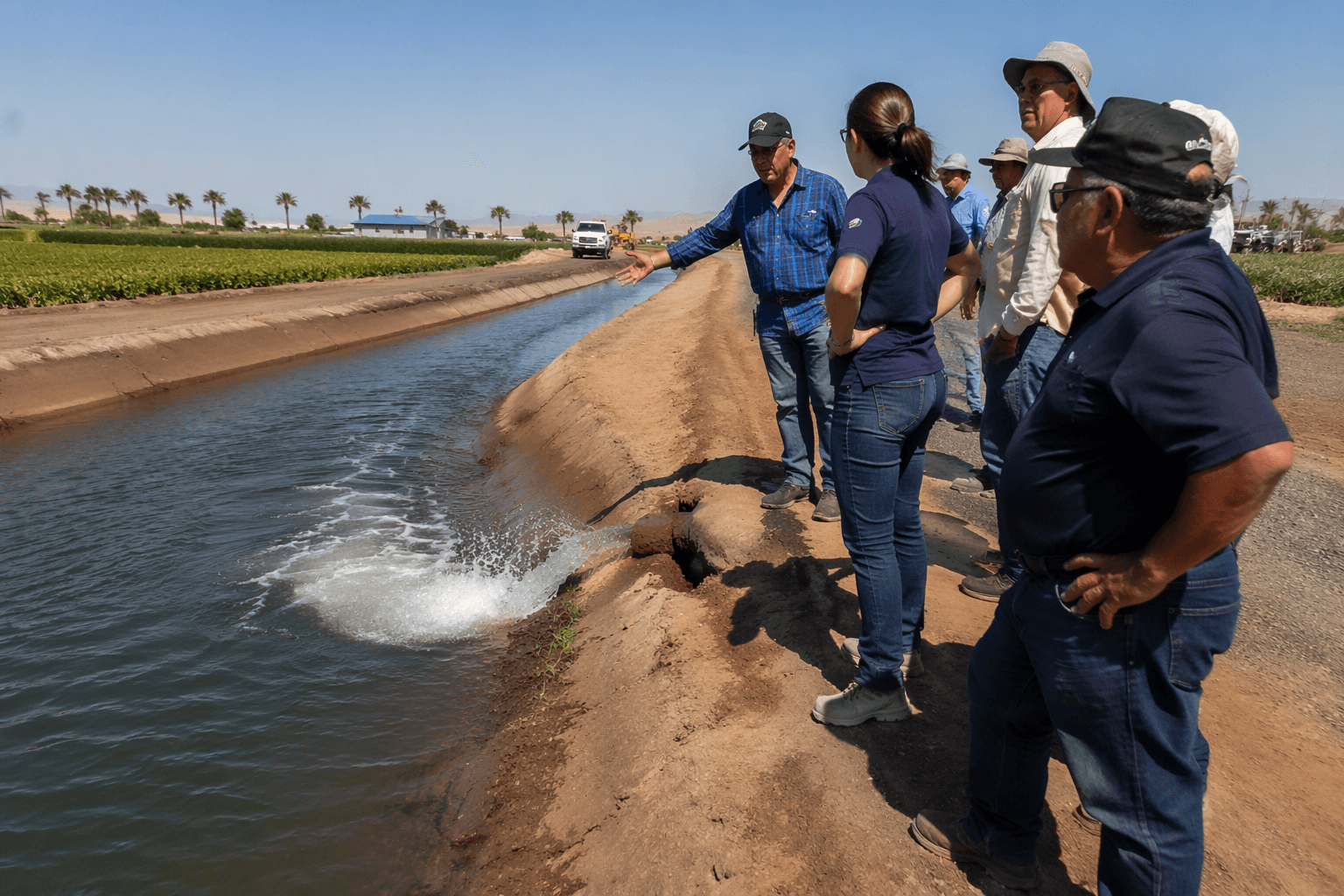
The Colorado River supplies drinking water to roughly 40 million people, irrigates farmland and underpins the economies of Los Angeles, Las Vegas and Phoenix, and stretches about 1,450 miles from the Rocky Mountains to the Gulf of California. SpectrumLocalNews notes the river supports more than 30 tribal nations; Reuters and other outlets emphasize that Lake Powell and Lake Mead are the nation’s largest reservoirs and are central to the dispute.
Negotiations have spanned about two years and key operational target dates remain. The Bureau of Reclamation set the Nov. 11, 2025 framework deadline, then the Feb. 14, 2026 detailed-plan deadline. Local television coverage flagged Oct. 1, 2026 as the next major date by which an operating plan needs to be in place to govern water use for the coming federal fiscal year.
The impasse reflects a longstanding Upper Basin-Lower Basin split. The Upper Basin states, Colorado, New Mexico, Utah and Wyoming, have resisted permanent cuts, arguing upstream supply is more variable and that in the driest years they already face steep usage reductions. Lower Basin leaders contend deeper shared reductions are necessary; Reuters reported Arizona offered to reduce its allocation by 27%, California by 10% and Nevada by nearly 17%.
The governors of California, Arizona and Nevada released a joint statement noting, “The federal deadline for a consensus agreement on managing the Colorado River after 2026 is passing for a second time without resolution,” and adding, “Our stance remains firm and fair: All seven basin states must share in the responsibility of conservation.” Reuters also summarized the standoff: “Each side seeks more favorable access to the river, which has been depleted for decades by rapid growth, drought and climate change. Both sides said they remained committed to reaching a deal.”
Projections cited in reporting raise urgency: the New York Times noted new reservoir forecasts show Lake Powell and Lake Mead could sink to critically low levels by the end of 2026, and MavensNotebook and other outlets warned a dry winter could accelerate declines at Lake Powell as soon as December. The New York Times also observed that existing rules dating from 1922 and last updated in 2007 no longer reflect basin realities; Reuters and other outlets described the current pact as set to expire at the end of 2026, a discrepancy that federal officials should clarify.

With the Bureau of Reclamation central to operations, the Department of the Interior’s initiation of a formal rule-revision process marks a significant federal step. The New York Times cautioned, “After two years of negotiations, seven states are no closer to agreeing on reduced water use. The stalemate could soon land in court.” Great Basin Water Network Executive Director Kyle Roerink summarized the climate challenge: “The clock is ticking to come up with a new management framework, but we are dealing with 21st century aridity problems in a system that was developed for a 20th century wetter world.”
None of the reporting excerpts explicitly mentions La Paz County’s water entitlements or direct impacts. Local officials, the La Paz County Board of Supervisors, Arizona Department of Water Resources, municipal utilities and tribal governments, should clarify whether county supplies are tied to Colorado River entitlements and how state or federal rule changes could affect allocations ahead of Oct. 1, 2026 and the end-of-year reservoir projections. Federal rulemaking, potential litigation and the Lower Basin reduction offers mean water managers and elected leaders across Arizona will need to provide specific, documented guidance for La Paz County residents and water users in the coming weeks.
This article was produced by Prism’s automated news system from verified source data, official records, and press releases, then run through automated quality and moderation checks before publishing. The system is built and supervised by the people who set the standards it runs under. Read our full AI policy.
Did this article answer your question?