CRIT briefs members on Colorado River water rights before 2026 deadline
CRIT leaders met in Parker to shape the next Colorado River deal before 2026. Up to half of the Tribe’s diverted water can be lost now, and that is what they want fixed.

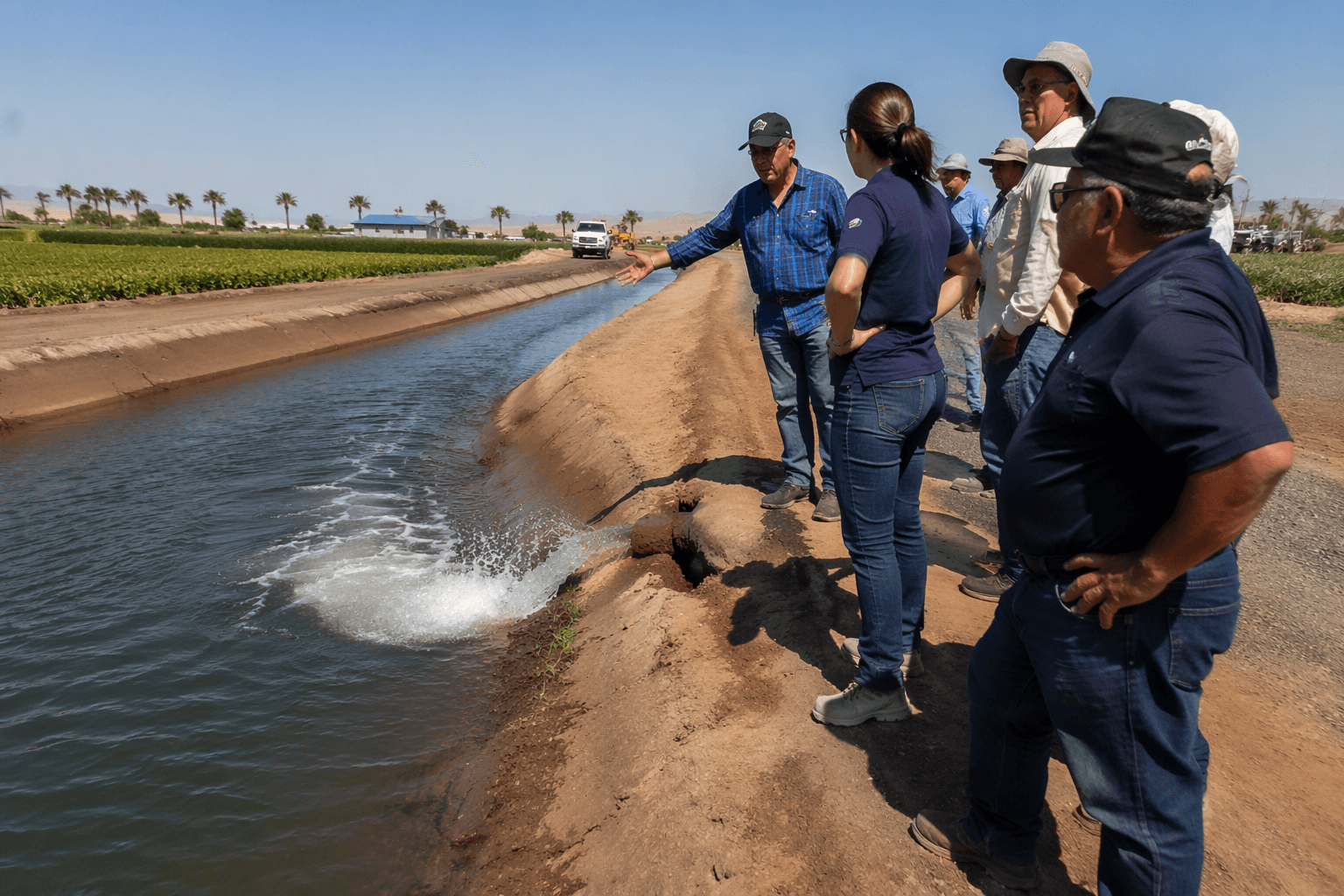
Nearly half of the water diverted through the Bureau of Indian Affairs irrigation project can end up back in the Colorado River unused, and CRIT leaders say that loss has to be addressed before the 2026 operating rules are locked in.
At a May 23 informational meeting in Parker, Chairwoman Amelia Flores and members of the Tribal Council briefed tribal members on Colorado River issues, answered questions and listened to concerns about water policy. The meeting was part of CRIT’s push to make sure members help shape the Tribe’s position now, while federal and state negotiations are still open, rather than after the next operating regime takes effect.

The central problem is practical as much as legal. CRIT’s article says the irrigation project returns between 47% and 50% of diverted water to the river without it being put to use. For a tribe that holds senior water rights, that inefficiency matters because water that cannot be put into service today can weaken the Tribe’s leverage later if the accounting rules do not reflect the reality of how the system works.
That is why CRIT is focusing on more than just defending paper rights. The Tribe wants to make its irrigation and water-delivery systems more efficient, use leases and other tools to better capture return flows, and avoid being penalized for water it could not effectively use. Those choices could affect how CRIT negotiates with the Bureau of Reclamation, the State of Arizona and other basin partners as they work toward a new agreement for the river after 2026.

For La Paz County, the stakes are immediate. Parker sits inside the reservation, and decisions about tribal water policy reach farms, homes, businesses and other local interests that depend on a stable lower Colorado River system. The Tribe’s internal consultation also gives members a direct role in shaping how much control CRIT can assert over water access and delivery, which in turn affects cross-jurisdictional planning throughout the county.

CRIT’s message is clear: the next round of Colorado River rules will be written soon, and the Tribe is trying to make sure its senior rights, its infrastructure and its local priorities are not left to fend for themselves when the current agreements expire in 2026.
This article was produced by Prism’s automated news system from verified source data, official records, and press releases, then run through automated quality and moderation checks before publishing. The system is built and supervised by the people who set the standards it runs under. Read our full AI policy.
Did this article answer your question?