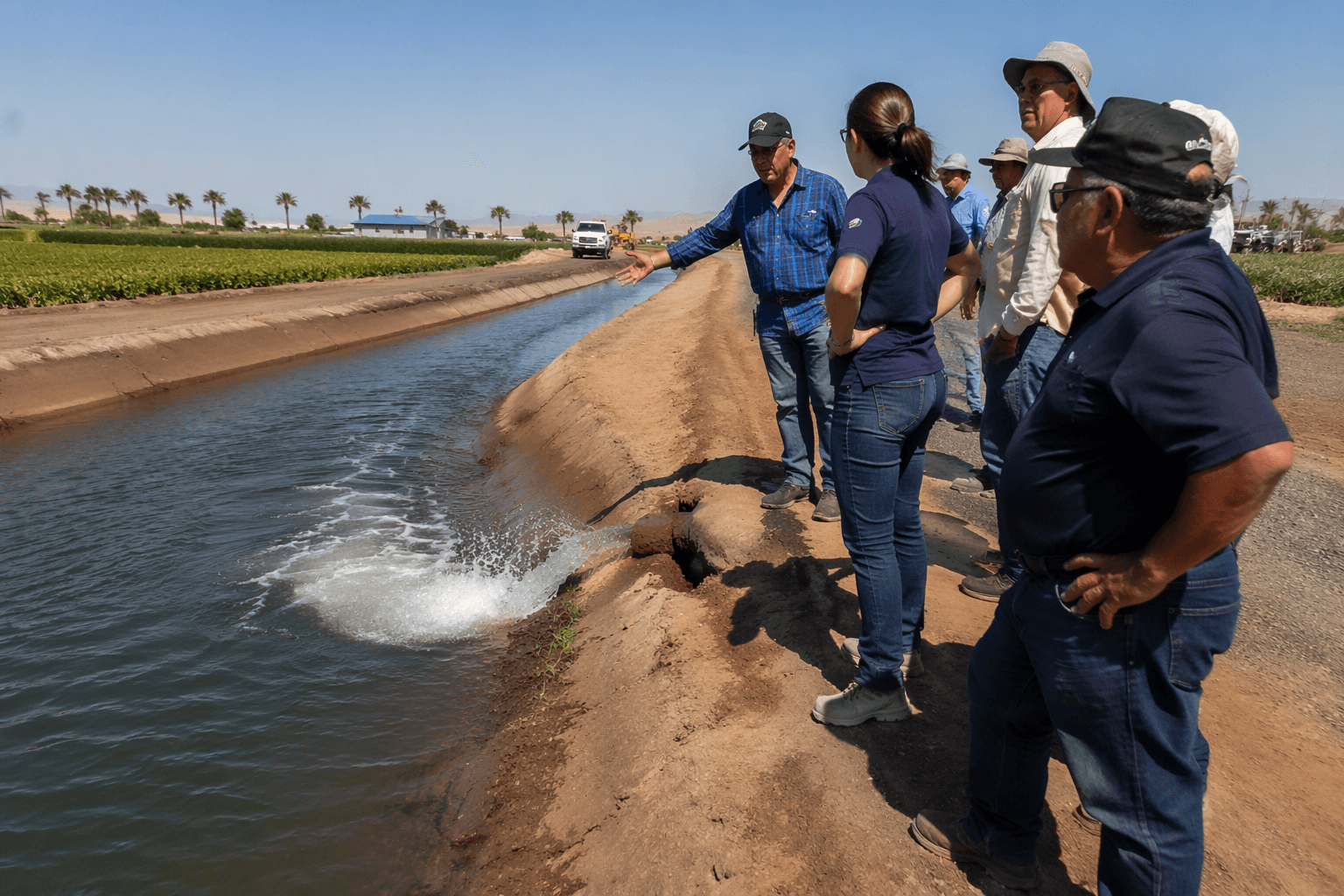
CRIT signs water agreements, gains larger role in Colorado River decisions
CRIT’s April 26 water pacts let the tribe lease, exchange or store Colorado River water, reshaping decisions that reach Parker and La Paz County.
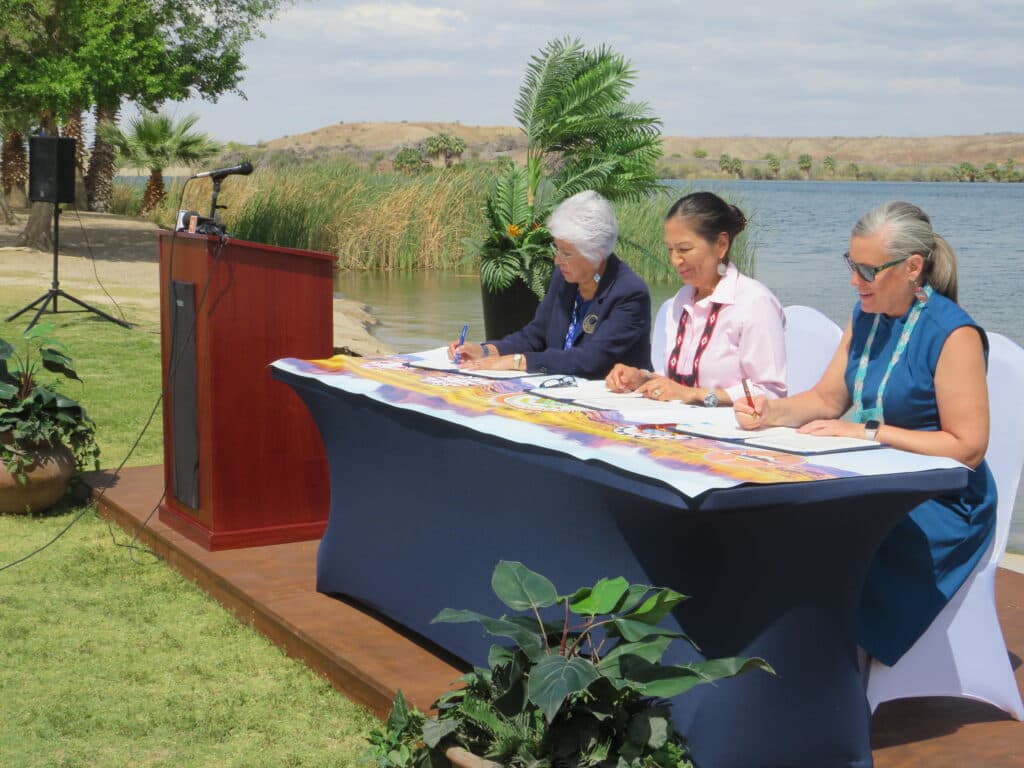
A set of agreements signed at BlueWater Resort on the Colorado River Indian Tribes reservation near Parker gave CRIT a legal tool it had long lacked: the ability to lease, exchange, store and conserve part of its Colorado River water entitlement with federal approval. For La Paz County, the change is not symbolic. It affects who can move water, where it can be used, and how future shortages and deliveries will be negotiated in one of Arizona’s most tightly managed river systems.
The signing brought together CRIT Chairwoman Amelia Flores, Interior Secretary Deb Haaland, Sen. Mark Kelly, Gov. Katie Hobbs, Bureau of Reclamation Commissioner Camille Calimlim Touton and Arizona Department of Water Resources Director Tom Buschatzke. The agreements implemented Public Law 117-343, approved on Jan. 5, 2023, after years of work by the tribe, federal officials, state water managers, water users and environmental groups. The law authorizes CRIT to enter into lease or exchange agreements, storage agreements and agreements for conserved water, subject to Secretarial approval.
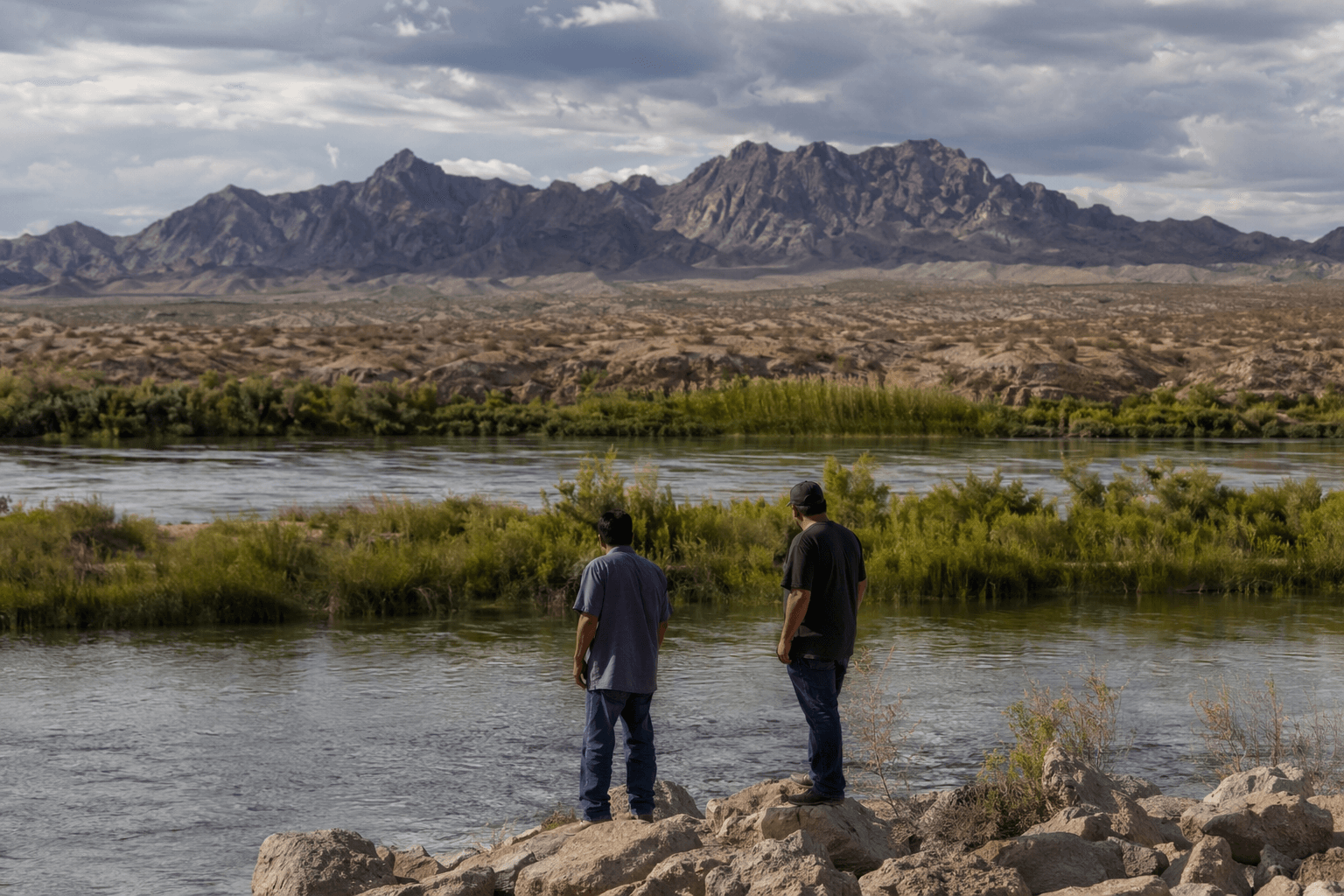
The policy shift matters because CRIT sits at the center of Colorado River politics in western Arizona. The reservation covers nearly 300,000 acres and about 90 miles of river shoreline, with farms, homes and infrastructure tied directly to the river. In testimony on the legislation, Flores said the tribe, the Aha Makhav or “people of the river,” has more than 70,000 acres of production on the reservation, including alfalfa, cotton and potatoes. Senator Kelly said the bill would let CRIT transfer water off-reservation for water storage, habitat restoration and drought relief.
The Senate report on the measure said the tribe’s first-priority present perfected rights were confirmed in Arizona v. California, but that CRIT had not had the same water-marketing and storage flexibility as many tribes with negotiated settlements. It also said off-reservation use or storage must stay in Arizona’s Lower Basin and not in Navajo, Apache or Cochise counties. That means the new authority is both broader and more constrained: CRIT gained the power to make deals that can affect regional shortages, but only within a defined legal framework.
Hobbs called the signing the end of an outdated framework that had restricted the tribe from making choices about its own water resources. She tied CRIT’s new role to the 2019 Drought Contingency Plan, when tribal participation helped stabilize Lake Mead. For Parker-area water management, the practical impact will come in future leasing, exchange and storage decisions, where tribal sovereignty, local agriculture and long-term development plans now intersect more directly.
This article was produced by Prism’s automated news system from verified source data, official records, and press releases, then run through automated quality and moderation checks before publishing. The system is built and supervised by the people who set the standards it runs under. Read our full AI policy.
Did this article answer your question?