CRIT workshop guides Parker businesses through licensing and taxes
CRIT's Parker workshop showed business owners which tribal licenses and tax forms they need, while a new digital filing system signals a faster process.
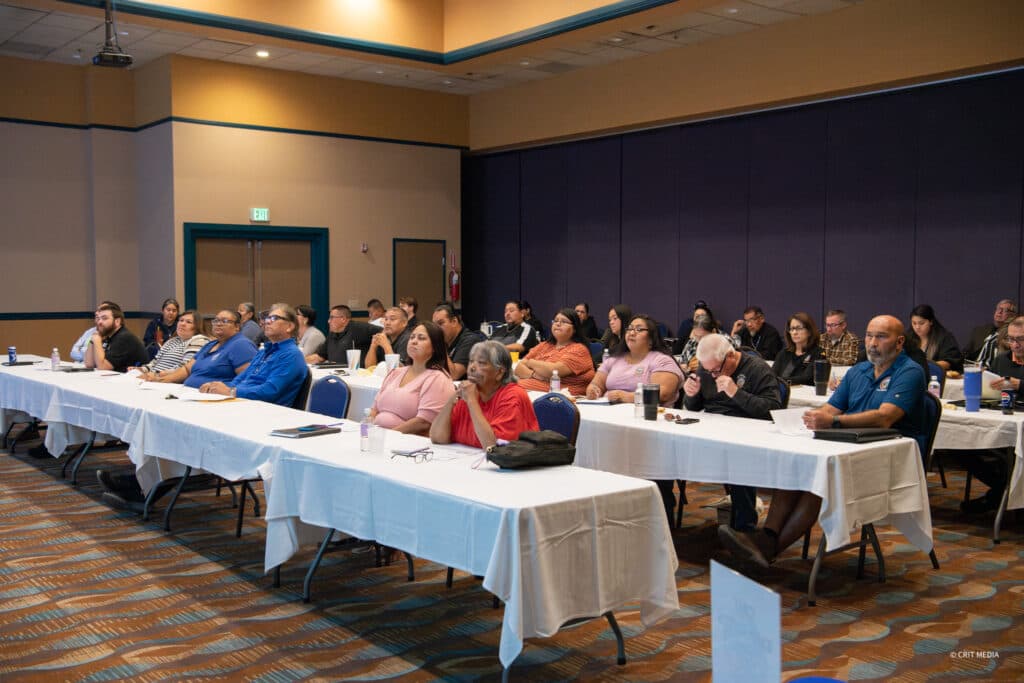
Workshop puts the rules in one room
CRIT’s Revenue and Finance Department brought current and prospective business owners together at Blue Water Resort and Casino in Parker for a Business License and Tax Workshop on May 16. The point was practical: explain, step by step, how tribal businesses are licensed and regulated, starting with the first question every owner has to answer, what kind of license is needed.

That matters in Parker and across the Colorado River Indian Reservation, where a small business can be affected not just by normal startup costs but by tribal rules, tax filing requirements, and the difference between a general business operation and one that sells tobacco or alcohol. The workshop was less about theory than about making the tribal system easier to navigate before owners lose time or run into avoidable delays.
The forms that shape a business launch
CRIT’s Department of Revenue publicly lists the paperwork owners are most likely to need: the CRIT Application for Business License, TR-1 tax returns, tobacco information returns, liquor license applications, a fee schedule, and private taxpayer ruling requests. Those forms show that opening a business under CRIT rules is not a one-document process. It is a set of filings that can change depending on the type of operation, what it sells, and whether it falls under special tax or licensing rules.
The tribe’s published materials place business licensing and tax administration under both the Taxation Code and the Business & Professions Code. That detail matters because it tells owners that licensing is not separate from tax compliance, and tax filing is not an afterthought. The two are built into the same tribal regulatory system.
For an entrepreneur, the practical lesson is straightforward. A retail shop, a service provider, a tobacco seller, and a liquor business may all face different forms and approval steps. The workshop’s value was in making that structure visible before someone opens doors, signs a lease, or starts collecting sales.
The payment rule that can trip people up
One of the clearest administrative details in CRIT’s public materials is also one of the easiest to miss: the revenue office does not accept cash. Payments must be made by check or money order only.
That is the kind of rule that can slow down a filing if an owner shows up expecting to pay in cash, especially in a small-business setting where owners are often moving quickly between vendors, permits, and startup purchases. It is also a reminder that the office expects formal payment channels, not informal handoffs, and that business owners need to plan ahead before they arrive.
CRIT’s public office listings also show more than one Parker address tied to Revenue and Finance. One page places the department at 1000 West Agency Road in Parker, inside the CRIT Financial Center. Another lists it at 26600 Mohave Road in Parker. For anyone doing business under tribal rules, that means checking the current office listing before making a trip is not a minor detail, it is part of staying organized.
Why Parker entrepreneurs are paying attention
The broader context makes the workshop especially relevant in La Paz County. The Colorado River Indian Reservation was established in 1865, covers nearly 300,000 acres, and includes about 90 miles of Colorado River shoreline. Parker is the primary community on the reservation, which makes it the center of daily commerce, tribal administration, and much of the local business traffic that affects nearby residents and workers.
CRIT’s economy has long rested on agriculture, including cotton, alfalfa, and sorghum. But the tribe also operates major enterprises of its own, including Blue Water Resort and Casino, described as the only Arizona gaming resort on the Colorado River. That mix of agriculture, tourism, gaming, and small business creates a local economy where rules about licensing and taxes can shape whether a new venture gets off the ground smoothly.
For Parker-area owners, the workshop signals something bigger than a one-time informational session. It suggests CRIT is trying to lower the friction that can keep people from formalizing a business, hiring help, or expanding services. In a place where sovereignty and economic development are closely linked, making the process clearer can be just as important as changing the process itself.
A wider move toward digital filing
The workshop also fits with a modernization effort now underway inside Revenue and Finance. A recent CRIT profile says Andrew Quillen, the new director of the department, is a tribal member who was born and raised in the community. He started his career with the Tribes as a tax examiner and revenue agent, and he is now introducing new online software that will allow taxpayers to file taxes and business licenses digitally.
That shift could be significant for a reservation spread across a large landscape, where travel to an office in Parker can add another layer of friction for owners who are trying to stay compliant. Digital filing does not replace the need to understand the rules, but it can reduce the number of steps between a business idea and a filed application.
The result is a clearer path for Parker entrepreneurs who want to do business the right way under CRIT law. Between the workshop, the published forms, the no-cash payment rule, and the move toward online filing, the Tribe appears to be building a more legible business system, one that still reflects tribal sovereignty but asks owners to navigate it with more confidence and less guesswork.
This article was produced by Prism’s automated news system from verified source data, official records, and press releases, then run through automated quality and moderation checks before publishing. The system is built and supervised by the people who set the standards it runs under. Read our full AI policy.
Did this article answer your question?