Eagletail Mountains Wilderness offers solitude, rock formations and desert hiking
The Eagletail Mountains Wilderness offers stark rock country and rare solitude, but its remote desert terrain demands water, caution and strict respect for federal rules.
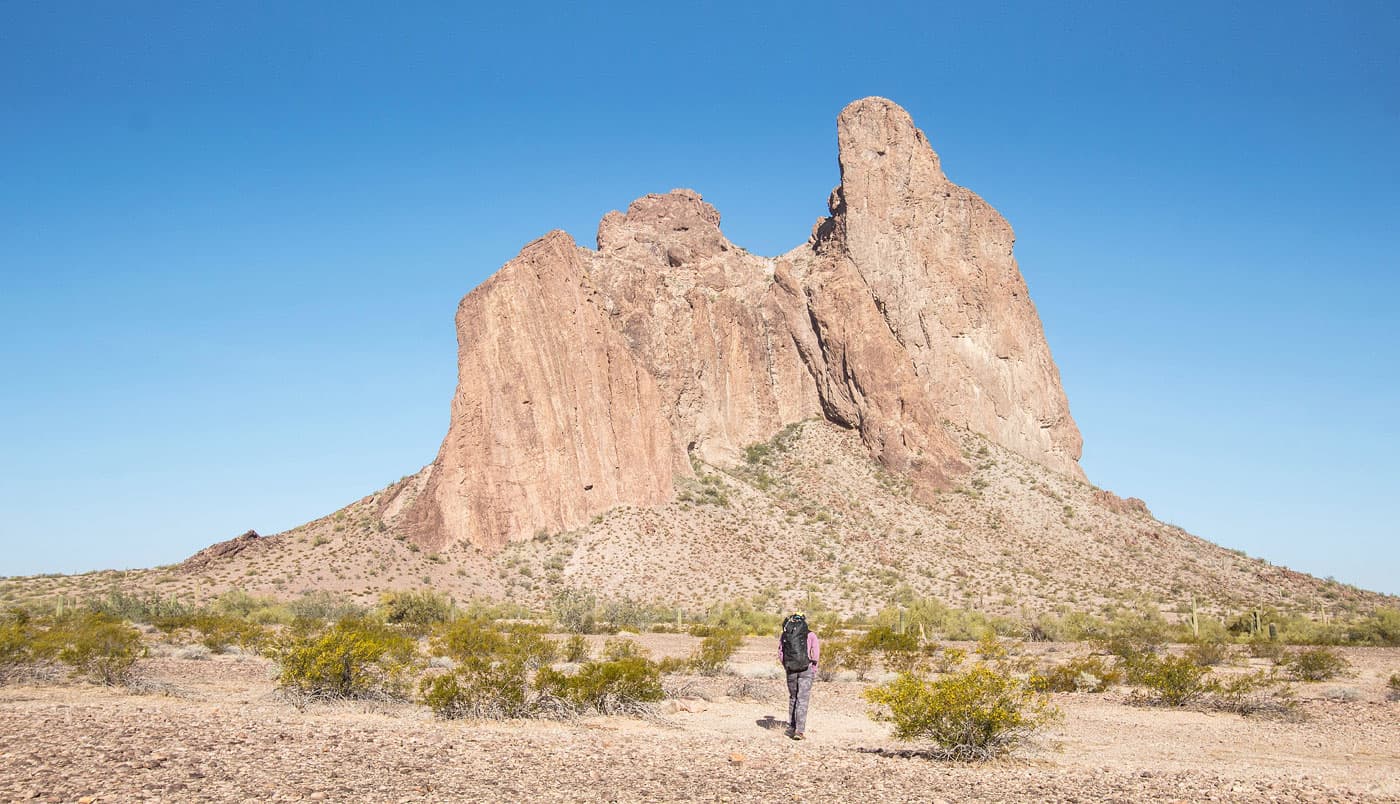
Eagletail Mountains Wilderness is one of La Paz County’s most consequential backcountry landscapes because it is both a hiking destination and a managed federal preserve. The 97,880-acre wilderness is known for colorful rock formations, natural arches and a skyline anchored by Courthouse Rock, which rises more than 2,800 feet from the desert floor near the northern boundary. In a county defined by river towns, winter travel and open desert, the Eagletails stand apart as a place where self-reliance matters as much as scenery.
What the landscape offers
The draw here is not a developed park experience. It is a rugged wilderness where the Bureau of Land Management says visitors find challenging recreation and extraordinary opportunities for solitude. The terrain rewards people who come prepared for big distances, dry washes and long views, with the kind of geology that makes the land itself the main attraction. Courthouse Rock is the landmark most people remember, but the broader appeal is the mix of arches, colorful formations and open desert that gives the wilderness its distinctive character.
That scale is part of the experience. At 97,880 acres, the wilderness is large enough to feel self-contained, and that remoteness is exactly why it appeals to hikers who want less company and more silence. It also means the area is not forgiving. A short outing can turn complicated fast if the weather turns hot, a route is unclear or water runs short.
How to reach it from La Paz County
Access is straightforward only in the sense that the wilderness sits south of Interstate 10. Centennial is commonly cited as the nearest exit, while Hyder serves as a southern access point through unimproved roads. That matters for La Paz County visitors because the last stretch may be rough, dusty and slower than expected, especially after storms or during periods of heavy use.
The Bureau of Land Management’s Yuma Field Office manages the wilderness, and that office oversees four wilderness areas in the region. For travelers, that puts Eagletail Mountains Wilderness in the context of a larger public-lands system rather than an isolated scenic stop. It is a managed landscape, but not a built-up one, and the difference shows once you leave the pavement.
Water, heat and safety in a dry desert
The single most important safety rule is simple: carry ample water. The BLM warns that many areas have inadequate or unpurified water sources, which makes relying on natural sources a bad gamble. In a remote desert setting, that warning is not a formality. It is the difference between a controlled day hike and a rescue call.
The dry terrain also means heat and exposure can become problems quickly, especially when people underestimate distance or assume they will find usable water along the way. The wilderness is not designed for casual wandering. It is a backcountry environment where preparation has to begin before the drive in, with extra water, a realistic turnaround time and an understanding that help may be far away.
Visitors are also expected to respect private-property boundaries around and within the wilderness and to use Leave No Trace practices. Those rules are especially important here because the land is both fragile and shared. Staying on appropriate routes, packing out waste and avoiding unnecessary disturbance help protect the area while reducing the chance that land managers will have to respond to avoidable problems.
The rules that shape the wilderness
The Eagletails became part of the National Wilderness Preservation System in 1990, and that designation carries real consequences for how people can use the land. The Arizona Desert Wilderness Act of 1990, signed by President George H. W. Bush on November 28, 1990, placed the area into a federal conservation framework that prioritizes preservation as well as recreation.
That process fits into a longer history of federal land review. The Federal Land Policy and Management Act of 1976 directed the Bureau of Land Management to inventory, study and report on lands with wilderness characteristics. Eagletail Mountains was part of that broader review system, which helped determine how the landscape should be managed once its wilderness value was recognized.
Management details have shifted over time. The final wilderness management plan was issued in April 1995, after a draft was released in September 1994 and a public comment period that ended on November 3, 1994. The BLM also moved management responsibility from the Phoenix District to the Yuma District on December 15, 1991. In 1995, the agency restricted some recreation in one area to day use only to protect wilderness and cultural values, a reminder that access in this landscape is balanced against preservation.

Why geology and history still matter here
The Eagletails are not only a recreation story. Before they were fully designated wilderness, the U.S. Geological Survey examined the broader Eagletail Mountains Wilderness Study Area in a 1989 bulletin that covered land in La Paz, Maricopa and Yuma counties. That study area received formal mineral surveys on 78,020 acres at the request of the BLM, showing how closely land management once tracked the area’s resource potential as well as its scenic value.
That geology backstory helps explain why the mountains remain significant beyond the trailhead. The same landscape that now draws hikers and people seeking solitude was also assessed through the lens of minerals, wilderness character and federal land policy. For La Paz County residents, that makes the area more than a place to visit. It is a place where conservation decisions were made in public, over time, and with lasting consequences.
A landscape with Indigenous ties
BLM wilderness messaging makes clear that these lands are also current and ancestral homelands of Tribal Nations and Indigenous peoples. An Indigenous Geotags post citing the BLM says Eagletail Wilderness is on traditional Yavapai land. That matters because wilderness designations are often discussed as if they begin with federal maps, when in fact the land’s human history is much older and deeper.
That context should shape how visitors move through the area. The silence and openness that make the Eagletails appealing do not mean the land is empty. They are part of a living landscape with cultural meaning, long memory and continuing significance.
For La Paz County travelers, Eagletail Mountains Wilderness offers the kind of desert experience that cannot be replicated by a roadside stop or a scenic overlook. It is a place for prepared hikers, careful drivers and anyone willing to treat solitude as something earned, not assumed.
This article was produced by Prism’s automated news system from verified source data, official records, and press releases, then run through automated quality and moderation checks before publishing. The system is built and supervised by the people who set the standards it runs under. Read our full AI policy.
Did this article answer your question?