Extreme Heat Warning issued for Central La Paz County, Parker Valley
Central La Paz County and Parker Valley faced 106 to 113-degree heat as the warning expired, with older residents carrying the biggest risk in a county where 43.9% are 65 or older.
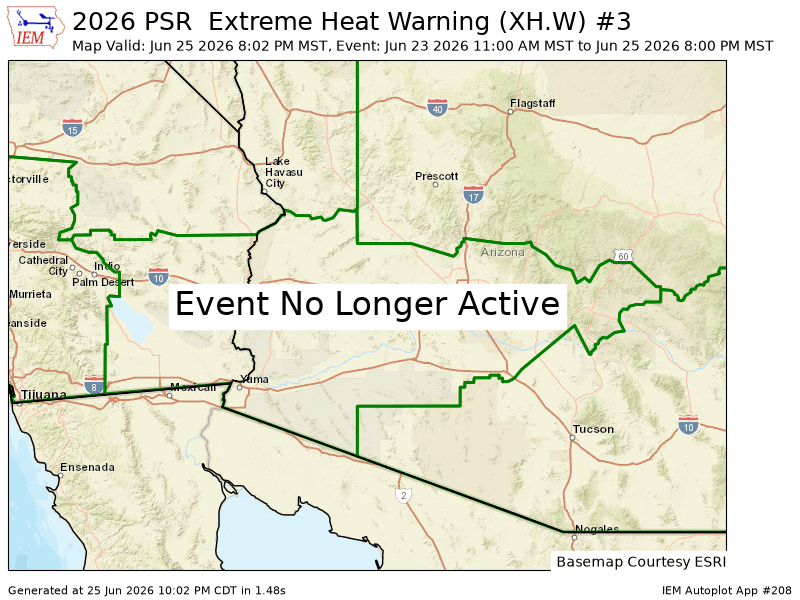
The National Weather Service in Phoenix issued an extreme heat warning for Central La Paz County and Parker Valley on June 25, with afternoon temperatures expected to reach 106 to 113 degrees before the warning expired at 8 p.m. that same day. The alert covered Arizona heat zones AZZ533 and AZZ530 and warned that localized major HeatRisk and overexposure could push residents into heat cramps, heat exhaustion and, without intervention, heat stroke.
For La Paz County, the danger landed hardest in a community that is both small and older than much of the state. The U.S. Census Bureau estimated the county’s population at 16,711 in July 2025, and 43.9% of residents were age 65 or older. That makes simple routines such as walking outside, working in the yard or sitting in a parked vehicle far more dangerous when temperatures climb into triple digits.
Arizona Department of Health Services said La Paz County was among the counties under an extreme heat warning June 24 and 25, with daytime highs expected to reach up to 114 degrees. The state health agency says Arizona sees about 4,298 emergency-room visits each year for heat-related illness, a reminder that heat in the lower Colorado River valley is not just uncomfortable but a routine medical threat.

National Weather Service Phoenix said extreme heat warnings remained in effect across multiple locations in south-central and western Arizona, with temperatures running 6 to 8 degrees above normal. The forecast office’s climate data also shows why residents in Parker Valley and across the county pay close attention to these alerts: Yuma averages 25 days a year at or above 110 degrees, and Phoenix averages 21.
Heat safety guidance from Arizona emphasized drinking water, limiting time in the heat and checking on neighbors and family members, especially older adults and anyone without reliable cooling. In La Paz County, those precautions matter not only for health, but for household costs and daily work decisions when air conditioning runs harder and outdoor schedules become unsafe.

The heat event was part of a broader stretch of dangerous weather, not a one-day spike. National Weather Service Phoenix said dry and windy conditions were expected to turn attention toward critical fire weather later in the week, extending the pressure on residents who were already coping with extreme temperatures.
This article was produced by Prism’s automated news system from verified source data, official records, and press releases, then run through automated quality and moderation checks before publishing. The system is built and supervised by the people who set the standards it runs under. Read our full AI policy.
Did this article answer your question?