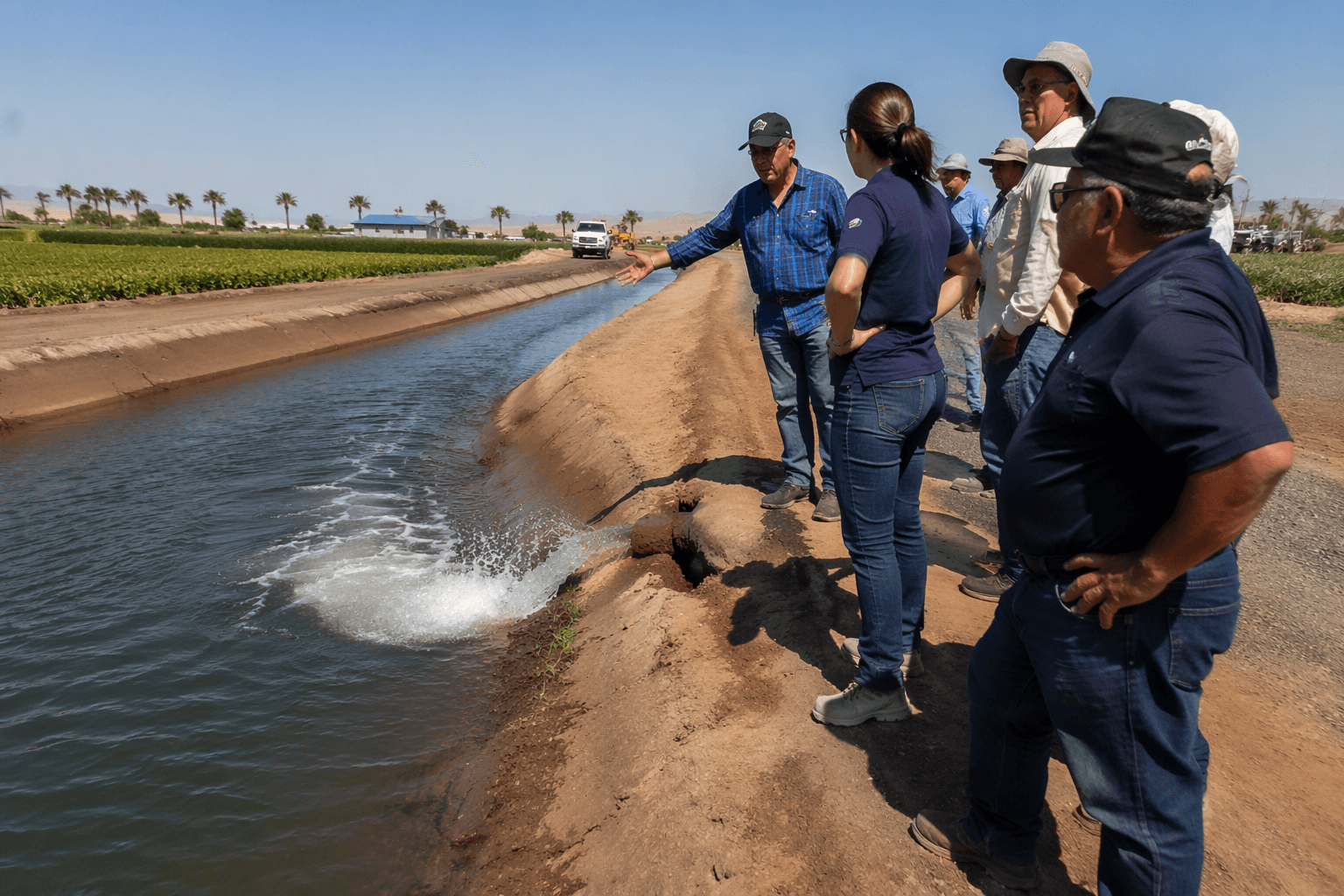
Gallego visit spotlights Colorado River water rights and sewage concerns
Gallego was pressed at CRIT on senior water rights and Parker’s sewage needs as the Colorado River heads toward a 2026 rule deadline.
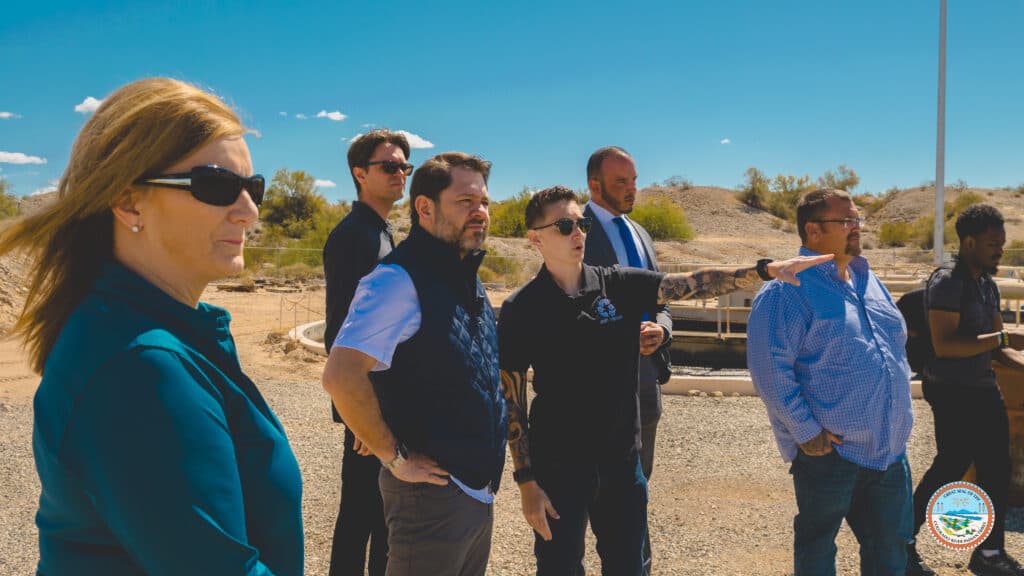
Senator Ruben Gallego was asked at the Colorado River Indian Reservation to confront a question that reaches far beyond one April visit: who protects senior water rights if the Colorado River is cut again, and who pays to keep Parker’s sewer system working when water and wastewater are so closely linked in La Paz County? When Gallego met on April 1 with Chairwoman Amelia Flores and Tribal Council members in council chambers, leaders raised concern about pro-rata shortage allocations and whether those proposals could collide with tribal rights.
Since that meeting, the biggest basin questions have not gone away. The Bureau of Reclamation still says post-2026 Colorado River operating rules are unresolved, and the 2007 Interim Guidelines and 2019 Drought Contingency Plans are set to expire at the end of 2026. That uncertainty matters in Parker and on the reservation because Arizona experienced its first declared Tier 1 Colorado River shortage beginning in 2022, and recent reporting says a federal no-deal plan could force cuts of up to 77% for Arizona if the states remain deadlocked.

Flores, who was elected chairwoman in December 2020, leads a nine-member Tribal Council that oversees a government with more than three dozen departments. The reservation’s Joint Venture office and Utilities Office are both based in Parker, which is one reason sewage repair was treated as a governance issue rather than a narrow infrastructure matter. After the council chambers meeting, Gallego and the delegation visited the Colorado River sewage system joint venture, where they met with Parker Mayor Randy Hartless, Vice Mayor Zafer Genc, Town Manager Nora Yackley, Council member Joshua Grenwalt and operations staff.
For local leaders, that stop carried immediate consequences. Sewage repairs affect public health, quality of life and the town’s economy, especially in a river corridor where wastewater, water delivery and reservoir operations are interconnected. CRIT’s public utilities ordinance gives the tribe regulatory authority over industrial waste discharge and delegates administration to the Joint Venture, underscoring how tightly utility work is tied to tribal sovereignty and daily services.
The river stakes are equally high. Reclamation says Colorado River Partnership Tribes hold reserved rights to divert nearly 2.8 million acre-feet per year from the river and tributaries, and that those rights are generally the most senior in the basin. CRIT has also said publicly that it holds the largest first-priority Colorado River water rights in Arizona. A 2024 accounting report from Reclamation references Headgate Rock Dam and the reservation main canal near Parker, showing how closely tribal infrastructure is tied to river accounting and operations.
Gallego’s office said he also met with the Hualapai Tribe, the town of Parker and Lake Havasu City during his visit to Mohave and La Paz counties to discuss water management and economic development. In Parker and on the reservation, the practical scorecard remains simple: protect senior rights, move sewage fixes forward and settle the river rules before the current ones run out.
This article was produced by Prism’s automated news system from verified source data, official records, and press releases, then run through automated quality and moderation checks before publishing. The system is built and supervised by the people who set the standards it runs under. Read our full AI policy.
Did this article answer your question?