Hi Jolly Cemetery preserves Quartzsite’s pioneer history and desert legacy
A camel driver’s grave still anchors Quartzsite’s identity, from pioneer families to a newer burial ground. The site blends roadside curiosity with real local history.
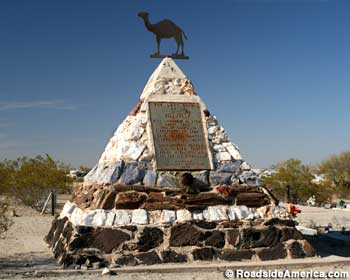
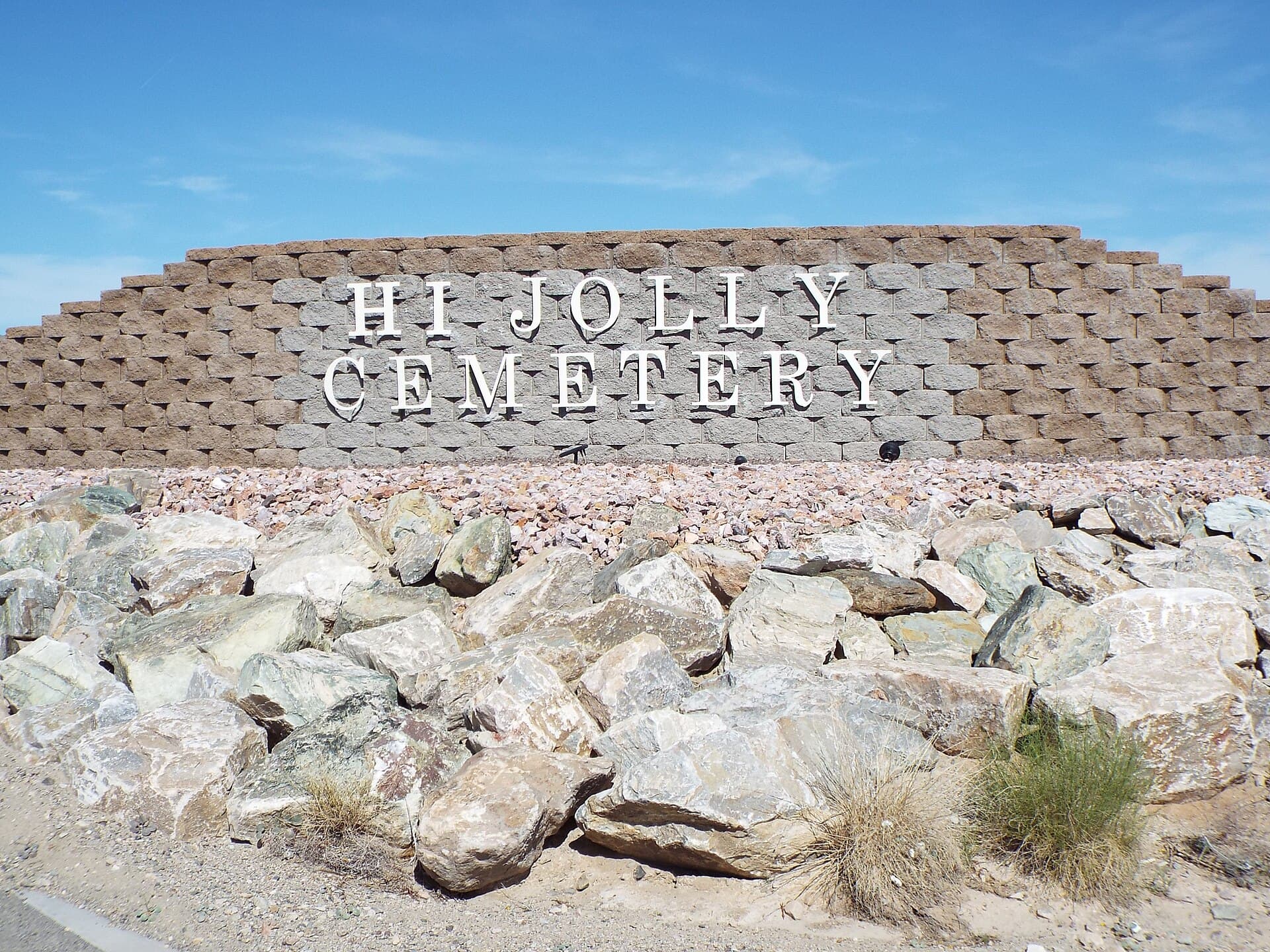
Hi Jolly Cemetery is the place where Quartzsite’s most unusual landmark does more than attract passing curiosity. At the west end of town, the cemetery combines a burial ground, a historic site, and a park, with desert views in every direction and a pyramid-shaped monument that keeps the story of Hi Jolly in public view. The result is not just a roadside stop, but a local landmark that ties Quartzsite’s early families, its active cemetery, and its preservation ethic into one compact place.
A cemetery that still functions as part of town life
The Town of Quartzsite operates and maintains Hi Jolly Cemetery for three purposes at once: as a cemetery, a historic site, and a park. That matters because the site is not frozen in the past. Quartzsite says there is also a newer section for people who choose to be interred there, which means the grounds still serve present-day families as well as visitors interested in local history.
The setting helps explain why the place has stayed so visible. The cemetery sits at the west end of Quartzsite, roughly a mile west of the I-10 and State Route 95 junction, where traffic funnels people through town and into the open desert beyond. From the grounds, the town describes desert vistas in every direction, so the visit feels at once intimate and expansive: a place of memory looking out into the same landscape that shaped the town.
Why one grave became the town’s best-known marker
The best-known feature is the Hi Jolly monument in the pioneer section of the cemetery, where Quartzsite’s pioneer families were and are laid to rest. That detail gives the monument its civic weight. It is not standing alone as a novelty; it sits among the graves of the people who built the town’s early identity, which is why the site reads as both a memorial and a record of continuity across generations.
Hi Jolly himself was born Philip Tedro. After converting to Islam and making a pilgrimage to Mecca, he became known as Hadji Ali, and later as Hi Jolly. He was hired by the United States Army in 1856 to work as a camel driver for the military’s camel trial in the Southwest, a short-lived experiment meant to test whether camels could help in arid frontier travel and transport. That history is the reason Quartzsite still has a monument that stands out from the usual markers found in Arizona cemeteries.

What the monument actually looks like
Visitors who come expecting a standard gravestone usually find something more striking. Local and state descriptions present the Hi Jolly grave marker as a pyramid-shaped monument topped with a camel silhouette. It is the kind of landmark that is easy to recognize even before you know the history behind it, which helps explain why it has stayed part of Arizona’s roadside memory for so long.
The plaque traditionally associated with the monument identifies Hi Jolly as a camel driver, packer, and scout. It also says he came to the country on February 10, 1856 and died in Quartzsite on December 16, 1902. ADOT says he remained in the desert Southwest after the camel experiment and worked as a prospector, scout, courier for the Jackass Mail, and freight hauler. Those roles place him firmly in the working history of the frontier rather than in legend alone.
The dates that matter, and why they matter
Hi Jolly died in December 1902 in Quartzsite, then known as Tyson’s Well. Local roadside-history accounts say the original tomb was dedicated on January 4, 1903. The Arizona Highway Department later erected or restored the monument in 1934, while some accounts give 1935 for that work. The exact year of the later reconstruction is less important than the fact that the monument was deliberately preserved, not left to disappear into the desert.
The site’s federal recognition reinforces that point. The Hi Jolly Monument was added to the National Register of Historic Places on February 28, 2011. The National Park Service describes the register as the official list of the nation’s historic places worthy of preservation, and the Hi Jolly Monument was accepted there as both a grave marker and a commemorative property. In other words, this is not only Quartzsite lore; it is a preserved historic site recognized at the national level.
What a visit tells you about Quartzsite
A stop at Hi Jolly Cemetery gives a sharper sense of Quartzsite than a drive-through ever can. The pioneer section shows where the town’s early families are buried, while the newer section shows that the cemetery still serves people who want to be interred in Quartzsite today. The monument itself connects that local continuity to a broader American story: military experimentation, migration, desert labor, and the long afterlife of frontier names.
Recent scholarship adds another layer by placing Hadji Ali within migration studies, transimperial labor flows, and early U.S.-Middle East relations. That lens matters because it moves the story beyond a colorful nickname. Hi Jolly was part of a larger network of movement and labor, and Quartzsite ended up preserving that history in a place that is still used, still tended, and still visible from one of the town’s main travel corridors.
- Go to the west end of Quartzsite, near the I-10 and State Route 95 junction.
- Look for the pyramid-shaped monument with the camel figure.
- Walk the pioneer section to see how the monument sits among the graves of early Quartzsite families.
- Notice the newer burial area, which shows the cemetery remains active.
- Take in the desert views, which make clear why the town treats the site as both memorial ground and public landscape.
For visitors, the essentials are straightforward:
The cemetery’s lasting appeal comes from that combination of ordinary use and unusual history. Quartzsite keeps Hi Jolly Cemetery open as a working burial ground, a preserved landmark, and a public reminder that one camel driver’s grave can still define how a town sees itself.
This article was produced by Prism’s automated news system from verified source data, official records, and press releases, then run through automated quality and moderation checks before publishing. The system is built and supervised by the people who set the standards it runs under. Read our full AI policy.
Did this article answer your question?