Illegal dumping and permit overstays draw complaints near Parker Strip
Trash piles and permit overstays are surfacing near the Desert Bar, putting Parker Strip access, cleanup costs and public land rules back in focus.

Around the Desert Bar and Nellie E. Saloon north of Parker, trash and permit overstays are hard to miss. From his vantage point near the bar, Ken Coughlin sees plenty of activity in the surrounding desert, and lately two problems stand out: illegal dumping and people staying on Bureau of Land Management land longer than allowed.
Illegal dumping can threaten public health, safety, property values and quality of life. Arizona Department of Environmental Quality defines it as wildcat dumping, meaning waste disposed of at locations not approved by the agency. Approved disposal sites are landfills and transfer stations that are permitted and inspected annually.
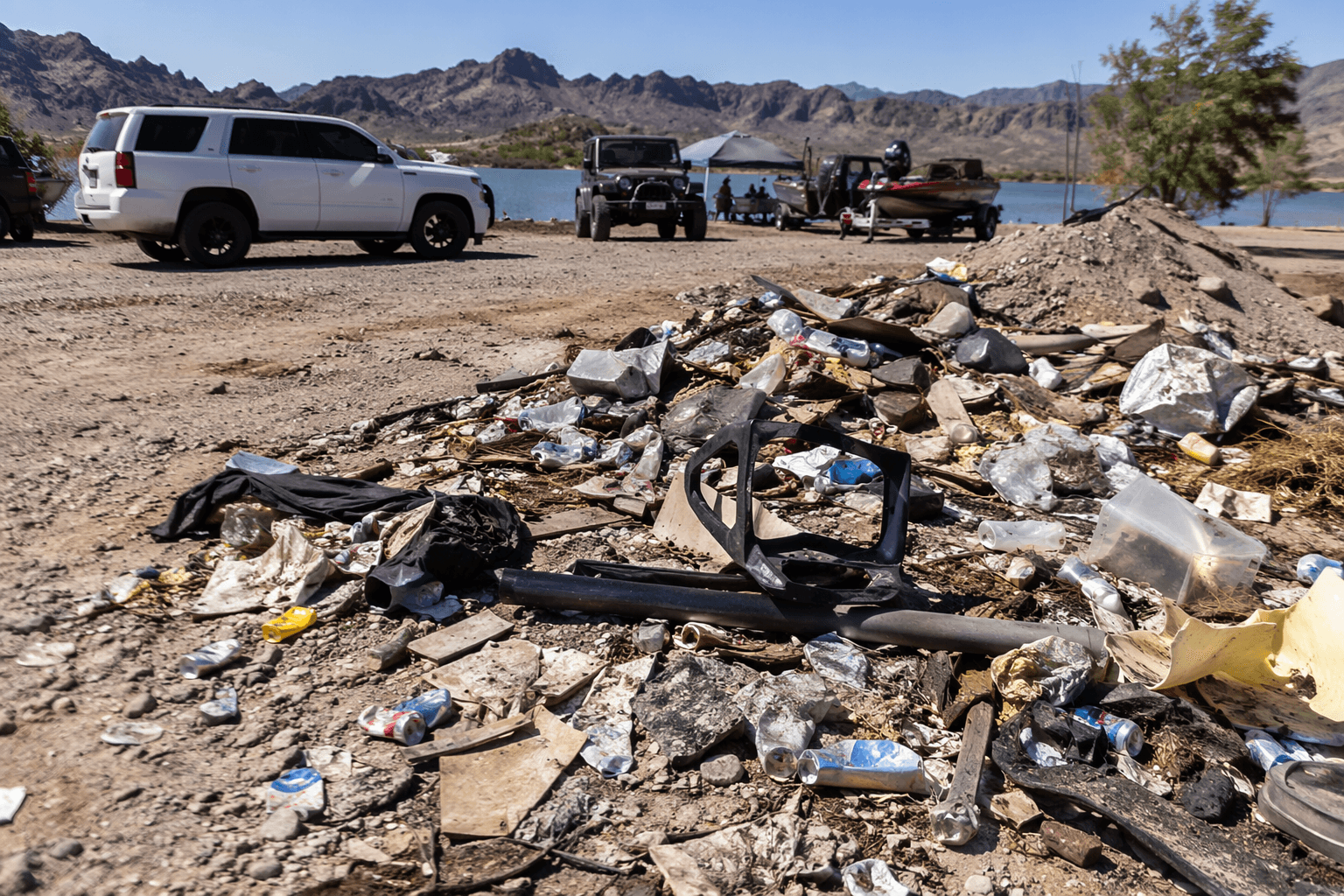
Illegal dumping can hurt property values, erode the tax base and create an economic burden on local government. In desert La Paz County, where trash is more visible and harder to hide, the cost of cleanup can land on taxpayers and on the people who use the land responsibly. It also leaves land managers dealing with piles that can sit in recreation corridors used by hikers, campers and off-road drivers heading into remote parts of the county.
The Bureau of Land Management manages 12.1 million acres of public land and 17.5 million subsurface acres in Arizona. Its camping rules say dispersed camping is for short-term recreation, not long-term living, except in designated Long-Term Visitor Areas. Visitors should check whether they need a permit or pass before heading out, special recreation permits authorize specific uses, and using public land for business or financial gain requires a special permit.
Western Arizona has dealt with the same pattern before. In 2017, a Kingman man and woman were charged after being caught dumping yard waste mixed with miscellaneous household trash in the desert north of Kingman. In 2021, BLM was still fighting illegal dumping on Mohave County public lands and preparing to brief county supervisors on the issue. ADEQ has helped with anti-dumping education, tribal strategies and cleanup funding.
This article was produced by Prism’s automated news system from verified source data, official records, and press releases, then run through automated quality and moderation checks before publishing. The system is built and supervised by the people who set the standards it runs under. Read our full AI policy.
Did this article answer your question?