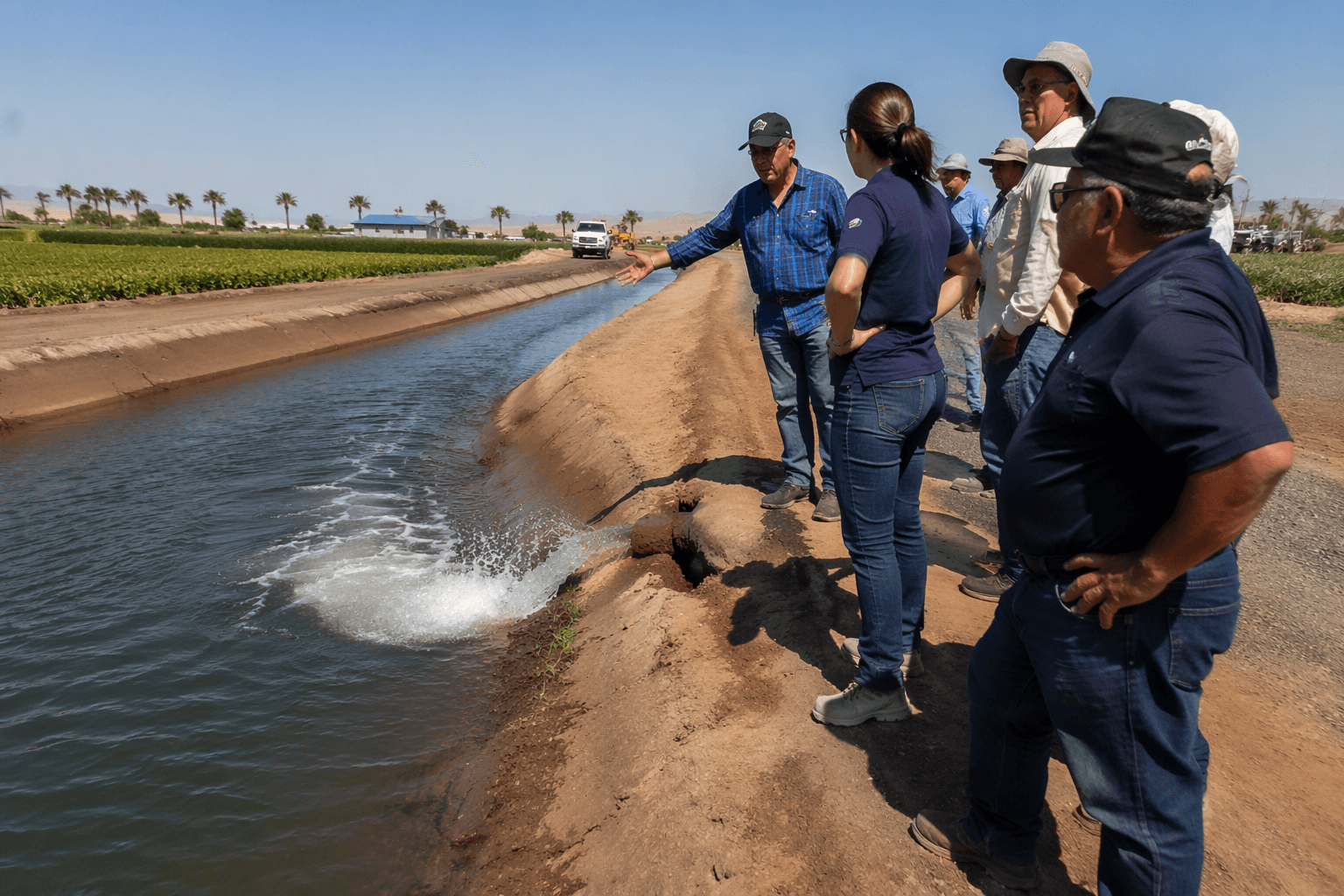
Judge Weighs La Paz County Regulations in AG Suit Over Fondomonte Pumping
A Superior Court judge is weighing whether La Paz County regulations weaken the AG's public nuisance suit against Fondomonte over groundwater pumping; the outcome affects local water protections.
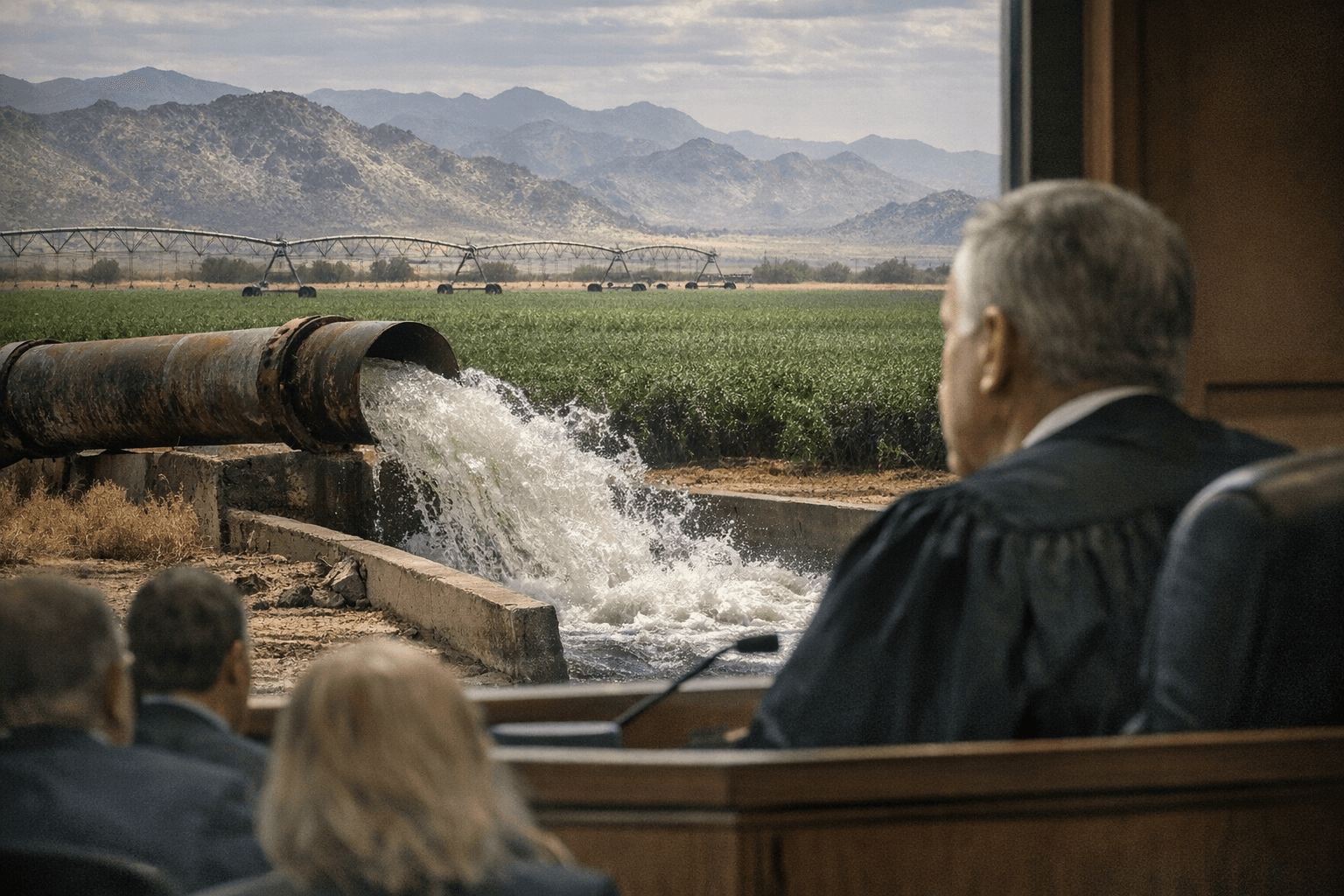
A Superior Court judge in La Paz County is weighing whether county regulations undercut Arizona Attorney General Kris Mayes’s public nuisance lawsuit alleging excessive groundwater pumping by Fondomonte, a Saudi-owned farming operation. The dispute places local groundwater management and residents’ access to targeted relief at the center of a broader clash between judicial remedies and state administrative authority.
The Arizona Attorney General filed suit seeking a court declaration that Fondomonte’s pumping amounts to a public nuisance. Assistant Attorney General Clinten Garrett wrote that “Here, Fondomonte is not subject to any administrative action directed at its excessive water use. Nor does ADWR have authority to impose ‘liability’ on Fondomonte for harming the community.” The AG argues a court finding would supply legal leverage that administrative processes cannot deliver.
Fondomonte’s counsel has urged the court to defer to the Arizona Department of Water Resources and to allow the new administrative framework to proceed. Attorney Briana Campbell told the court, “ADWR has the expertise and resources, not to mention statutory mandate, to handle these issues properly and independently.” Fondomonte seeks regulation and restrictions through the Active Management Area process rather than a judicial nuisance finding.
Complicating the litigation is ADWR’s recent implementation of a new Active Management Area for the Ranegras Plain Basin. Under the AMA framework ADWR is tasked with assessing current groundwater use, exempting existing users, blocking new irrigation and implementing water reporting and management plans to protect the area’s water supply. Those administrative tools could alter whether Fondomonte’s operations are found to be exempt or subject to restrictions.
A prospective court order deeming Fondomonte’s groundwater pumping a public nuisance could be critical to ADWR’s assessment of whether the farm’s current practices are legal and thus exempt from any future regulation. A prospective court order deeming Fondomonte’s groundwater pumping a public nuisance could be critical to ADWR’s assessment of whether the farm’s current practices are legal and thus exempt from any future regulation.
The AG’s filings also contend that ADWR cannot impose civil liability and that its regulatory route would not provide “targeted relief to impacted community members,” a point Mayes has emphasized as she pursues the case and vows to continue the fight. Those who rely on private wells or small-scale irrigation in and around Riverview and the Ranegras Plain Basin stand to be most directly affected by how the court and ADWR divide authority.
Procedural details remain sparse in publicly available excerpts: the judge overseeing the matter is not named in the filings provided, and the record excerpts do not include filing dates, specific La Paz County code sections at issue, or quantified pumping data. The court’s forthcoming ruling on whether county rules undercut the AG’s nuisance claim will shape whether judicial findings or ADWR’s AMA tools become the primary path for protecting local groundwater and delivering relief to affected residents.
This article was produced by Prism’s automated news system from verified source data, official records, and press releases, then run through automated quality and moderation checks before publishing. The system is built and supervised by the people who set the standards it runs under. Read our full AI policy.
Did this article answer your question?